
TSX getting you down? There are always sound investment alternatives.
Latest News


Paying capital gains tax on a loss + MORE Apr 24th
Q: My question today relates to the new changes to capital gains on real estate. My wife and I owned a condo for a number of years. We paid $80,000 in 2006 and sold for $140,000 in March 2016. The problem is we rented the unit out after we bought our house in 2011. Looking at the new formula for .... More »
Where to find and apply for COVID-19 financial relief Aug 20th
The COVID-19 outbreak has dealt a shock to our economy, shuttering entire industries and leaving many more businesses in limbo, forcing layoffs and loss of income on many people. Fortunately, the Canadian government and several other institutions are offering financial relief for Canadians during th.... More »
Top 10 most expensive homes in Metro Vancouver (PHOTOS) - Daily Hive + MORE Jan 2nd
Top 10 most expensive homes in Metro Vancouver (PHOTOS) Daily HiveIt should be no surprise that Metro Vancouver's most valuable residential real estate is located in the Westside area of the city of Vancouver, but here is a ...View full coverage on Google News.... More »
Unlocking the Annuity Puzzle: Why Canadians avoid what seems to be the perfect retirement vehicle + MORE Dec 18th
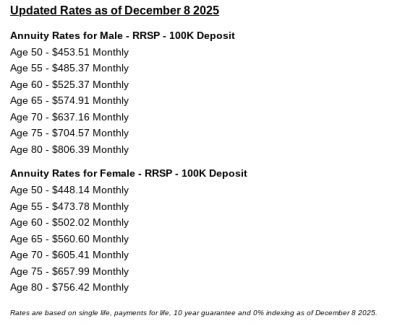
The Annuity Puzzle is about a curious phenomenon in Canada: while life annuities sold by insurance companies seem to have all sorts of compelling reasons to acquire them, more often than not, retirees shun them.
Financial planner Robb Engen recently tackled this puzzle in his Boome.... More »
Canada’s best cash back credit cards 2020 + MORE May 8th
The concept behind cash back credit cards is very easy to understand. You get a small percentage back on purchases you make with the card, and the reward comes in the form of cash back, meaning money. The beauty of this system is that cash back rewards are flexible and you can spend them on anything.... More »
Local TV news coverage more important than station finances, says CRTC chair
– canadianbusiness.com
OTTAWA – The head of the country’s broadcast regulator says TV stations have a responsibility to produce local news, even if it hurts their bottom line.
Jean Pierre Blais is telling a Commons committee that financial profits aren’t everything — the marketplace of ideas and information is equally important.
The chairman of the Canadian Radio-television and Telecommunications Commission made the remarks in front of the heritage committee studying the future of local media.
Blais says that while digital platforms offer an alternative source of coverage, they don’t have the funding and expertise in gathering information possessed by professional TV news outlets.
The chairman also laments that a “disturbing number of television stations” have cut staff, centralized operations and reduced the length of their newscasts.
In June, the CRTC announced changes to the way broadcasters can pay for local TV news and required licence holders in Toronto, Montreal, Vancouver, Edmonton and Calgary to produce at least 14 hours a week of local news content…
Jean Pierre Blais is telling a Commons committee that financial profits aren’t everything — the marketplace of ideas and information is equally important.
The chairman of the Canadian Radio-television and Telecommunications Commission made the remarks in front of the heritage committee studying the future of local media.
Blais says that while digital platforms offer an alternative source of coverage, they don’t have the funding and expertise in gathering information possessed by professional TV news outlets.
The chairman also laments that a “disturbing number of television stations” have cut staff, centralized operations and reduced the length of their newscasts.
In June, the CRTC announced changes to the way broadcasters can pay for local TV news and required licence holders in Toronto, Montreal, Vancouver, Edmonton and Calgary to produce at least 14 hours a week of local news content…
Survey: Number of Americans without bank accounts declines
– canadianbusiness.com
NEW YORK, N.Y. – Fewer Americans are without access to a checking or savings account, according to a survey released Thursday by federal regulators, a sign that the improving economy is helping lift the nation’s poorest households.
Having a checking or savings account is considered a cornerstone of financial stability in the U.S. Without one, households must rely on check-cashing services, prepaid debit cards and other costly ways to pay bills and make routine transactions.
While the gains were modest, the results of the survey from the Federal Deposit Insurance Corporation are an encouraging sign that more people are getting access to bank accounts.
The portion of Americans who do not have a bank account, known in industry jargon as “the unbanked,” declined to 7 per cent in 2015 from 7.7 per cent in 2013, according to the FDIC. The improvements mostly came from households making less than $15,000 a year.
The FDIC report is the most recent piece of data showing that the economic recovery is beginning to help those at the bottom…
Having a checking or savings account is considered a cornerstone of financial stability in the U.S. Without one, households must rely on check-cashing services, prepaid debit cards and other costly ways to pay bills and make routine transactions.
While the gains were modest, the results of the survey from the Federal Deposit Insurance Corporation are an encouraging sign that more people are getting access to bank accounts.
The portion of Americans who do not have a bank account, known in industry jargon as “the unbanked,” declined to 7 per cent in 2015 from 7.7 per cent in 2013, according to the FDIC. The improvements mostly came from households making less than $15,000 a year.
The FDIC report is the most recent piece of data showing that the economic recovery is beginning to help those at the bottom…
Greed, fear and the U.S. election: make your portfolio president-proof
– canadianbusiness.com
OTTAWA – The U.S. election promises to be a wild ride to Nov. 8 and stock markets could be taken along for the volatile trip to voting day.
With that in mind, experts are urging investors to resist falling prey to emotion and see past the short term while remaining focused on their plans.
“You can’t kind of go from greed to fear to greed to fear,” says Chris Catliff, CEO of BlueShore Financial.
“You need to keep it in check.”
Britain’s surprise vote in June to leave the European Union sent stock markets into a tizzy. An upset win by Republican presidential candidate Donald Trump, despite polls suggesting only a slim chance of victory, could result in similar convulsions.
But people should remember that while stock markets sank in the wake of the so-called Brexit vote, they also bounced back in the weeks that followed. Those who sold their holdings in the immediate aftermath missed out on the rebound.
Those who are nervous about the short term moves on the market may have too much risk in their portfolios…
With that in mind, experts are urging investors to resist falling prey to emotion and see past the short term while remaining focused on their plans.
“You can’t kind of go from greed to fear to greed to fear,” says Chris Catliff, CEO of BlueShore Financial.
“You need to keep it in check.”
Britain’s surprise vote in June to leave the European Union sent stock markets into a tizzy. An upset win by Republican presidential candidate Donald Trump, despite polls suggesting only a slim chance of victory, could result in similar convulsions.
But people should remember that while stock markets sank in the wake of the so-called Brexit vote, they also bounced back in the weeks that followed. Those who sold their holdings in the immediate aftermath missed out on the rebound.
Those who are nervous about the short term moves on the market may have too much risk in their portfolios…
The U.S. election promises to be a wild ride to Nov. 8 and stock markets could be taken along for the volatile trip to voting day. With that in mind, experts are urging investors to resist falling prey to emotion and see past the short term while remaining focused on their plans.
What to do with your raise
– moneysense.ca

My husband just got a promotion that comes with a $20,000 bump in salary. What should we do with the extra money: Pay the mortgage quicker? Save it in RRSPs and TFSAs? Take a family vacation? Or maybe it should go towards our upcoming $3,000-a- month daycare bill.
—Jennifer, Vancouver
Congratulations! But before you start making elaborate plans, realize that $20,000 added to a $100,000 salary will amount to only an extra $1,000 per month after taxes. And that’s what counts—what you get to keep after taxes.
Start by looking at your financial goals and creating a time line, along with a realistic amount needed, to reach each goal. If your spending plan doesn’t include funding for more immediate expenses, such as the entire $36,000 annual daycare bill, then this extra money will have to be used for that. Or if you’ve been accumulating debt and paying higher rates of interest on credit cards, then a strategy to pay down that debt is an excellent idea. Only when you are able to meet your current expenses and have paid down debt should you consider adding to retirement savings…

