
All about Canadian investments. Learn the ins and outs and get the latest news.
Latest News



Caribbean islands begin preparations for Hurricane Irma - CTV News Sep 3rd
CTV NewsCaribbean islands begin preparations for Hurricane IrmaCTV NewsSAN JUAN, Puerto Rico -- Islands at the eastern end of the Caribbean Sea made preparations Sunday for approaching Hurricane Irma, a Category 3 storm that could threaten the area beginning Tuesday. Hurricane watches were posted fo.... More »
Why it’s time to raise the TFSA limit to $8,500 + MORE Feb 25th
If the government won’t increase RRSP contribution room for high earners, a reasonable alternative might be to modestly increase TFSA contribution room for everyone.
Canadians are notoriously nice consensus seekers. The old joke might be that they tend to never cross the road becau.... More »
Should you leave corporate savings in your company? + MORE Mar 1st
I have $1 million accumulated in my corporate account. I don’t need that money for my corporation. What is the best way to take that money out with minimal tax? I’m 39 and I’m not planning to retire soon.—Chris
Withdrawing money from a corporation to invest
One of the first things to i.... More »
Rogers doubles financial award for Writers’ Trust Fiction prize + MORE Sep 26th
(iStock)
This morning the Writers’ Trust of Canada and Rogers Communications announced that the telecommunications and media giant was doubling its annual financial commitment to the Rogers Writers’ Trust Fiction Prize, one of the country’s three major national literary awards. This year’s w.... More »
Stock news for investors: Big banks see third-quarter profit growth + MORE Aug 29th
Here’s a round-up of news for Canadian investors this week.
BMO
Scotiabank
RBC
National Bank
EQ Bank
TD
CIBC
Laurentian Bank
Featured RRSP Accounts
featured
EQ Bank
.... More »
HollyFrontier to buy Suncor’s Petro-Canada lubricants unit for $1.13-billion
– theglobeandmail.com
The deal will immediately add to HollyFrontier’s earnings per share and cash flow, the company said
GE, Baker Hughes create powerful new player in energy sector
– canadianbusiness.com
NEW YORK, N.Y. – General Electric and Baker Hughes are joining their oil and gas businesses to create a powerful player in an energy sector buffeted by years of weak prices.
The deal could give the new company, which will be called the “New” Baker Hughes, more leverage both in technology, and with oil drillers that are cutting back on contracts with oilfield service companies like Baker Hughes.
Baker Hughes is the smallest of the big three oilfield services companies. It has a market capitalization less than a third of rival Schlumberger Ltd.
Under the deal announced Monday, General Electric Co. will own 62.5 per cent of the new company and Baker Hughes Inc., will own the rest. Baker Hughes shareholders will receive a one-time cash dividend of $17.50 per share.
The new company will have $32 billion of combined revenue and operations in more than 120 countries. The transaction is expected to add 4 cents per share to GE’s earnings by 2018 and 8 cents per share by 2020…
The deal could give the new company, which will be called the “New” Baker Hughes, more leverage both in technology, and with oil drillers that are cutting back on contracts with oilfield service companies like Baker Hughes.
Baker Hughes is the smallest of the big three oilfield services companies. It has a market capitalization less than a third of rival Schlumberger Ltd.
Under the deal announced Monday, General Electric Co. will own 62.5 per cent of the new company and Baker Hughes Inc., will own the rest. Baker Hughes shareholders will receive a one-time cash dividend of $17.50 per share.
The new company will have $32 billion of combined revenue and operations in more than 120 countries. The transaction is expected to add 4 cents per share to GE’s earnings by 2018 and 8 cents per share by 2020…
One year after its IPO, the honeymoon may be over for Hydro One
– canadianbusiness.com
 (Education Images/Getty)
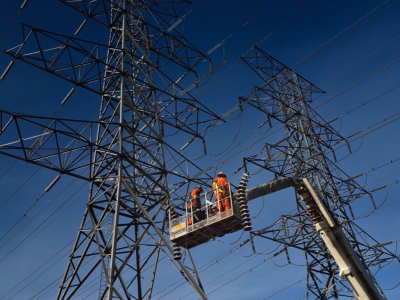
It’s not every day that the main power utility in Canada’s largest province sells shares to the public, so when Hydro One did so last year, investors got a little giddy. The offering on Nov. 8, 2015, took in $5 billion, far more than the $1.6 billion expected. Since then, the stock has climbed by 22.5%, and that doesn’t include its 3.2% yield. It’s been a great 12 months for shareholders. But with Hydro One now trading at a premium to its peers, is it still a good buy?
.cbR{box-sizing:border-box;display:block;width:100%;margin:1em 0;border:1px solid #bbb;padding:.5em}@media (min-width:480px){.cbR{width:250px;margin:0 0 1em 1em;float:right}}Here’s how to protect your portfolio if interest rates go negative
This former Crown corporation has a near monopoly on electricity transmission in Ontario, and its 30% of the province’s distribution market makes it the largest player in that space. It’s also operating in a benign regulatory environment, says Vijay Viswanathan, a portfolio manager at Mawer Investment Management…
Singapore starts trial of ex-banker linked to 1MDB Fund
– canadianbusiness.com
SINGAPORE – A private banker charged with money laundering and other offences in connection with the indebted Malaysian state fund 1MDB went on trial in Singapore on Monday.
Yeo Jiawei, a former wealth planner at Swiss private bank BSI, is facing 11 charges for allegedly obstructing the course of justice, money laundering, cheating and forgery.
Singapore ordered BSI to close its operations in the city in May due to violations of anti-money laundering requirements, among other problems.
Investigators in Singapore, Switzerland, Hong Kong and the U.S. have been probing allegations that people close to Malaysian Prime Minister Najib Razak stole more than $1 billion from 1MDB, or 1Malaysia Development Bhd.
In February, Singapore authorities said they had “seized a large number of bank accounts” in connection with the probe, which began in mid-2015.
On Monday, Deputy Public Prosecutor Tan Kiat Pheng described Yeo, 33 as “one of the main Singapore-based suspects in this massive money laundering case…
Yeo Jiawei, a former wealth planner at Swiss private bank BSI, is facing 11 charges for allegedly obstructing the course of justice, money laundering, cheating and forgery.
Singapore ordered BSI to close its operations in the city in May due to violations of anti-money laundering requirements, among other problems.
Investigators in Singapore, Switzerland, Hong Kong and the U.S. have been probing allegations that people close to Malaysian Prime Minister Najib Razak stole more than $1 billion from 1MDB, or 1Malaysia Development Bhd.
In February, Singapore authorities said they had “seized a large number of bank accounts” in connection with the probe, which began in mid-2015.
On Monday, Deputy Public Prosecutor Tan Kiat Pheng described Yeo, 33 as “one of the main Singapore-based suspects in this massive money laundering case…
3 investments that ease your tax burden
– moneysense.ca
 (Illustration by Sam Island)
Nobody likes to pay taxes. So you’re probably on the look-out for ways to reduce the tax bite. As it happens, there are a few investments that can ease the tax load when used properly in non-registered accounts. We show how three of them can be put to effective use: Corporate class mutual funds, T-series mutual funds and flow-through shares.
Still, we need to remember “these are all niche investments” and work well only in specific situations, says Jamie Golombek, managing director of tax and estate planning at CIBC Private Wealth Management.
Corporate Class Mutual Funds
Effective at year-end, the federal government plans to end the most prominent tax advantage of corporate class funds—the ability to switch from one fund to another within the same corporate class family without triggering immediate capital gains. But while that has a big impact, the remaining tax advantages can still make corporate class funds worthwhile.
To understand how that remaining advantage works, first realize that mutual funds essentially distribute income they receive back to the investors in those funds (after offsetting some of the potential income with fund expenses), so that income is generally taxed in the hands of investors rather than the fund itself…

