
Manulife cutting 700 jobs, consolidating Canadian operations Jun 21st
Does good financial advice have a shelf life? Jul 10th

Nvidia’s 2025 fourth quarter earnings analysis: revenue up, production up + MORE Feb 27th

Want to Supersize Your Business? Buy Another Aug 3rd
Engadget Podcast: Switch 2 review, Summer Game Fest and WWDC 2025 - Engadget Jun 13th
Investing paralysis
– moneysense.ca
 M A K I N G B A N K
Everyone is guilty of impulse-buying every now and then. That pair of shoes you’ll never wear, a fancy camera you never use or a Darth Vader costume that you used once that then caused you to question your life choices. (Ok, one of those impulse purchase didn’t happen, I’ll leave it to you to guess which one). Regardless, there is no question impulse buying is wasteful, but at least you can contain the damage. With investing, frivolous, spur of the moment purchases can cost a whole lot more. When you’re buying at stock you need to shop with clear purpose and goal in mind.
Remember that time I bought Apple stocks with my practice account? That stock purchase was the fun, experimental antithesis to my smart, advice-backed Couch Potato portfolio. But now it’s just sitting there like the iPod nano I no longer use. If this was my real money, what would I want from it if I held it for the long term? And can it deliver on those expectations? Everyone knows that if you’d bought Apple stocks in the 80’s for instance, you’d have made a huge windfall (more than 30,000% not counting dividends to be exact)…
Why your bond ETF isn’t losing money
– moneysense.ca
 I frequently get asked questions about bonds. One reader named Andrew recently asked me: “I have been investing using your Couch Potato strategy for just over three years now,” he wrote. “However, does it still make sense to invest in bonds when they are continually losing money?”
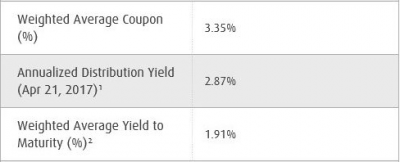
As it happens, bond ETFs have not been “continually losing money” at all. Indeed, over the three years ending March 31, broad-based funds such as the BMO Aggregate Bond Index ETF (ZAG) and the Vanguard Canadian Aggregate Bond Index ETF (VAB) returned close to 4% annually, with positive returns in each calendar year. A $1,000 investment in either ETF would have grown to about $1,120 over that period. So why would an investor think he had lost money?
I don’t blame Andrew for being confused, as this one trips up a lot of investors. The problem lies in the way brokerages display the holdings in your account. Rather than calculating the total return on your investments—which would include both price changes and all interest payments and dividends—your list of holdings reflects only the change in market price…

