
All about Retirement Planning in Canada. Learn the ins and outs and get the latest news.
Latest News

Tax write-offs that Canadians often get wrong Apr 18th
I come across frequent questions from taxpayers about expenses they think they can claim as a tax deduction or credit. Often, they cannot be claimed, or there are strict criteria that apply.
Safety deposit box
Back in the olden days, investors sometimes kept stock certificates in their safety .... More »
What do to with a spousal RRSP at age 71 Jun 15th
Ask MoneySense
My question is in regards to a spousal RRSP that I have set up for my wife years ago. When she turns 71, do we have to turn it into something like a RRIF, which I did for my RRSP (I am older than her) and then withdraw from it annually? Or, could it be directly transferred to her TFSA.... More »
What’s involved with an owner withdrawal of cash from a corporation + MORE Dec 7th
I work as a self-employed IT contractor. I am incorporated. Over the years I have accumulated about $100,000 in my business account, over and above what I need to carry operating expenses. I am about five years out of retirement, maybe less than that if I go for a semi-retired approach. I would like.... More »
Stock news for investors: Cineplex and Aritzia post strong results despite industry headwinds + MORE Oct 11th
Here’s a round-up of news for Canadian investors this week.
Cineplex
Aritzia
Trilogy Metals
Barrick Mining
Cenovus-MEG Energy
Featured RRSP Accounts
featured
EQ Bank
Buil.... More »
UFC Notebook: Cormier undecided on retirement after loss - TSN Aug 18th
UFC Notebook: Cormier undecided on retirement after loss TSNLeading up to UFC 231, Daniel Cormier acknowledged that facing Stipe Miocic in a rematch for the UFC heavyweight title was a high risk proposition. With the ...View full coverage on Google News.... More »
When RRSP withdrawals for debt repayment is a bad idea
– moneysense.ca

Q: My wife and I currently have a mortgage of $297,000. On top of that we’ve had to dip into our line of credit (unsecured) to the tune of $44,000. I’m trying to determine whether or not it makes sense to withdraw the $44,000 – plus the withholding tax – from my RRSP.
I currently participate in a DB pension and am in a fairly safe/steady employment position. My RRSP is currently sitting at $150,000 and my salary is approximately $115,000.
Re-financing is going to cost quite a bit and wouldn’t necessarily cover the full debt load.
—Tom
A: I don’t want to be one of those judgemental financial experts who tells you that if you have had to dip into your line of credit to the tune of $44,000, you’re spending too much money. Life happens and sometimes there are expenses that go beyond our budget. Obviously if you guys are continuing to run up your line of credit balance though, that’s not sustainable forever, Tom. But you know that.
With regards to your RRSP withdrawal plan, I think it’s important to clarify that the withholding tax is not the final tax on your withdrawal…
10 ways to save more and pay down your debt
– moneysense.ca
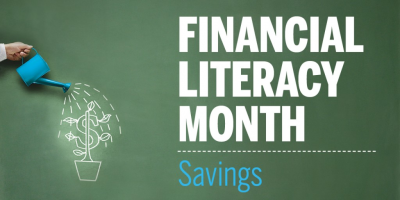
1. Set a goal
If you’re serious about saving you need to set a goal so you know what you’re saving for. Whether it’s a trip to Japan you hope to take in a few months or saving for retirement, having a very specific goal will help you stay motivated and on track.
2. Track your dollars
The best way to get on track to saving is to spend less than you earn. Tracking your spending—either through a daily journal or an app—can help you do this.
3. Trim spending
Consider trimming expenses. Once you know how much you’re spending monthly, you can decide what areas you’d like to cut back on so you can meet your savings goal.
4. Kill two birds with one stone
For those with low to moderate incomes, paying off debt—including the mortgage—is the best tax-planning you can do. That’s because you don’t pay taxes on the capital gains on your home and there’s no tax on the return you get for getting out of debt.
5. Automate it!
Set up an automatic transfer of funds to a savings to a savings account (or TFSA or RRSP) so that a set amount—say 10% of your gross monthly income that comes off your paycheque automatically…
The federal government should allow parents who want to help their offspring with the purchase of a home to tap into their retirement savings, says The Canadian Real Estate Association, which also wants the maximum withdrawal limit bumped up by $10,000.
The best time to start CPP —if you don’t know when you will die
– moneysense.ca
The last time we looked at the question of when to commence receipt of the Canada Pension Plan (CPP), we made the case for delaying as long as possible – ideally until 70 – while drawing down RRSP assets in your 60s when you’re in a lower tax bracket. (The piece is here.)
That’s a valid strategy for many but it does make a few assumptions, including that you have a large enough RRSP to withdraw from, have good alternative sources of income in the meantime, and that you’re not confident that the markets will deliver good returns if you were in a position to invest your CPP were it taken earlier.
But the biggest assumption is that you’ll live to enjoy those higher payouts once they commence. If your life expectancy is for some reason lower than average, all bets are off and you may be better off taking CPP between 60 and 65.
Jason Heath, of Toronto-based fee-only planners Objective Financial Partners, leans to advising clients to defer CPP/OAS to 70 for those whose life expectancy is average or longer than average…
That’s a valid strategy for many but it does make a few assumptions, including that you have a large enough RRSP to withdraw from, have good alternative sources of income in the meantime, and that you’re not confident that the markets will deliver good returns if you were in a position to invest your CPP were it taken earlier.
But the biggest assumption is that you’ll live to enjoy those higher payouts once they commence. If your life expectancy is for some reason lower than average, all bets are off and you may be better off taking CPP between 60 and 65.
Jason Heath, of Toronto-based fee-only planners Objective Financial Partners, leans to advising clients to defer CPP/OAS to 70 for those whose life expectancy is average or longer than average…
CREA wants parents to assist children with home purchase with their RRSPs
– canadianbusiness.com
VANCOUVER _ The federal government should allow parents who want to help their offspring with the purchase of a home to tap into their retirement savings, says The Canadian Real Estate Association, which also wants the maximum withdrawal limit bumped up by $10,000.
Extending the Home Buyers’ Plan to allow for “intergenerational RRSP loans” would ease the financial burden that many young Canadians face when trying to purchase a home for the first time, wrote CREA in its 2018 pre-budget submission to the House of Commons Standing Committee on Finance.
Under the current plan, first-time buyers can withdraw up to $25,000 from their RRSPs to contribute to the purchase of a home. The tax-free loan must generally be repaid within 15 years.
Allowing parents access to the plan would help many first-time buyers enter the market and ease their financial obligations, the association said.
Recent and rapid home price increases have resulted in many parents already gifting down payment money to children…
Extending the Home Buyers’ Plan to allow for “intergenerational RRSP loans” would ease the financial burden that many young Canadians face when trying to purchase a home for the first time, wrote CREA in its 2018 pre-budget submission to the House of Commons Standing Committee on Finance.
Under the current plan, first-time buyers can withdraw up to $25,000 from their RRSPs to contribute to the purchase of a home. The tax-free loan must generally be repaid within 15 years.
Allowing parents access to the plan would help many first-time buyers enter the market and ease their financial obligations, the association said.
Recent and rapid home price increases have resulted in many parents already gifting down payment money to children…

