
Personal Savings getting you down? There are always smart ways to increase your savings.
Latest News


The Best No-Fee Rewards Credit Cards For 2019 Nov 9th
Credit card rewards come in many forms. From points to statement credits to cold-hard cash, a good rewards card maximizes on your everyday purchases and ultimately helps you save.
Reward credit cards generally offer different amounts of rebates for particular spending categories (gas, grocery, phar.... More »
Best FHSAs in Canada: Where to get the new first home savings account Jun 5th
First home savings account (FHSA) highlights
The FHSA is a type of registered account that allows you to contribute up to $8,000 annually, up to a lifetime limit of $40,000, to save for the purchase of your first home.FHSAs became available on April 1, 2023. However, availability is currently limite.... More »
The best RRSP investments 2022 + MORE Oct 31st
A registered retirement savings plan (RRSP) is an investment that is registered with the Canadian federal government. RRSPs are often described as being “tax-advantaged.” That means you don’t pay income tax on the amount you are contributing to an RRSP, in the year you earn that contribution. .... More »
Best high-interest savings accounts in Canada 2021 + MORE Jan 2nd
Regular savings accounts offer very low interest rates, so if you want to earn on your deposits (rather than simply use your account as a temporary “holding tank” for funds you’ll soon be using for purchases, or directing to longer-term saving and investing vehicles), a high-interest savings a.... More »
The best high-interest savings accounts in Canada for 2024 May 21st
Save
The best high-interest savings accounts in Canada for 2024
Here are the accounts offering the highest interest rates and lowest fees.
Compare now
Tap the button for more details.
W.... More »
Forgot to File Your Taxes Last Year? What You Need to Know
– ratesupermarket.ca

If filing your taxes over the next few weeks isn’t on your calendar, it certainly should be. Tempting as it may be, this is one area where procrastinating can only make things worse.
Unlike sales tax, which is a pay-at-the-pump proposition, Canada’s income tax system is based on self-assessment. Make your money, plan your affairs as best you can and then, pay up.
Not everybody does though. So before the April 30 deadline sneaks up and passes you, here are a few things to keep in mind.
Better to file late than never
Simply forgot to file last year?
Some people may neglect to file one year and then freeze when it comes to the next year’s tax return because of the old unfiled return.
This type of procrastination hurts since the Canada Revenue Agency will monitor your financial behaviour over time, using identifiers like your SIN and your date of birth to access data from your bank accounts or credit card transactions.
At this point, it’s best to contact the CRA to find out any penalties you may have incurred, as well as the best way to file and pay off your outstanding balance immediately…
Should I contribute to my TFSA when I’m 68?
– moneysense.ca
 iStock
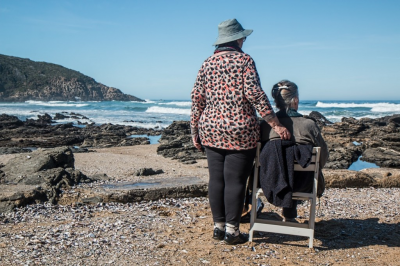
Q. I am 68 years old and already retired. Is there any point in contributing to a TFSA?
– Michelle
A. Any point? Why yes. There are lots and lots of points. I’ll make a few of them here.
The Tax-Free Savings Account is a great vehicle to reduce your taxes whatever your age. You’re already retired, so you’re not saving for that phase of your life. But you may have assets that could benefit from the tax shelter that the TFSA provides.
Money that you withdraw from an RRSP or a RRIF is taxed as income. But TFSA contributions are made with after-tax income, so you don’t pay a second time when you pull the money out. This means that whatever you draw from the TFSA will not impact “income-tested” benefits like Old Age Security or the Guaranteed Income Supplement.
Related: Should we tap the RRSP and feed the TFSA?
Remember, too, that you can’t contribute to an RRSP after age 71 and you’ll have to start withdrawing money from your RRIF, according to the amounts the government mandates…
Open a savings account for your toddler
– moneysense.ca
OTTAWA — Omar Abouzaher remembers going to the bank with his daughter so she could make her first deposit into an account that was opened for her when she was just a toddler.
The regional vice-president for the Bank of Montreal’s daughter was four when they took her piggy bank to deposit the coins.
“She’s a banker at heart,” he said.
While RESP accounts can help parents save for a child’s education, opening a savings account for a child can be the first step in teaching basic financial literacy, Abouzaher said.
“I believe sometimes we wait too long until the kids are a bit older and try to cram all this financial information and throw it at them,” he said.
Abouzaher recommends starting with teaching what it means to save and then build on that foundation.
“The older they grow, they’ll understand as well the other components or the other pieces that are maybe a little bit more complex when it comes to understanding debt, understanding what it takes to pay tuition, what it takes to manage your credit,” he said…
The regional vice-president for the Bank of Montreal’s daughter was four when they took her piggy bank to deposit the coins.
“She’s a banker at heart,” he said.
While RESP accounts can help parents save for a child’s education, opening a savings account for a child can be the first step in teaching basic financial literacy, Abouzaher said.
“I believe sometimes we wait too long until the kids are a bit older and try to cram all this financial information and throw it at them,” he said.
Abouzaher recommends starting with teaching what it means to save and then build on that foundation.
“The older they grow, they’ll understand as well the other components or the other pieces that are maybe a little bit more complex when it comes to understanding debt, understanding what it takes to pay tuition, what it takes to manage your credit,” he said…
When to watch out for OAS clawbacks
– moneysense.ca
 Beware of the clawback!(Shutterstock)
Q: I have been trying to find out how much extra income a person can earn without having to report the income while drawing OAS and CPP.
I have tried looking this up online, but every site I have been to wants to charge me just to get the answer or does not answer my question and ends up talking about other things.
I just need to know the limit they are allowed to earn before they need to report it.
—Marcella
A: By default, Marcella, you should assume that most income sources are taxable and need to be reported on your tax return. There are a few exceptions, like GST/HST credits, Canada child benefits, lottery winnings, gifts, inheritances, post-secondary scholarships for full-time students, and Tax Free Savings Account (TFSA) withdrawals.
Ask a Planner: Leave your question for Jason Heath »
There are also amounts that may end up being tax-free, like if your income is low, or if you have lots of tax credits, or on the sale of certain types of assets, like a business or farm…
Canadian Household Debt Hits Record High – $1.8-Trillion Owed
– ratesupermarket.ca

According to a new Equifax report, Canadian consumer debt has now climbed to over $1.8-trillion.
$1,821,000,000,000 – That’s how much collective household debt Canadians had in the fourth quarter of 2017 according to a recent study done by Equifax, which is up from the $1.797 trillion reported in the previous quarter.
The report attributes the rising debt to an increase in the various types of loans Canadians are taking out, including mortgages (6.2 per cent), auto loans (6.5 per cent), and installment loans (10.3 per cent). While it may sound like a lot, Regina Malina, a senior director of decision insights at Equifax Canada, believes things may not be so bad.
“Despite the high debt, mortgage payments are generally on time, which could be attributed to low unemployment numbers and mortgage and auto finance interest rates which are still at historically low and reasonable levels,” said Malina in a statement released Monday.
As it turns out, 46 per cent of Canadians reduced the amount they owed last year, 37 per cent that added more debt to their load, and 16 per cent of Canadians maintained the same level of debt…

