
How to go about securing the best savings strategy in Canada.
Latest News
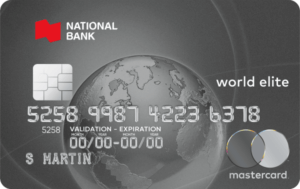


How to use your credit card responsibly Jun 4th
Credit cards are a part of everyday life. They’re a convenient and safe way to pay for your purchases, and they often come with perks and benefits. Plus, when you use a credit card responsibly, you can build up your credit score, which can help you access loans, mortgages or other types of creditâ.... More »
The best TFSAs in Canada for 2026 + MORE Feb 4th
Featured TFSA Accounts
featured
EQ Bank TFSA Savings Account
Earn 1.50% tax-free on your cash savings.
Go to site
featured
.... More »
A tax guide for Canadians with disabilities + MORE May 6th
It is the understatement of the century to say that being disabled is expensive. Many advocates refer to the added financial burden as the “disability tax”—the extra, unavoidable costs of living with a disability. In Canada, where about 27% of people identify as disabled according to Statistic.... More »
When to consider extra RRIF withdrawals Apr 8th
I am in my 91st year and for my age, in reasonably good health. I drew down a significant extra sum in 2025 from my RRIF. Fortunately, due to some good earlier decisions, my RRIF remains with a very strong market value. I use this drawdown for two purposes: to reinvest in my non-registered accounts.... More »
Video: How to close a bank account + MORE Sep 12th
Pretty much every Canadian has a bank account. So it makes sense to ensure that you have the best savings account for you (and chequing too) by shopping around. So if you’ve decided to move on from your current bank, you will want to close your old account and ensure that nothing gets lost in the .... More »
RESP advice for Canadian citizens living in the U.S.
– moneysense.ca
Q. I opened a RESP account while I was living in Canada, as a Canadian citizen. A few years back, we moved to the U.S., where my kids are going to college and university. I still have an active RESP account and make regular monthly contributions.
We file our tax returns in the U.S. only, since we declared ourselves as non-resident Canadian citizens in 2014.
Please let me know if we are still entitled to receive the Canadian government’s grant on RESP contributions, and what is the procedure to withdraw the funds.
–Sohail
A. When you become a non-resident of Canada, you can generally continue to maintain Canadian registered investment accounts like a Registered Education Savings Plan (RESP). You may not be able to buy new mutual funds as a non-resident, but can continue to hold existing mutual funds, sell those mutual funds, or buy other investments, like stocks, bonds and exchange-traded funds (ETFs).
There are a couple issues to be aware of in your case, Sohail. A U.S. taxpayer, whether a U…
The GIC Laddering Strategy: Reach for Returns with Safety
– ratesupermarket.ca

When you save for retirement through investing, you have two main goals: to grow your money but also to protect what you put in from being wiped out.
So, for most people, it makes sense to put a portion of their money into fixed-income products that keep their principal safe and provide a steady stream of income, usually through interest.
One type of fixed-income product is a Guaranteed Investment Certificate (GIC).
One downside is that regular GICs carry a penalty if the owner wants to “cash” them before the date they reach maturity. A strategy to consider is to “ladder” several GICs.
What is a GIC?
A GIC is an investment that has a set term, and you get repaid with interest for your trouble while protecting your principal (as long as the institution doesn’t default and is a member of the Canada Deposit Insurance Corporation).
You can get GICs with terms ranging from one month up to 10 years. Usually, the longer the term, the higher the interest rate.
A GIC can be held in several types of savings plans, such as registered accounts like an RRSP or TFSA…
As social bubbles, provinces and countries slowly open up again, many people are looking to salvage their travel plans for this summer while others think about 2021. Admittedly, there’s still a lot of uncertainty in the world, but that isn’t preventing some providers from tempting lockdown-weary Canadians with discount deals on travel and accommodations.
Locking in savings is usually a win for travellers, but is it worth buying now when there’s currently no vaccine for COVID-19 and, in some cases, no guarantee you’ll be able to travel safely? There’s no right or wrong answer, but if you do your due diligence, you may find that booking now can work to your advantage. Here’s what you need to know:
Air travel may or may not be more expensive
Some people think that flying will be more expensive in the future. The theory is that since there will be less demand and airlines will need to follow new health regulations, which may include an empty middle seat, prices will go up.
This is entirely possible, but I did a quick search of various destinations, and I have not noticed prices that I would consider higher than average…

