
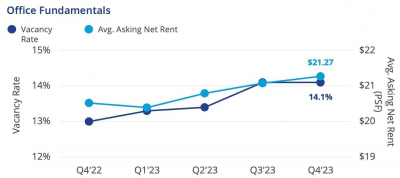
The State of Commercial Real Estate in Canada Jan 22nd

The best high-interest savings accounts in Canada for 2025 + MORE Jun 9th

Top 5 questions about family RESPs + MORE May 13th
The best high-interest savings accounts in Canada for 2025 + MORE Sep 29th
Cracking the case of the global black pepper shortage — should you stock up on the spice? Jun 29th
What to expect for GICs in 2024
– moneysense.ca

In late 2020, major banks were offering 5-year guaranteed investment certificates (GICs) with rates of less than 1%. Now, just three years later, bank GIC rates for 5-year terms are over 4%. Some credit unions and trust companies are offering rates over 6% for short-term GICs, though 4- and 5-year rates are just under 6%.
It is uncommon to see long-term rates lower than short-term rates. This is a situation called an inverted yield curve. It signals expectations that interest rates will fall in the future. It can also forecast a recession, which tends to result in lower interest rates to stimulate a weakening economy.
Bank of Canada interest rate forecast for 2024
Most interest rate forecasts see rates declining in Canada in 2024. RBC Economics predicts the Bank of Canada’s overnight rate will drop by 1% by the fourth quarter of 2024. Scotiabank agrees with RBC, and TD is forecasting a 0.75% decline by the end of 2024.
Forecasts are not always accurate, but the consensus seems to be that rates could be lower next year…
What types of tax-free savings accounts (TFSAs) exist?
– moneysense.ca
There’s a specified limit to how much money you can put inside a TFSA. For 2023, the annual TFSA contribution limit is $6,500, and for 2024, it will be $7,000. As of Jan. 1, 2024, there is a lifetime maximum of $95,000 for those who were 18 or older as of 2009. The good part is that any unused contribution space and any amount that you withdraw from your TFSA becomes available to you as contribution room in the next calendar year…

