

How much income do you need to buy a home in Canada? A look at home affordability in April 2025 + MORE May 27th

3 financial goals to kick-start the new year Jan 16th
Iran conflict latest: IEA warns of "very severe" oil crisis sparked by war - Investing.com + MORE Mar 23rd

The best RRSPs in Canada for 2024 + MORE Nov 13th
I hate working: What can I do about it? + MORE Jan 29th
Top 25 timeless personal finance books
– moneysense.ca
 Knowledge is power—and it can be highly rewarding, too. At MoneySense, we love a great personal finance book, so as part of our special 25th anniversary series, we asked some of Canada’s leading personal finance experts and influencers for their top picks. They replied with a robust reading list, everything from a comprehensive Canadian financial planning bible to a Singaporean graphic novel on how to hack capitalism. MoneySense editors rounded out the list with a few excellent titles we believe will stand the test of time and add value to your bookshelf—and perhaps your net worth.
To help you find your next read, we’ve grouped the books under seven themes:
Invest for success with low-cost ETFs and index funds
Get started in the stock market—or hone your skills
Master the basics of personal finance—at any age
Find the courage to chase your dreams
Explore the psychology of spending and saving
Achieve FIRE: Financial Independence, Retire Early
Read what your advisor is reading
Invest for success with low-cost ETFs and index funds
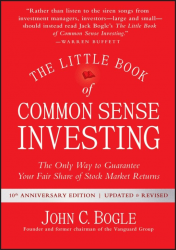
The 10th anniversary edition was released in 2017…
Making sense of the markets this week: August 18, 2024
– moneysense.ca
 Kyle Prevost, creator of 4 Steps to a Worry-Free Retirement, Canada’s DIY retirement planning course, shares financial headlines and offers context for Canadian investors.
The U.S. is set to cut rates—finally
After much speculation about when the U.S. will finally begin cutting its interest rates, the CME FedWatch tool reports a 100% chance that the U.S. Federal Reserve will cut its rates in September. Market watchers are pretty confident, with a 36% chance that the U.S. Fed will go right to a 0.50% cut instead of nudging the rate down. And looking ahead, the futures market predicts a 100% chance of 0.75% in rate cuts by December this year, with a 32% chance of a 1.25% rate decrease. The forecasts became stronger this week as the annualized inflation rate in the U.S. slowed to 2.9%, its lowest rate since March 2021. There are a lot of percentages here, but the gist is people are expecting big interest rate cuts.
Those probabilities should take some of the currency pressure off of the Bank of Canada (BoC) when it makes its next interest rate decision on September 4…
RESPs 101: The RESP withdrawal rules
– moneysense.ca
How to pay for school and have a life—a guide for students and parents
read now
The perks of having an RESP
The RESP was first introduced in 1974 as a tax-deferred savings vehicle for a child’s post-secondary education. While it’s typical for parents to open an RESP for their children, anyone can open one for any child, and anyone can contribute to the account. When it comes to RESPs, three key terms to know are “the subscriber” (typically the parents or a guardian), “the beneficiary” (the child), and “the provider” or “promoter,” the account-holding financial institution or professional…

