
What happens to an RESP when a family moves to the U.S.? + MORE May 8th
The U.S. wants Venezuelan oil. Does that undercut Canada's leverage in trade talks? - CBC Jan 10th
Renting out your home can bring cash—and complications May 20th
Are you really ready to retire? Why many Canadians are struggling with retirement planning Mar 24th

Stock news: Dividend hikes, earnings results, and what moved Canadian stocks this week + MORE Feb 6th
Stock news for investors: Iamgold expands, Teck advances merger talks, and Wealthsimple hits $100B milestone
– moneysense.ca

Here’s a round-up of news for Canadian investors this week.
Iamgold
Teck Resources
Mullen Group
Wealthsimple
West Fraser Timber
Featured RRSP Accounts
featured
EQ Bank
Build your retirement savings with 1.50% interest, tax-deferred contributions and zero fees.
go to site
featured
Registered GIC rate
Earn a guaranteed 3.00% in your RRSP when you lock in for 1 year.
go to site
Best RRSP rates
See our ranking of the best RRSP accounts and rates available in Canada.
read now
Why trust us
MoneySense is an award-winning magazine, helping Canadians navigate money matters since 1999…
Who you gonna trust: Barry Ritholtz or Jim Cramer?
– moneysense.ca
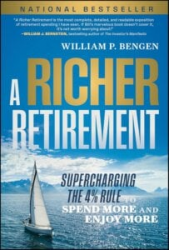 Because I get a lot of free review copies of financial books, it’s rare that I actually order one from Amazon, let alone three. But I did just that recently when I was curious about three influential authors who released new financial books within weeks of each other.
The first can be regarded by retirees and those on the cusp of retirement as a must read: William Bengen’s A Richer Retirement, the long-awaited update of his classic book on the much-cited 4% Rule: Conserving Client Portfolios During Retirement. First published in 2006, that book was really aimed at financial advisors but became popular with the general investing public after it got extensive press exposure over the years.
The 4% Rule—which is actually closer to a 4.7% Rule depending how you interpret it—refers to the “safe” percentage of a portfolio that retirees can withdraw each year without running out of money in 30 years, net of inflation. Bengen’s term for this is “SAFEMAX…
Covered call ETFs have high yields but come with a trade-off
– moneysense.ca
Prerna Mathews, vice-president of ETF product strategy at Mackenzie Investments, said covered call ETFs typically invest in dividend-paying equities and further enhance income by writing call options on those holdings. A call option provides the right to purchase a security at a set price. She said covered call ETFs essentially earn option premiums in exchange for “giving up” some of the stock’s future gains beyond the set option price.
She noted covered call ETFs have flourished in the market recently, fuelled by investor enthusiasm for their higher yields. Mathews said these products can be attractive to those who prioritize income over growth and help manage market volatility…

