
The “Big Five” Canadian banks offer investment funds and include Royal Bank of Canada, Toronto Dominion Bank (TD Canada Trust), Bank of Nova Scotia, Bank of Montreal and Canadian Imperial Bank of Commerce (CIBC). Let’s explore the best place for you to invest.
Latest News

5.5 year - 2.70% + MORE Aug 14th
This GIC rate is offered by Outlook Financial and was updated on 2013-03-14. Click on the link above to get more details or apply online..... More »
AbbVie tops 2Q net income expectations, misses revenue forecasts + MORE Jul 24th
NORTH CHICAGO, Ill. – AbbVie Inc. (ABBV) on Friday reported second-quarter profit of $1.37 billion.
The North Chicago, Illinois-based company said it had profit of 83 cents per share. Earnings, adjusted for non-recurring costs and amortization costs, came to $1.08 per share.
The results exceed.... More »
Statement from the Board of Directors, Canada Pension Plan Investment Board - Canada NewsWire Feb 26th
Statement from the Board of Directors, Canada Pension Plan Investment Board Canada NewsWireCPP Investments CEO Mark Machin resigns after travelling to UAE for COVID-19 vaccine Yahoo Canada FinanceCPPIB chief Mark Machin resigns after it was revealed he got COVID shot in United .... More »
Nokia says quarterly profit rose but cautions on outlook + MORE Feb 11th
HELSINKI – Nokia saw fourth quarter profit grow more than 50 per cent to 498 million euros ($560 million) on a slight increase in sales, but the telecom networks company cautioned it would face some “market headwinds,” especially in China.
The pared-down Finnish company, which sold.... More »
Westin hotels in Ottawa, Calgary and Edmonton put up for sale + MORE Jan 31st
The trio of Westin Hotels is considered a ‘rare portfolio of assets’ and is expected to fetch between $475-million and $525-million.
.... More »
Trading Closed End Funds’s (CEF), Why And How?
– IntelligentSpeculator.net
 Today, since I did not have a new tech stock pick to open, I decided to do something that I should do more frequently:) Go into the mail bag:) I get most questions through email (from mailing list members) and that is probably the easiest way. You can also contact me through Twitter or on the IntelligentSpeculator Facebook page:) I answer most questions directly but there are some cases where I feel (after confirming it’s ok) that the answer would be better answered on the blog:) Here is a question I recently received:
“I would be very happy if you covered a small portion of your information on “Closed End Funds”. I know your are not crazy about them, but with your expertise you could give a few pointers. I hope one of your pointers is not “stay away from them” Half my investments are closed end funds, and its hard to find people that talk about them. I do have access to CEF connect and a few other websites, but I like to read what other people have to say about them…
Loblaw to buy Shoppers
– moneysense.ca
Loblaw Companies Ltd. has a friendly deal to purchase Shoppers Drug Mart Corp. for $12.4 billion in cash and stock, combining Canada’s largest grocery and pharmacy chains. The proposed sale represents a nearly 30% premium over Shoppers closing share prices Friday. For the very latest, head over to Canadian Business. And for those wondering what will happen to their Optimum points, Shoppers says there are no changes to the loyalty program planned at the moment.
Speaking of loyalty programs, COLLOQUY and Environics Research Group have published a new online tool that promises to reveal the best loyalty program for you based on your spending habits.
A recent HSBC study has found that men are more likely to dip into their retirement savings during tough times than women (27% vs. 23%). One-third would tap other savings/investments while roughly 20% would downsize their home, 17% would sell valuables and 18% would borrow. The study also found only 40% of Canadians are regular savers.
Here’s another interesting stat for you: 22% of Canadians in a romantic relationship polled fora recent TD study said they are not always completely honest with their partner about money…
Does “Smart Beta” Really Beat Cap-Weighting?
– CanadianCouchPotato.com
“Smart beta” has become a buzzword in investing circles, especially among pension funds and other institutional investors. The term may be new, but the idea isn’t: it’s about looking for ways to capture the returns of an asset class with a strategy other than traditional cap-weighting. These alternatives include fundamental indexing, equal-weighted indexes, low-volatility strategies and a few more exotic techniques.
A growing body of evidence has highlighted the inherent flaws in cap-weighted indexes, which are undeniable. By their nature, cap-weighted indexes give the most influence to the largest companies, as well as any that happen to be overvalued. That’s a potential problem because these are companies that are most likely to underperform the broad market over long periods.
A second potential problem with cap-weighted indexes is concentration. This isn’t an issue in huge markets like the US, or in a multi-country index like the MSCI EAFE. But it’s a concern in small countries like Canada (where Nortel once represented about a third of our entire stock market) and in individual sector funds…
Home sales below year-earlier levels in June, prices rise 4.8%
– theglobeandmail.com
Canadian Real Estate Association says year-over-year sales fell 0.6 per cent last month but were 3.3 per cent above May levels
Make the most of sudden windfall
– moneysense.ca
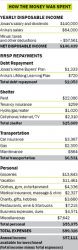 If you ask Jonas and Anika Finn about the happiest day of their lives, they can pinpoint it exactly—April 7, 2008, the day they got a second chance at love. Having each come from failed first marriages, Jonas, 43, and Anika, 41, were thrilled to find each other. The couple first started chatting online through the dating site, Lavalife, and met in person a few weeks later on that fateful day. “I had been online dating for a couple of years and had been disappointed,” Anika says. “This was going to be my last kick at the can. I wanted a long-term relationship with someone who loves travel and adventure as much as I do. Jonas didn’t disappoint.”
Jonas admired the honesty of Anika’s ad. “She sounded down to earth and I was ready to meet someone to share my life,” says Jonas. (We’ve changed names to protect privacy.) Today, however, after three years of marriage, the Finns find themselves at a crucial financial crossroads. The couple expects a windfall of about $125,000 after Jonas sells his 10% ownership stake in the insurance consultancy where he works and they’re not sure what to do with it…

