
All about Canadian Savings. Learn the ins and outs and get the latest news.
Latest News




The scoop: What Canadian investors need to know now + MORE Sep 19th
For those who like surprises, the stock markets have not disappointed in 2020. The S&P 500 surged to new heights despite the economy-clenching COVID-19 pandemic powering around the globe, and individual investors’ participation in trading reached a 10-year high during the first half of this ye.... More »
The Best No-Fee Rewards Credit Cards For 2019 + MORE May 17th
Credit card rewards come in many forms. From points to statement credits to cold-hard cash, a good rewards card maximizes on your everyday purchases and ultimately helps you save.
Reward credit cards generally offer different amounts of rebates for particular spending categories (gas, grocery, phar.... More »
Black Friday: How To Cross The Border For Cheap + MORE Dec 2nd
Black Friday is bedlam.
If you’ve never been, by all means take part – but prepare yourself for a swirling mass of bodies clambering over one another to get to the best deals. According to a BMO poll, 47 per cent of respondents planned to cross the border for Black Friday in 2013. That.... More »
Planning a Trip or Cruise? Best Travel Tips for More Money May 24th
Want to save money on your cruise? Want to know how to save big on your next vacation? If you’re spending cash-only for your cruise, hotel and rental car, you might be missing out. There are lots of travel tips and cash reward perks you can take advantage of to stretch your dollars fur.... More »
The best high-interest savings accounts in Canada for 2025 + MORE Mar 18th
Savings comparison tool
Find the best and most up-to-date savings rates in Canada using the comparison tool below. Plus, use the filters to assess your estimated return based on the size of your balance.
Advertisement
Why trust us
MoneySense is an.... More »
The Great TFSA Race: Enter for your chance to win
– moneysense.ca
 Perhaps the federal government’s greatest gift to those who aspire to financial independence is the TFSA, or Tax Free Savings Account, introduced in 2009. With $25,500 cumulative contribution room rising to $31,000 as of January 2014, TFSAs have now attracted a significant amount of capital. Consider that between them, couples will soon have $62,000 available that will be largely free from the clutches of the tax person.
In the early days, the mere $5,000 that was available initially seemed so insubstantial that many tended to give the vehicle short shrift. Certainly, many baby boomers felt TFSAs were too little and too late for their purposes, although they would look with a certain amount of envy at millennials and young investors with a 40-year investing time horizon ahead of them—indeed, many financial gurus have calculated that merely by maxing out TFSA contributions over such a time frame, that alone would be sufficient to ensure a comfortable retirement: no RRSP or employer pension plan contributions necessary! (We would of course advocate doing all of those things, since saving too much is a far better problem to have than saving too little…
Grow your property value by planting a tree
– moneysense.ca
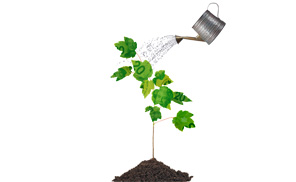 Turns out trees can raise the average home’s value by more than $19,000—and save you $180 or more a year on your energy bills.
Energy savings: Properly located trees can reduce air conditioning needs by 30% ($57 per year), and save 20% or more on heating costs ($120+ per year).
Curb appeal: A property with healthy, mature trees could easily sell in excess of 5% more—$19,350 on average—and that’s a conservative figure.
Not just any tree: The value of a tree can plummet by as much as 50% if the species isn’t desirable for a specific area. Balsam fir, for example, does poorly in urban environments. But slower growing trees, such as oak, usually offer the most value as they provide more shade and stay healthier longer.
Placement counts: Plant needle-bearing trees on the north and west side of your home to block winter winds. For shade in the summer, plant deciduous varieties on the south end of your lot.
Handle with care: Much of a tree’s ability to enhance property value depends on how it’s maintained…
No RESP: A $38,000 Mistake
– ratesupermarket.ca

A new BMO survey finds only one third of Canadian students currently in school have money invested into an RESP for them. Despite knowing the government tops up any contributions parents make for their child’s education, many choose not to take advantage of this registered plan. I call this the $38,000-dollar mistake.
The True Cost Of Learning
Last year, an undergraduate student in Canada paid an average of $5,581 in tuition fees. That means a four-year degree will likely cost that same student $22,234. That’s only taking into account the expense of tuition; factor in the cost of housing, food, books and transportation and students are looking at well over $60,000 to complete their undergraduate degree, according to details in the recent survey by BMO.
Why Parents Don’t Open An RESP
Many parents don’t feel they can afford to pay for their day-to-day family costs and still have money left to save for their child’s education. As well, many are confused as to how the Canada Savings Grant works…
Why you may not need an emergency fund
– moneysense.ca
 Many experts suggest saving six months of living expenses for emergencies like a job loss. But, says Toronto fee-only planner Jason Heath, if you’re in a stable household it makes more sense to use that money elsewhere, and open a home equity line of credit to draw on in the event of a crisis. Consider what happens if you take $20,000 in emergency fund money from your high-interest saving account and instead apply it to your mortgage.
The post Why you may not need an emergency fund appeared first on MoneySense.

