
Personal Savings getting you down? There are always smart ways to increase your savings.
Latest News




The best TFSAs in Canada for 2026 + MORE Feb 4th
Featured TFSA Accounts
featured
EQ Bank TFSA Savings Account
Earn 1.50% tax-free on your cash savings.
Go to site
featured
.... More »
How to build a credit history while renting in Canada + MORE Oct 2nd
Being a young adult may afford you the freedom to live on your own. But for most people, that means renting a space—more than 80% of individuals aged 25 to 29 are renters. What’s more, younger Canadians who live in urban areas make up the largest group of renters, according to a study by RBC.... More »
Invest or pay off debt? + MORE Oct 12th
Q: I may be coming into an inheritance and I want to know if it would be better to pay off all the debt I have or invest the money? I have the following debt:
Mortgage: $60,000, at 2.5%, variable rate
Line of credit: $20,000 at 5.7%, variable rate
Car loan: $24,000 at 3.75%
I am 62 years old and .... More »
What’s more important: your wealth or your legacy? + MORE Nov 12th
Ask MoneySense
My dad is 77 years old and we live together in a house worth $840,000, which we own together. Dad retired at age 70 and commuted his pension so he would have money to leave to me. He has about $580,000 divided between a LIF and a RRIF and his CPP is $17,000 and OAS $9,500. He lives on.... More »
Four smart things to do with your income tax refund + MORE Apr 19th
You might be tempted to spend your refund on a new TV set, but there are financially smarter options, writes Gordon Pape..... More »
How much you really need to retire
– moneysense.ca
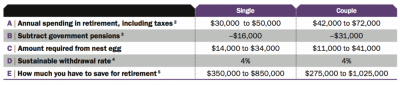 Many advisers say you need retirement cash flow equal to 70% to 80% of your peak pre-retirement income. While that would be nice, most Canadians retire comfortably on far less.
“I get so upset when I hear advisers telling clients they need 70% to 80%,” says Annie Kvick, a certified financial planner and associate with Money Coaches Canada in North Vancouver. “I’ve had clients come to me at 67 and they’re still working because their adviser told them they didn’t have enough. When I looked at how much they really needed, I found they could have retired five years ago.”
In my view, a better rule of thumb is to aim for a replacement ratio of 50% to 60% for couples, and 60% to 70% for singles, assuming you have a paid-for home and your kids are financially independent. Better yet, use actual dollar figures. Typical middle-class Canadian couples can live comfortably on $42,000 to $72,000 a year ($30,000 to $50,000 for singles), again assuming no mortgage or child costs.
If you wonder how you can make those figures work, consider the middle years of your working life when you probably carried a hefty mortgage, supported children, paid for work-related transportation and wardrobe costs, saved for retirement and paid a lot of income tax…
Reverse Mortgages: Why They’re An Expensive Option
– ratesupermarket.ca

Ask advisors whether the money tied up in your home should be counted as an asset that you can tap in retirement and you’ll get a wide variety of opinions.
Most financial planning software programs don’t consider home equity when tallying potential retirement income. In looking at the few that do, it’s clear that there’s no agreed-upon method for calculating its impact on your financial future.
Despite this, home equity remains a tempting target for older investors to tap. Don’t forget that close to three quarters of Canadians over age 60 are homeowners, not renters — a considerably higher rate than for most other age groups.
You can always downsize, of course, and invest the difference. But, other than that, there really aren’t a lot of options when it comes to wringing money out of your home.
Also Read: Learn More About Reverse Mortgages>
Helocs Not Generally Available
A home equity line of credit secured against the value of your property is likely your best bet…
Hey, where’s my $11,000 TFSA limit?: Mayers
– thestar.com
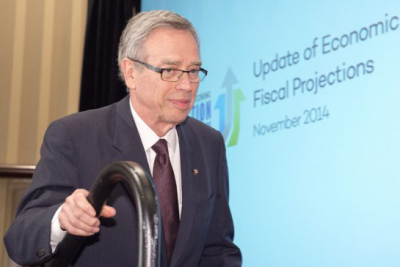 Joe Oliver’s economic update didn’t deliver on a Conservative promise to double the Tax Free Savings Account. Now we’ll have to wait until the spring.
Hey, where’s my $11,000 TFSA limit?: Mayers
– thestar.com
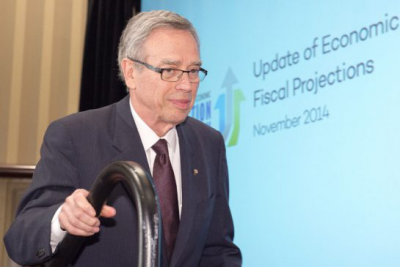 Joe Oliver’s economic update didn’t deliver on a Conservative promise to double the Tax Free Savings Account. Now we’ll have to wait until the spring.
NHL teams with the biggest tax breaks
– moneysense.ca
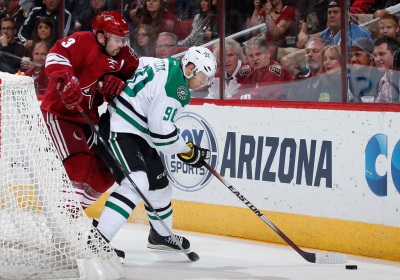 Jason Spezza’s tax savings by moving from Ottawa to Dallas are $394,732 (Christian Petersen/Getty Images)
There’s a lot to think about when considering a move to a new city for work and taxes should be near the top of that list. No other profession better illustrates the affect of regional taxes on take-home pay than professional hockey. A new study by the Canadian Taxpayers Federation (CTF) and Americans for Tax Reform (ATR) found that NHLers sporting Calgary Flames and Edmonton Oilers jerseys have the biggest tax advantage in the league whereas Montreal is the most expensive city to play the game.
Just how much money are players leaving on the ice when they switch teams? Winger PA Parenteau will pay an additional $349,535 in taxes after being traded to the Canadiens, moving from Colorado’s 46 per cent tax rate to Quebec’s 54 per cent rate.
Conversely, former Ottawa Senators centre Jason Spezza can expect to see tax savings of $394,732 after being traded to the Dallas Stars, moving from Ontario’s 49 per cent rate to 41 per cent in Texas…

