
A redesign is coming—and we can’t wait to show you + MORE Apr 20th

Visa Infinite Exclusive Offer: 500 bonus ALL Accor Live Limitless points for stays Fairmont Hotels & other Accor locations + MORE Mar 27th
Buy Air Canada Aeroplan points with up to a 30% discount (Not recommended) Sep 28th
Loyalty Lesson: How to extract more value from Avion Rewards Mar 31st
2 months after first strike against Visa, Walmart mum on follow-up + MORE Aug 7th
How to Open a Joint Chequing Account
– ratesupermarket.ca

Tired of moving cash back and forth with your partner to pay for housing costs, monthly bills, or groceries? Opening a joint chequing account can be a convenient way to manage finances as a team. And joint accounts aren’t just for couples – whether you’ve tied the knot, are common-law cohabitators, or a parent keeping tabs on your child’s cash, you may find the joint approach to be convenient.
But there are some main differences to be aware of. Here are a few ways joint accounts differ from the single variety.
How to Open a Joint Chequing Account
The process may vary slightly between financial institutions, but there’s a basic process for setting up an account as joint holders. Most financial institutions allow you to set up a joint account in person or online. The process is simpler if you and your co-applicant already have separate banking accounts at the financial institution.
Here is a list of information you and your co-applicant may be required to provide when filling out your application:
2 pieces of photo ID, such as a driver’s license or passport
Social Insurance Number (SIN) for tax reporting
Name and address of employer
A major credit card (not a department store credit card)
The Benefits of a Joint Chequing Account
The ability to carry a higher balance often means qualifying for premium account products…
The real problem with all that tax debt Canadians owe
– macleans.ca
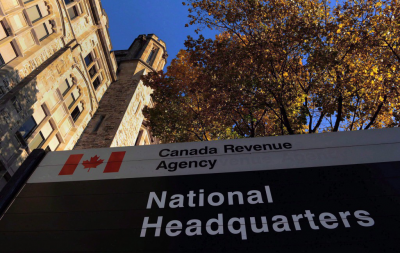 (Sean Kilpatrick/The Canadian Press)
The media was all aflutter yesterday reporting that the Canada Revenue Agency wrote off $4 billion in debt in the last two years. I guess this is newsworthy, only because the House is not sitting and the election has not yet ramped up, so there is not much else to talk about. That $4 billion represents less than two per cent of tax revenue collected in any given year. Anyone in the credit business will tell you that that is a pretty low number.
Why should CRA writing off bad debt not be a surprise? Predominantly because it should come as no surprise that people engage in tax evasion. Some of those people get caught and as a result owe money to CRA for taxes owed, fines, and penalties. And some of those people are such tax rebels that they refuse to pay. And much like all other creditors, it is difficult to collect on all of this debt.
Of course there are other reasons for people to owe CRA and not pay it off. First, people die and do not have an estate remaining to pay off their last tax liability…
Air Miles expands points donation program
– moneysense.ca
As of Friday, the rewards program extended its list of participating charities from five to 86,000 registered charities. Air Miles Cash collectors can browse the list of charities at airmiles.ca/donate, click to get a donation code and spread cash-equivalent miles across any number of charities in increments of at least $10.
“Air Miles’ new charitable program provides an innovative new way for Canadians to make a difference,” Karen Shaver, interim President and CEO at Big Brothers Big Sisters of Canada, said in a press release.
With a charitable receipt, Canadians can claim a 15% tax credit on donations under $200 and 29% on larger gifts. Credits jump to 40% and 54% for first-time donors giving between $200 and $1,000.
Air Miles competitor Aeroplan also allows collections to donate points to 510 active charities in either lump sums or on a regular basis by donating 2% of all miles at time of accumulation…
The real problem with all that tax debt Canadians owe
– macleans.ca
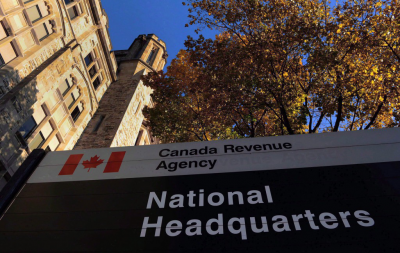 (Sean Kilpatrick/The Canadian Press)
The media was all aflutter yesterday reporting that the Canada Revenue Agency wrote off $4 billion in debt in the last two years. I guess this is newsworthy, only because the House is not sitting and the election has not yet ramped up, so there is not much else to talk about. That $4 billion represents less than two per cent of tax revenue collected in any given year. Anyone in the credit business will tell you that that is a pretty low number.
Why should CRA writing off bad debt not be a surprise? Predominantly because it should come as no surprise that people engage in tax evasion. Some of those people get caught and as a result owe money to CRA for taxes owed, fines, and penalties. And some of those people are such tax rebels that they refuse to pay. And much like all other creditors, it is difficult to collect on all of this debt.
Of course there are other reasons for people to owe CRA and not pay it off. First, people die and do not have an estate remaining to pay off their last tax liability…

