

How does OSAP work? How can I pay it off? We make it make sense Jan 31st

Should I stay or should I go: The real costs of moving out of the city + MORE Oct 15th
Court to rule Thursday in fight over release of real estate sold figures + MORE Aug 22nd

“Get to know and minimize the investing fees you pay”: Michael McCullough, MoneySense contributing editor + MORE Oct 30th

Federal fraud sentencing drags on for former NBA player, UConn star Tate George + MORE Dec 30th
Why this stock market upheaval is so dangerous
– moneysense.ca
What investors should do when stock markets tank »
6 mistakes investors make when markets tank »
Is a pullback really a buying opportunity? »
Q: We’d started to see some signs of recovery in the U.S. economy. Does this stock market turmoil pose a threat to that?
A: First I’d say it’s not a strong recovery. The crisis was 2008, we’re now in 2015—eight years later after the recession and the gap between where we would have been and where we are is huge and not closing…
Banks defy pessimists amid glut of economic uncertainty
– theglobeandmail.com
TD profit increases 7%
– cbc.ca
Canada needs an agency to handle real estate bubbles
– moneysense.ca
@media all and (min-width: 1008px) and (max-width: 1264px) {
.tab-nav li.menu-item a{
padding: 22px 18px;
}
}
One of Bank of Canada Governor Stephen Poloz’s deputies spoke about housing this week. Lawrence Schembri was disarmingly calm while tackling a subject that can easily lead to hysterics. There was no mention of bubbles or irrational exuberance, suggesting the central bank continues to believe that the situation is under control.
There are those who think otherwise. But Schembri’s speech showed that the Bank of Canada remains more concerned about the 18% plunge in Canadian commodity prices this year than the 10% jump in the average national resale price of homes since 2013.
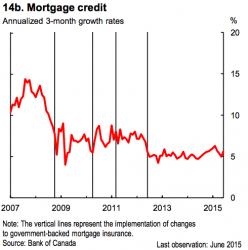
Here’s one reason why:
The red line is the annualized growth rate of household credit since 2007. The dark vertical lines represent the imposition of measures meant to dissuade riskier borrowers from buying homes, such as the narrowing of the amortization period for an insured mortgage to 25 years from 40 years…

