
The “Big Five” Canadian banks offer investment funds and include Royal Bank of Canada, Toronto Dominion Bank (TD Canada Trust), Bank of Nova Scotia, Bank of Montreal and Canadian Imperial Bank of Commerce (CIBC). Let’s explore the best place for you to invest.
Latest News



TSX crosses into bear market territory after COVID-19 declared a pandemic - CTV News Mar 11th
TSX crosses into bear market territory after COVID-19 declared a pandemic CTV NewsCanada Stocks Plunge, Putting Them on Pace to Enter Bear Market Yahoo Canada FinanceGordon Pape: There will be more gut-wrenching volatility going forward. Here's how to adjust your portfolio .... More »
Bill Morneau’s briefing book flags investment in public pensions + MORE Jun 17th
OTTAWA — A briefing book prepared last fall for incoming Finance Minister Bill Morneau warns that Canada’s spending on public pensions is dramatically lower than many other rich countries — even though private-sector pension coverage has deteriorated.
The document, obtained by The Canadia.... More »
Consumer Reports to retest Tesla Model 3 after brake fix + MORE May 22nd
Consumer Reports said Tuesday it will retest brakes on Tesla Inc's new Model 3 sedans after chief executive Elon Musk promised a software update, but the potential hit to sales from the magazine's negative review weighed on Tesla stock..... More »
Should I switch all at once? + MORE Jun 11th
A couch potato investor named Remi sent me the following question:
I want to move away from my stocks and mutual funds in order to build a Couch Potato portfolio with ETFs. What is the best way to do this? Should I sell everything at once and pay all of the taxes this year, or should I sell my asset.... More »
Best robo-advisors in Canada for 2024 Feb 8th
This being 2024, robo-advisors have now been part of Canada’s investment landscape for a decade. They’re not some newfangled fad. They’ve been tested by market cycles as well as competition from even simpler, lower-cost options like all-in-one exchange-traded funds (ETFs). Robos are still incr.... More »
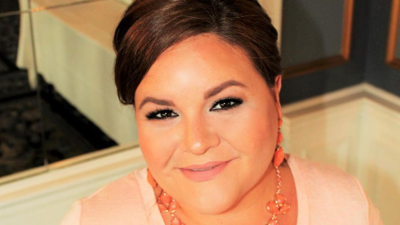 Sandra Arias.
A federal campaign has rolled into its ninth full week for its first time since the 1970s, en route to the longest campaign since the 1870s. A multi-partisan array of candidates have quit or been pushed out because their past remarks or actions spurred micro-tempests for parties that didn’t need larger storms. But last week was the first case where one tapped out mid-race because of burnout.
“Simply put, the financial strain of a historically long election has been just too much to bear for myself and my family,” Sandra Arias wrote on her Facebook page. She was running for the NDP in Saskatchewan’s Battlefords–Lloydminster against Agriculture Minister Gerry Ritz.
Running a serious campaign can be more demanding than most full-time jobs, in energy and in time. Candidates must be willing to hold up their lives to unprecedented scrutiny, both in every word they say during the race but, increasingly, in everything typed or Facebook-liked in the past. (After she withdrew, some upstart Facebook-trawlers posted some of Arias’s social-media comments dating back to 2007…
 (Jenna Marie Wakani/NDP)
A new myth-busting study by Equal Voice, a national, multi-partisan organization dedicated to electing more women to all levels of political office in Canada, provides a fresh way of looking at female representation on the federal stage. In analyzing Canada’s 33 most ethnically diverse ridings, they found that, contrary to stereotypes that visible minority communities are less open to women leaders, representation of female visible minority candidates is far higher than that of the non-visible minority candidate pool. Part of the reason? Political parties cultivate visible minority women in these communities in a way we don’t see them do with so-called “old stock” Canadians, to employ the risible term used by Stephen Harper in a recent leaders’ debate.
The Equal Voice study was undertaken to determine candidate diversity in diverse ridings, says its executive director Nancy Peckford. Researcher Grace Lore, a Ph.D. political science student at the University of British Columbia, crunched data on 33 ridings where more than 50 per cent of the population is visible minority as identified by Andrew Griffith in Multiculturalism in Canada: Evidence and Anecdote—23 ridings in Ontario, eight in B…

