

Two-Thirds of Canadians Saving for Retirement: Census 2016 Sep 28th

Investing U.S. stocks in a TFSA + MORE Nov 30th

It’s possible to be a first-time home buyer twice—here’s how + MORE Jul 9th

How to stake Cardano (ADA) in Canada + MORE Nov 14th

How to save and invest smarter: What Canadians need to know Dec 31st
B.C. Budget 2016: What You Need To Know
– walletpop.ca
Here are some highlights:
— A surplus budget of $264 million and a forecast allowance of $350 million, spending of $47.5 billion and revenues at $48 billion.
— A $100 million B.C. prosperity fund is created out of the 2015-16 budget surplus to be used to help eliminate the debt, invest in health care, education, transportation and family supports.
— Children will be exempt from paying the medical service premiums, a savings of up to $1,298 starting Jan. 1, 2017.
— Investment in new and upgraded infrastructure including $2.9 billion for health-care projects, $3.1 billion for transportation infrastructure, $2.5 billion for post-secondary facilities and $1.7 billion for maintenance and replacement for kindergarten to Grade 12 schools.
— Health care spending is up by 3 per cent to 1.6 billion.
— B.C. Economic Forecast Council projects a provincial GDP growth of 2.7 per cent in 2016 and 2…
Should You Refinance Your Mortgage?
– ratesupermarket.ca

A recent study by NerdWallet using mortgage data by Black Knight Financial Services found that Americans are wasting as much as $13 billion per year because they aren’t refinancing their mortgages.
The study, which identified over 5.2 million homeowners who had good credit and at least 20 per cent equity, showed that these borrowers could save an average of $215 per month if they were to refinance. However, they cautioned that they were being conservative about the potential $13 billion savings since they used a higher refinance rate than was being offered at the time. That means that American homeowners could potentially save even more.
What About Canadian Homeowners?
It’s hardly a stretch to suspect that Canadian homeowners are also paying significantly more in interest a year than they might have to. A 2004 CIBC study showed that Canadians saved $7 billion that year by refinancing their mortgages. With the increase in housing prices and mortgages in the ensuing decade, Canadians with good credit could likely qualify to save a significant amount if they refinance their mortgages…
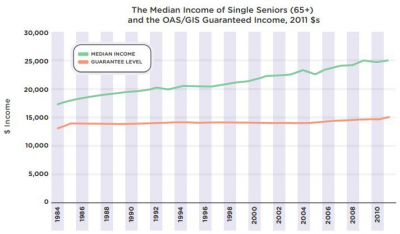 Half of Canadians aged 55 to 64 who don’t have an employer pension have less than $3,000 saved up for retirement.
That’s one of the many staggering numbers in a new report on seniors’ finances from the Broadbent Institute, released Tuesday.
“This new data on retirement savings and gaps in support makes one thing perfectly clear — we have a retirement income crisis on our hands that requires urgent government action now,” said Rick Smith, the institute’s executive director, in a statement.
The study found nearly half (47 per cent) of Canadians aged 55 to 64 don’t have an employer pension plan. Among them, those who earn $50,000 to $100,000 a year have saved up an average of $21,000.
Among those who earn $25,000 to $50,000 and don’t have an employer pension, the average savings is a paltry $250. Those savings are “wholly inadequate,” the report concludes.
Fewer than one in five people over age 55 who don’t have an employer pension have enough to live in retirement for five years or more, the study found…

