
How to go about securing the best Retirement Plan in Canada.
Latest News


What do to with a spousal RRSP at age 71 Jun 15th
Ask MoneySense
My question is in regards to a spousal RRSP that I have set up for my wife years ago. When she turns 71, do we have to turn it into something like a RRIF, which I did for my RRSP (I am older than her) and then withdraw from it annually? Or, could it be directly transferred to her TFSA.... More »
Should you borrow to pay expenses on an investment property? + MORE Nov 18th
Q. I have an investment property that I rent out. Now that I’m retired, I would like to use the income to supplement my retirement income. That would leave me with no money to pay the expenses on the property (mortgage payment, maintenance, utilities, etc.).
I’m wondering two things: One, can I .... More »
CPPIB grows presence in Hong Kong logistics real estate with Goodman partnership + MORE Dec 9th
TORONTO _ The Canada Pension Plan Investment Board is investing $320 million in a partnership with more than a dozen modern logistics properties in Hong Kong.
The Goodman Hong Kong Logistics Partnership, created in 2006, has assets worth about C$4.7 billion including a 50 per cent interest in Goodma.... More »
A simple guide to investing your first $500 + MORE Jan 24th
For many young Canadians, the barrier to entry for investing feels impossibly high. Between student loans, rising rent, and the cost of living, scraping together a starter fund can seem daunting. Yet, as little as $500 to $1,000 is sufficient enough to begin building the habits that create long-ter.... More »
Stock news for investors: Dollarama, Transat and Roots release earnings Jun 13th
Here’s a round-up of news for Canadian investors this week.
Dollarama
Transat
Roots
Featured RRSP Accounts
featured
EQ Bank
Build your retirement savings with 2.00% interest, t.... More »
Sneak preview: Top dividend stocks of 2016
– moneysense.ca
We’re hard at work on this year’s Dividend All-Stars, which grades the largest 100 dividend stocks in Canada. As a preview, I thought you might be interested in a few highlights and some behind the scenes data to whet your appetite for the next issue of the magazine.
The Dividend All-Stars strategy has been running since 2007 under a variety of names. Last year it was called the Retirement 100, but the core approach to finding good dividend stocks hasn’t changed. That’s a good thing, because it has been quite profitable over the years.
Our A-graded stocks gained a total of 148%, on average, since we stared back in 2007 despite the market crash of 2008. While the market recovered from its lows, it climbed just 39% over the same period.
Last year was also a good one for the A-graded stocks, which gained 14% on average. By way of comparison, the market climbed 11% over the same time frame.
This year there are just under 300 dividend paying common stocks on the TSX. While we focus primarily on the 100 largest companies (those with market capitalization in excess of $2,850 million), the following statistics reflect the larger universe of dividend payers…
The Dividend All-Stars strategy has been running since 2007 under a variety of names. Last year it was called the Retirement 100, but the core approach to finding good dividend stocks hasn’t changed. That’s a good thing, because it has been quite profitable over the years.
Our A-graded stocks gained a total of 148%, on average, since we stared back in 2007 despite the market crash of 2008. While the market recovered from its lows, it climbed just 39% over the same period.
Last year was also a good one for the A-graded stocks, which gained 14% on average. By way of comparison, the market climbed 11% over the same time frame.
This year there are just under 300 dividend paying common stocks on the TSX. While we focus primarily on the 100 largest companies (those with market capitalization in excess of $2,850 million), the following statistics reflect the larger universe of dividend payers…
A portfolio built to minimize taxes
– moneysense.ca
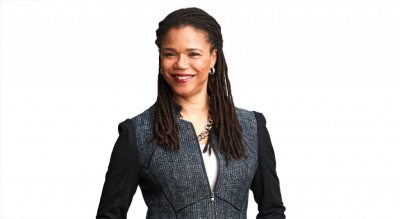 Marie Lewis, 58, Toronto (Photo by Micah Bond)
The Problem
The 58-year-old business analyst from Toronto plans to retire in a couple of years, but needs to invest two recent windfalls. Last month, she transferred the six-figure commuted value of her company pension to a Locked-in Retirement Account (LIRA). She also sold an investment property and has an extra $60,000 to invest. Lewis plans to use the money to augment CPP and OAS payments at age 65. She wants a low-cost, tax-efficient portfolio that’s easy to manage on her own. Lewis has a 60/40 RRSP portfolio of equities and fixed income but is debating taking on more risk with the money. “I’d like an after-tax return of 3% annually so the money lasts.”
BEFORE: 100% cash
The Fix
Calgary-based certified financial analyst Paul Wheaton says Marie needs a simple, well-diversified, balanced portfolio. In fact, just two low-fee, stellar-performing Mawer mutual funds with 60% equities and 40% fixed-income holdings will allow Lewis to meet her goals with little volatility…
Invest or pay off debt?
– moneysense.ca

Q: I may be coming into an inheritance and I want to know if it would be better to pay off all the debt I have or invest the money? I have the following debt:
Mortgage: $60,000, at 2.5%, variable rate
Line of credit: $20,000 at 5.7%, variable rate
Car loan: $24,000 at 3.75%
I am 62 years old and the thought of being debt-free is very appealing, but also want to make the best financial decision for the long run.
— McFeely, Alberta
Nawar Naji, mortgage broker with Mortgage Architects:
The answer to your question really depends on a few factors:
1) When is your retirement date? i.e, how many more income earning years do you have?
2) Do you have any other savings, such as RRSPs, that will be used during your retirement years?
Now, if you have a few working years left and you have a retirement plan, then consider paying off the high interest debt first (line of credit at 5.7%). Paying off a depreciating asset (car loan) is not the best idea. If there are additional funds in the inheritance consider investing them into cash producing (such as dividend stock) to supplement your retirement income…

