
The “Big Five” Canadian banks include Royal Bank of Canada, Toronto Dominion Bank (TD Canada Trust), Bank of Nova Scotia, Bank of Montreal and Canadian Imperial Bank of Commerce (CIBC). Are there other viable options?
Latest News

The best GIC rates in Canada for 2024 + MORE May 21st
Investing
The best GIC rates in Canada for 2024
Find the best GIC rates in Canada. Plus, everything you need to know about how they work.
Find the best rate
Tap "Return to top" to come back here.
.... More »
Looking for a mortgage in B.C.? Don’t limit your options to the big banks Aug 9th
At last, interest rates are coming down again. For Canadians who are in the market for a new home, facing renewal of their mortgage in the foreseeable future, or feeling unsatisfied with their current home loan, this poses two choices: do you pounce now, or stay on the sidelines in the hope that rat.... More »
The best GIC rates in Canada for 2024 Jun 25th
Investing
The best GIC rates in Canada
Find the best GIC rates in Canada. Plus, everything you need to know about how they work.
Compare highest rates
Why trust us
MoneySense is an award-winning.... More »
Canadians to see lower fees and simpler account transfers Nov 6th
Ottawa plans to make it easier for Canadians to move their banking and investment accounts in a bid to increase competition and reduce costs for consumers. The government said as part of Tuesday’s federal budget, it will move to eliminate investment and registered account transfer fees, which .... More »
The best credit cards for airport lounge access in Canada for 2023 + MORE Oct 5th
Spend
The best credit cards for airport lounge access in Canada for 2023
Searching for the perfect credit card? In under 60 seconds, CardFinder narrows down your top matches without impacting your credit score, no SIN required.
Find my perfect card.... More »
Feds, big banks announce fund of up to $1 billion for small, medium businesses
– canadianbusiness.com
Canada’s biggest banks and other financial institutions have launched a fund of up to $1 billion over 10 years to help small- and medium-sized companies access capital to grow their businesses.
The fund, which will be financed by the private sector and aims to fill the gap between angel investors and the public markets, will initially start at $500 million for the first year.
If demand from the businesses is strong and the fund’s performance is good, it could be increased to a total of $1 billion over the next nine years.
RBC’s CEO David McKay said small businesses face challenges accessing the cash they need to expand their operations _ for example to hire new staff, purchase new equipment or facilities, or acquire another company.
“We do have a very strong and vibrant investment community … but it’s sub-scale and it’s fragmented,” McKay said. “So we do have a challenge raising capital for growth in our economy.”
The financial sector has been meeting for about a year to try to solve this problem, he said, and the investment fund is the solution they devised…
The fund, which will be financed by the private sector and aims to fill the gap between angel investors and the public markets, will initially start at $500 million for the first year.
If demand from the businesses is strong and the fund’s performance is good, it could be increased to a total of $1 billion over the next nine years.
RBC’s CEO David McKay said small businesses face challenges accessing the cash they need to expand their operations _ for example to hire new staff, purchase new equipment or facilities, or acquire another company.
“We do have a very strong and vibrant investment community … but it’s sub-scale and it’s fragmented,” McKay said. “So we do have a challenge raising capital for growth in our economy.”
The financial sector has been meeting for about a year to try to solve this problem, he said, and the investment fund is the solution they devised…
Investment fees are eating your returns
– moneysense.ca
 How are your investment fees affecting your returns? A new site called the WealthGame.ca has the answer, but you may not like what you learn.
Larry Bates is the founder of WealthGame.ca, which aims to draw attention to the impact fees have on your portfolio. The 25-year financial services industry veteran was tired of watching people entrust their hard to earned money to the banks and fund companies only to see half of their gains lost to fees. That might sound like hyperbole, but when you run the numbers half might be an understatement.
Consider the following two scenarios.
Scenario 1
Let’s say you have a $100,000 portfolio earning 3% per year. Over 25 years that portfolio would more than double in value to $209,378, but that’s before fees. If the annual fee is 0.5% that portfolio will pay almost $24,000 in fees over that time. Because of the drag fees have on compounding, that gain realized by the investor is a little more than $85,000.
Scenario 2
Now let’s assume the same portfolio and performance, except this time the fee is 2%, which is in line with a typical mutual fund…
Canada’s banks pumped up the housing bubble
– moneysense.ca
Royal Bank of Canada Chief Executive David McKay flattered some Bay Street reporters with rare interviews the other day, having just conducted another clinic in money making by guiding his 148-year-old institution to a record quarterly profit of $3 billion. What better time for a banker to subject herself or himself to scrutiny than amidst a flurry of zeroes?
Judging by the headlines, the scribes were either underwhelmed or uninterested by what McKay had to say about banking. He made news by talking about Toronto real estate. Not so long ago, Royal’s chief executive was fairly sanguine about Canada’s big-city housing bubble. “We feel good about housing,” McKay said in 2015, even as institutions such as the International Monetary Fund and the Bank of Canada warned of trouble. He now sounds uneasy. He flagged for the Financial Post a “somewhat dangerous mix of catalysts” that are pushing prices higher, including the rich international buyers that Vancouver chased away last year with a 15 per cent tax to deflate its housing bubble…
Judging by the headlines, the scribes were either underwhelmed or uninterested by what McKay had to say about banking. He made news by talking about Toronto real estate. Not so long ago, Royal’s chief executive was fairly sanguine about Canada’s big-city housing bubble. “We feel good about housing,” McKay said in 2015, even as institutions such as the International Monetary Fund and the Bank of Canada warned of trouble. He now sounds uneasy. He flagged for the Financial Post a “somewhat dangerous mix of catalysts” that are pushing prices higher, including the rich international buyers that Vancouver chased away last year with a 15 per cent tax to deflate its housing bubble…
How Canada’s big banks pumped up the housing bubble
– macleans.ca
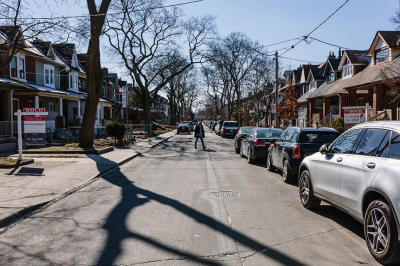 (Mark Sommerfeld/Bloomberg/Getty Images)
Royal Bank of Canada Chief Executive David McKay flattered some Bay Street reporters with rare interviews the other day, having just conducted another clinic in money making by guiding his 148-year-old institution to a record quarterly profit of $3 billion. What better time for a banker to subject herself or himself to scrutiny than amidst a flurry of zeroes?
Judging by the headlines, the scribes were either underwhelmed or uninterested by what McKay had to say about banking. He made news by talking about Toronto real estate. Not so long ago, Royal’s chief executive was fairly sanguine about Canada’s big-city housing bubble. “We feel good about housing,” McKay said in 2015, even as institutions such as the International Monetary Fund and the Bank of Canada warned of trouble. He now sounds uneasy. He flagged for the Financial Post a “somewhat dangerous mix of catalysts” that are pushing prices higher, including the rich international buyers that Vancouver chased away last year with a 15 per cent tax to deflate its housing bubble…

