
The “Big Five” Canadian banks offer investment funds and include Royal Bank of Canada, Toronto Dominion Bank (TD Canada Trust), Bank of Nova Scotia, Bank of Montreal and Canadian Imperial Bank of Commerce (CIBC). Let’s explore the best place for you to invest.
Latest News


Taylor Swift Invests in Discounted Closed End Funds. Should You? May 18th
Taylor Swift is often called one of the savviest businesspeople in the music industry. And, in another demonstration of her money smarts, it was recently revealed that the 33-year-old pop superstar invests in a niche, elite investor-approved type of mutual fund.
Last weekend, Boaz Weinstein.... More »
“Our parents just passed. What do we do about their estate?” + MORE Apr 22nd
Ask MoneySense
My mom passed away a number of years ago and sadly we just lost our dad. My brother and I are wondering about taxes owing, the timing of distributions, and if we should move all of the investments to cash. My brother and I are beneficiaries of the RRIF and TFSA, and the grandkids.... More »
The Gorpcore Fashion Trend Is Giving a Boost to the Outdoor-Apparel Market Nov 7th
The term “gorpcore” was coined in the mid-2010s to describe the type of utilitarian clothing worn by the “good old raisins and peanuts” (hence GORP) crowd—hikers, campers and the like. When celebrities like Hailey Bieber and Frank Ocean started wearing grip-sole shoes and multi-pocket pant.... More »
Jeffrey Rath fought for First Nations. Now former clients are fighting him - Global News Jul 14th
Jeffrey Rath fought for First Nations. Now former clients are fighting him Global NewsCourt freezes accounts of separatist lawyer as First Nation alleges misappropriation CBCJudge freezes $8.5M of Alberta separatist lawyer’s assets amid First Nation trust fight Glo.... More »
This Toronto Floral Shop Is Making the Industry More Sustainable + MORE Oct 12th
Before the pandemic, May Flowers, then a two-year-old floral business, operated like many of its competitors. It focused on wedding and occasion bouquets, and its shop in Toronto’s west end functioned primarily as a depot to fulfill orders.
This past spring, right after Mother’s Day—one of.... More »
Dearly beloved, we are gathered here today to bid a fond farewell to the Canada Savings Bond, the grand dame of Canadian investment vehicles, who met her end at age 71 this week after a lengthy decline.
Reporting the sale of a rental property
– moneysense.ca

Q: I bought a house in 2010 for $600,000 and lived in that house as my principal residence until 2013. Then I bought and moved into another property. I rented out the first house and reported all income on my tax returns. In 2016, I sold the rental property for $900,000. When I file my tax return for 2016, how much capital gains am I supposed to declare and report to the CRA? Is it $900K minus $600K, minus the cost of disposition; or $900K minus whatever the deemed fair market value of the property at the time when I moved out in 2013, minus the cost of disposition?
— Wallace, Toronto
Ayana Forward is a Certified Financial Planner with Ryan Lamontagne Inc. in Ottawa:
You are entitled to a principal residence exemption for the time you lived in the residence—between 2010 and 2013. The formula for calculating your principal residence exemption also includes an extra year so you will have four years of exemption according to the formula.
The formula is as follows:
((# of years home is principal residence + 1)/# of years home is owned) x capital gain
Your capital gain before factoring in the principal residence exemption is your proceeds of disposition ($900,000) minus your purchase price ($600,000), which works out to $300,000…
Calendar: What investors need to know for the week ahead
– theglobeandmail.com
A daily rundown of the economic reports and corporate earnings that will be grabbing the market's attention in the week ahead
The week's most oversold and overbought stocks on the TSX
– theglobeandmail.com
TMX Group is the focus
Should I use my RRSP to pay down debt at retirement?
– moneysense.ca
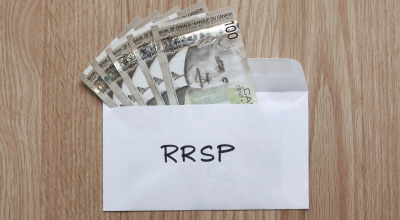
Q: I have a friend who has just retired and is carrying a debt load of $96,000. She wants to eliminate this debt over a fairly short period of time—about 4 years. The debt is a line of credit that she is paying 4% on. She’s a widow and has $423,000 in RRSPs. How would you approach this problem? Would it be okay to withdraw an arbitrary figure of say $15,000 per year from her RRSP until the debt is cleared? As of this year she will be in a lower tax bracket and by withdrawing it will lower her withdrawals when she has to convert to a RRIF in five years. What’s your advice?
– John
A: This is a good question. And this is a situation that many new retirees find themselves in—the carry-over of pre- retirement debt. I will say that four years to eliminate $96,000 of debt is very ambitious—let alone for someone whose income is now lower.
But your question raises more questions. You don’t mention your friend’s retirement income and whether she needs the income that the RRSP/RRIF will provide in the future…

