
The “Big Five” Canadian banks offer investment funds and include Royal Bank of Canada, Toronto Dominion Bank (TD Canada Trust), Bank of Nova Scotia, Bank of Montreal and Canadian Imperial Bank of Commerce (CIBC). Let’s explore the best place for you to invest.
Latest News



Are your financial documents being forged? CBC's Marketplace consumer cheat sheet + MORE Jun 4th
Miss something this week? Here's the consumer news you need to know..... More »
Podcast 21: Larry Swedroe on Investing in Retirement Dec 20th
In my final podcast episode of 2018, I’m joined by Larry Swedroe, who has long been one of my favourite authors on investing and financial planning. Larry and I discuss his latest book, Your Complete Guide to a Successful & Secure Retirement, and we focus on the challenges investors face as th.... More »
Complacency, competition, and Canada’s productivity crisis + MORE Oct 10th
A senior official at the Bank of Canada is calling for more competition in the banking sector to better serve Canadians and the economy. Senior deputy governor Carolyn Rogers laid out her case for a more competitive Canada in a speech at the Canadian Club in Toronto on Thursday morning. Rogers sound.... More »
Making sense of the markets this week: July 26 Jul 24th
Each week, Cut the Crap Investing founder Dale Roberts shares financial headlines and offers context for Canadian investors.
Earnings to drive Tesla stock into orbit?
Tesla has disrupted the entire automotive industry. The global leader in electric vehicles now has greater stock market value than Fo.... More »
Should I fire my advisor and invest by myself? + MORE Feb 11th
(Flickr)
Q. Bruce, I believe I am with a good and honest financial advisor. On her recommendation, I hold low-cost mutual funds, with an MER below 1%. My returns have averaged 6-8% annually over the past few years. But I am wondering if I should consider moving into a self-directed investment.... More »
Dearly beloved, we are gathered here today to bid a fond farewell to the Canada Savings Bond, the grand dame of Canadian investment vehicles, who met her end at age 71 this week after a lengthy decline.
Reporting the sale of a rental property
– moneysense.ca

Q: I bought a house in 2010 for $600,000 and lived in that house as my principal residence until 2013. Then I bought and moved into another property. I rented out the first house and reported all income on my tax returns. In 2016, I sold the rental property for $900,000. When I file my tax return for 2016, how much capital gains am I supposed to declare and report to the CRA? Is it $900K minus $600K, minus the cost of disposition; or $900K minus whatever the deemed fair market value of the property at the time when I moved out in 2013, minus the cost of disposition?
— Wallace, Toronto
Ayana Forward is a Certified Financial Planner with Ryan Lamontagne Inc. in Ottawa:
You are entitled to a principal residence exemption for the time you lived in the residence—between 2010 and 2013. The formula for calculating your principal residence exemption also includes an extra year so you will have four years of exemption according to the formula.
The formula is as follows:
((# of years home is principal residence + 1)/# of years home is owned) x capital gain
Your capital gain before factoring in the principal residence exemption is your proceeds of disposition ($900,000) minus your purchase price ($600,000), which works out to $300,000…
Calendar: What investors need to know for the week ahead
– theglobeandmail.com
A daily rundown of the economic reports and corporate earnings that will be grabbing the market's attention in the week ahead
The week's most oversold and overbought stocks on the TSX
– theglobeandmail.com
TMX Group is the focus
Should I use my RRSP to pay down debt at retirement?
– moneysense.ca
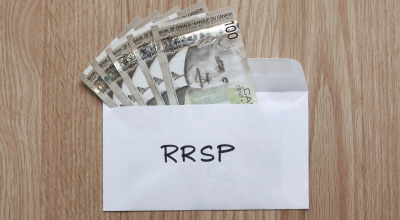
Q: I have a friend who has just retired and is carrying a debt load of $96,000. She wants to eliminate this debt over a fairly short period of time—about 4 years. The debt is a line of credit that she is paying 4% on. She’s a widow and has $423,000 in RRSPs. How would you approach this problem? Would it be okay to withdraw an arbitrary figure of say $15,000 per year from her RRSP until the debt is cleared? As of this year she will be in a lower tax bracket and by withdrawing it will lower her withdrawals when she has to convert to a RRIF in five years. What’s your advice?
– John
A: This is a good question. And this is a situation that many new retirees find themselves in—the carry-over of pre- retirement debt. I will say that four years to eliminate $96,000 of debt is very ambitious—let alone for someone whose income is now lower.
But your question raises more questions. You don’t mention your friend’s retirement income and whether she needs the income that the RRSP/RRIF will provide in the future…

