
TSX getting you down? There are always sound investment alternatives.
Latest News



How to buy Avalanche (AVAX) in Canada + MORE Apr 8th
Cryptocurrencies took another giant step towards legitimacy in the wake of Russia’s invasion of Ukraine. Crypto threw a lifeline to people desperate to cross national borders at a time when the financial system became strained, fiat currencies depreciated swiftly and access to physical money was l.... More »
This 33-year-old analyst makes $100,000 a year including bonus. She paid off her student loans and wants to buy a home. Is now the right time? + MORE Jul 20th
Like many millennials, Anna’s main long-term goal is to save up for a down payment. Now, because of the pandemic, she’s looking to buy sooner than later because of the real estate market..... More »
Are you revenge spending? Don’t make matters worse Aug 2nd
Post-pandemic revenge spending could make your financial health worse. Instead of buying things you don’t really need, taking control of your finances will be an even sweeter revenge, Lesley-Anne Scorgie writes..... More »
Should I overcontribute to my group RRSP and pay the tax penalty? + MORE Oct 23rd
Q. My employer has a fantastic group Registered Retirement Savings Plan (RRSP). They match employee contribution is up to 4%, of earnings, and they also provide a year-end bonus of 5% of earnings if you contribute the full 4%. Needless to say, I have taken advantage of this and been able to.... More »
U.S. blocks MoneyGram sale to China’s Ant Financial on national security concerns + MORE Jan 3rd
Most high-profile Chinese deal to be torpedoed under the administration of U.S. President Donald Trump
.... More »
Bank of Canada raises interest rate to 1 per cent
– macleans.ca
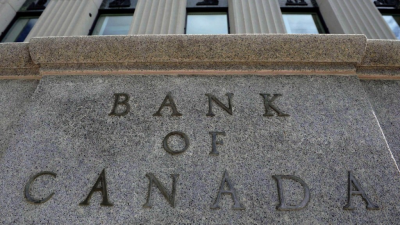 The Bank of Canada marker is pictured in Ottawa on September 6, 2011. (THE CANADIAN PRESS/Sean Kilpatrick)
OTTAWA – The Bank of Canada is once again raising its benchmark interest rate as it sees the economy’s powerful performance pointing to broader, more self-sustaining growth.
The central bank hiked its rate Wednesday by one-quarter point to 1.0 per cent, its second 25-basis-point increase since July.
The move, which will likely be a surprise for some, came less than a week after the latest Statistics Canada numbers showed the economy expanded by an impressive 4.5 per cent in the second quarter.
That followed unexpectedly healthy growth in the first three months of 2017 and easily exceeded the Bank of Canada’s projections.
In a statement Wednesday, the bank said solid employment and wage growth led to strong consumer spending, while the key areas of business investment and exports also improved.
“Recent economic data have been stronger than expected, supporting the bank’s view that growth in Canada is becoming more broadly-based and self-sustaining,” the bank said…
Bank of Canada raises key interest rate to 1.0%
– moneysense.ca
OTTAWA — The Bank of Canada is once again raising its benchmark interest rate as it sees the economy’s powerful performance pointing to broader, more self-sustaining growth.
The central bank hiked its rate Wednesday by one-quarter point to 1.0 per cent, its second 25-basis-point increase since July.
The move, which will likely be a surprise for some, came less than a week after the latest Statistics Canada numbers showed the economy expanded by an impressive 4.5 per cent in the second quarter.
That followed unexpectedly healthy growth in the first three months of 2017 and easily exceeded the Bank of Canada’s projections.
In a statement Wednesday, the bank said solid employment and wage growth led to strong consumer spending, while the key areas of business investment and exports also improved.
“Recent economic data have been stronger than expected, supporting the bank’s view that growth in Canada is becoming more broadly-based and self-sustaining,” the bank said…
The central bank hiked its rate Wednesday by one-quarter point to 1.0 per cent, its second 25-basis-point increase since July.
The move, which will likely be a surprise for some, came less than a week after the latest Statistics Canada numbers showed the economy expanded by an impressive 4.5 per cent in the second quarter.
That followed unexpectedly healthy growth in the first three months of 2017 and easily exceeded the Bank of Canada’s projections.
In a statement Wednesday, the bank said solid employment and wage growth led to strong consumer spending, while the key areas of business investment and exports also improved.
“Recent economic data have been stronger than expected, supporting the bank’s view that growth in Canada is becoming more broadly-based and self-sustaining,” the bank said…
The GTA’s real estate market continued to cool off last month, with less homes selling and less homes being listed when compared with August 2016.
CBC.caToronto home sales soften in August, but fall could see market warm upCBC.caThe GTA's real estate market continued to cool off last month, with less homes selling and less homes being listed when compared with August 2016. The Toronto Real Estate Board's sales numbers for August 2017, released Wednesday morning, show that …Toronto home prices in bear market as sales sink 34.8% in AugustBNNGTA REALTORS® Release August Resale Housing Market FiguresDigital JournalHome sales slide but average price sneaks up 3% in yearThe South Bayview BulldogGlobeNewswire (press release)all 14 news articles »
 Student of the George Brown College Construction Management program. (GEORGE BROWN)
TORONTO – A new survey by the Canadian Payroll Association suggests nearly half of workers are living paycheque to paycheque due to soaring spending and debt levels.
The poll found that 47 per cent of respondents said it would be difficult to meet their financial obligations if their paycheque was delayed by even a single week.
The survey, which polled 4,766 Canadian employees between June 27 and Aug. 5, also found that 35 per cent said they feel overwhelmed by their level of debt.
For the first time in the survey’s nine-year history, more respondents found mortgages on principal residences the most difficult debt to pay down, with 32 per cent of respondents selecting this option compared to 23 per cent who cited credit card debt.
Results from the poll indicate that the primary reason for increased debt is higher overall spending. Of the major reasons for increased spending, 32 per cent of respondents pointed to higher living expenses while 25 per cent mentioned unexpected expenses…

