
Canadian housing mortgage rates are all over the map. Don’t get trapped in an unnecessarily costly mortgage agreement.
Latest News

The real costs of buying a car Mar 31st
The thrill of driving a new car off a dealer’s lot is appealing, but experts warn not to let the new car smell go to your head when it comes to borrowing money to make it happen.
Mark Kalinowski, a credit counsellor and financial educator at the Credit Counselling Society, says you need to know.... More »
How do mortgage brokers get paid? Feb 18th
Q. Is it typical to pay a mortgage broker fee in advance, and before closing?
My broker is saying that I have to pay cash one week before closing, and that he will pay other persons who are involved. I am confused as to why brokers payment in advance and in cash.
–Adil
A. A mortgage broker can obt.... More »
Department of Finance Announces New Qualifying Rate for Insured Stress Test Feb 19th
The federal government announced on Tuesday it will be changing the benchmark qualifying rate used for Canada’s insured mortgage stress test. The change, which will take effect April 6, 2020, means borrowers with insured mortgages (typically those with less than 20% equity) will need to prove they.... More »
Q2 2018 Bank Earnings – Mortgage Morsels Jun 8th
The majority of Canada’s Big Six banks beat expectations for second-quarter earnings, despite slowing real estate activity and tighter lending rules for uninsured mortgages. Both RBC and Scotiabank posted 6% year-over-year increases in their residential mortgage portfolios, although the other .... More »
NBC says rising rates will lead to mortgage market “normalization” + MORE Aug 30th
National Bank of Canada, the smallest of the Big 6 banks, reported third-quarter earnings in-line with market expectations..... More »
Recent mortgage fraud in Toronto.. you can prevent it easily.. Read on.
– canadamortgagenews.ca
In November, Toronto police said a woman used fake ID to get a $300,000 mortgage. The unsuspecting homeowner only discovered a mortgage had been fraudulently registered on their home when … Continue Reading Recent mortgage fraud in Toronto.. you can prevent it easily.. Read on.
Liberals look to put stamp on CMHC with new board focused on social housing
– canadianbusiness.com
OTTAWA _ Canada’s housing agency is getting a makeover as the Liberals look to cement the Canada Mortgage and Housing Corp. as a vehicle to deliver more affordable housing to millions of Canadians.
The federal Liberals have named seven new members to the CMHC board of directors this week as they look to leave their stamp on the organization that has for decades been largely out of the social housing business.
A one-time head of Toronto’s social housing agency will become chairman of the board, two more appointments come from the world of co-operative financial institutions, and another member will be the current chancellor of Simon Fraser University.
All will take their place on the board between now and the end of April, when Derek Ballantyne officially takes over as chairman.
Ballantyne said the makeup of the board means that different parts of the housing sector will have a voice in implementing the national housing strategy that has CMHC as a key player.
The CMHC was at one time a focus of federal efforts in the social housing sector, but saw its role shift as the federal government scaled back its involvement and funding for affordable units…
The federal Liberals have named seven new members to the CMHC board of directors this week as they look to leave their stamp on the organization that has for decades been largely out of the social housing business.
A one-time head of Toronto’s social housing agency will become chairman of the board, two more appointments come from the world of co-operative financial institutions, and another member will be the current chancellor of Simon Fraser University.
All will take their place on the board between now and the end of April, when Derek Ballantyne officially takes over as chairman.
Ballantyne said the makeup of the board means that different parts of the housing sector will have a voice in implementing the national housing strategy that has CMHC as a key player.
The CMHC was at one time a focus of federal efforts in the social housing sector, but saw its role shift as the federal government scaled back its involvement and funding for affordable units…
Do I need to retire my debt, before I retire myself?
– moneysense.ca

Q: So, I’m retiring (single male 65) with $850,000 total in RRSPs and a DCP where I currently work.
I have no debt. I owe $50,000 on a $500,000 home. I pay $730/month. Mortgage is due May 2019. Penalty would be minimal. Should I pay it out in 2018, my first year ‘unemployed’? What are my options?
—Art
A: Retiring debt-free should be a goal for Canadians in their 50s and 60s, but it’s not always possible. And it’s not always bad to retire with debt either. I think yours is a good case study, Art, to illustrate this concept.
With a mortgage that is only 10% of your home value and a net worth of $1.3 million, a $50,000 mortgage doesn’t seem like much, but I understand your dilemma. You’d like to get rid of it and you have this money sitting in your RRSP and your employer defined contribution (DC) pension plan that you could use.
Ask a Planner: Leave your question for Jason Heath »
The problem is, to pay off $50,000 of mortgage debt, you would likely need to take a withdrawal of $65,000 from your investments to be left with $50,000 pre-tax…
New Year, New Mortgage Rules: Why You’ll Soon Have a Harder Time Qualifying for a Mortgage
– ratesupermarket.ca
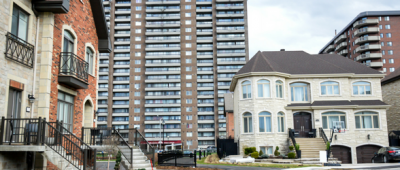
Come January 2018, new Ontario mortgage applicants likely won’t be able to afford the same home they’ve set their eyes on this year, as they will be subject to new and stricter mortgage rules, posed by the Office of the Superintendent of Financial Institutions Canada (OSFI) and published in the Residential Mortgage Underwriting Practices and Procedures document.
The new rules will decrease affordability, as federally regulated financial institutions will be required to put all new applicants through a “stress test.”
The test is being used to determine if applicants can still afford mortgage payments if rates were to ever increase. Under the stress test, applicants must be able to afford the greater of two options: either the conventional mortgage rate (the five-year rate published by the Bank of Canada – which is currently 4.99 per cent), or the contractual mortgage rate plus two percentage points.
Currently, stress tests only apply to those applying for high-ratio mortgages, meaning those with less than a 20 per cent down payment…

