
Personal Savings getting you down? There are always smart ways to increase your savings.
Latest News


The ins and outs of tax and estate planning for a RRIF + MORE Apr 5th
Q: I’m 81, single, female, with around $265,000 in a RRIF (invested in two different financial institutions, both mutual funds). My withdrawal is about $12,000 a year.
How can I minimize tax payable (by my beneficiaries) at death?
— Lydia
A: The tax savings and deferral from contributing t.... More »
How annuities work in Canada + MORE Jul 17th
Annuities are life insurance products that pay a regular income to a purchaser. When you buy an annuity, it’s like buying a pension plan with a lump sum premium paid from your savings. The payments you receive include a return of your original capital and interest income on that capital. It ma.... More »
How to invest as a teenager in Canada + MORE Mar 13th
If you’re starting to save the money you’ve received from birthdays, holidays and part-time jobs, you may be wondering how you can invest your savings. An important life lesson for any young person is the habit of saving—so, investing for some teenagers can be the next step.
In Canada.... More »
Planning to cash in on your home to help fund retirement? Here’s how to do it right + MORE Dec 19th
Elizabeth and Charles have a home worth about $1.3 million. They’re considering selling and downsizing to a smaller unit to bulk up retirement savings. We ask experts for advice on the right move..... More »
Best online brokers in Canada for 2020 Mar 13th
NOTE: These rankings are based on data collected before June 1, 2020 and do not reflect changes which may have taken place since then.
A penny saved, as they say, is a penny earned. That’s certainly the case for Canada’s self-directed investors, who are embracing the ultra-low fees offered by .... More »
How to get the pension income tax credit
– moneysense.ca

Q: I am 65 years old and will have income for the next three years. I want to open a Registered Retirement Income Fund (RRIF) and transfer some money into it to take advantage of the pension credit on a $2,000 withdrawal. While doing so, can I then turn around and use that $2,000 as part of my contribution to my RRSP? In other words, can you withdraw from an RRIF and contribute to your RRSP in the same year?
—Rhonda P.
A: Thank you, Rhonda, for your question. I assume that you do not have a pension—and you didn’t mention the value of your RRSPs. For many, it’s a great strategy to open an RRIF and transfer net $2,000 from your RRSP in order to take advantage of the pension credit. Be sure to transfer a little bit extra to the RRIF so the $2,000 withdrawal does not deplete the RRIF and cause it to close. Your financial institution will advise you on what the minimum amount is to keep the RRIF open. Or you can transfer as a lump sum.
And yes—you can technically withdraw from an RRIF and then contribute to an RRSP—if you have the room and are still under 71 years of age…
How to start investing late in life
– moneysense.ca
 Flickr
Q: I am a late bloomer. I finally have an empty nest, but I had low income employment and always lived with my nose 1 inch under the water. I finally have a good paying job at a bank, minimal debt, and I want to save. I have no idea where to go. My bank opened an investment account and I can finally put money into it this month. Please help.
—Pamela
A: Don’t feel bad about being a late bloomer, Pamela. Life happens, and we do our best. And don’t feel bad about needing help with your investment strategy. They don’t teach you this stuff in school and I frequently meet intelligent, successful people who don’t know the first thing about personal finance or investing.
First things first, you should figure out what kind of investment account the bank opened for you. Given you work at a bank, I’m wondering if this is some sort of account related to your employment? Often employers will offer defined contribution (DC) pension plans or group registered retirement savings plans (RRSPs) with matching contributions made by the company…
RRSP vs TFSA: Where to store your retirement savings
– moneysense.ca
 —In partnership with Scotiabank—
The post RRSP vs TFSA: Where to store your retirement savings appeared first on MoneySense.
A guide to having retirement income for life
– moneysense.ca
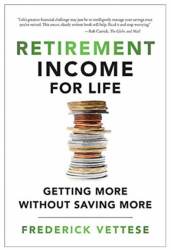 With 1,100 Canadians reaching the official retirement age of 65 every day, there’s a sea of change occurring in the investment world. The move from wealth accumulation is rapidly moving to its opposite, de-accumulation or “decumulation.”
Decumulation is actuary Fred Vettese’s preferred term over “drawdown” and his new book Retirement Income for Life (Milner & Associates, Toronto, 2018) seems destined to become the bible of any new or near retiree challenged with converting large RRSPs and other savings into reliable income.
The only retirees who may not need this book are the fortunate few and increasingly rare members of traditional Defined Benefit (DB) pensions. As Vettese says – the chief actuary for Morneau Shepell Inc. – decumulation is a much trickier act than accumulation. The book covers some ground previously occupied by Moshe Milevsky’s Pensionize Your Nest Egg or Daryl Diamond’s Retirement Income Blueprint but Vettese takes the topic further.
What I like about Vettese’s book is a 5-part strategy involving what he terms “enhancements…

