
N.B. wants to sell its stock of American alcohol removed in anti-Trump protest Oct 11th
Canadian home sales hit four-year August high as fall market heats up + MORE Sep 16th

Why emotional biases may be riskier than market swings + MORE Apr 17th

Individual vs. joint investment accounts: What every couple should know Oct 16th

Stock news for investors: Rogers sees revenue gain, lifted by Blue Jays’ playoff success + MORE Jan 30th
How to build an advanced couch potato portfolio
– moneysense.ca
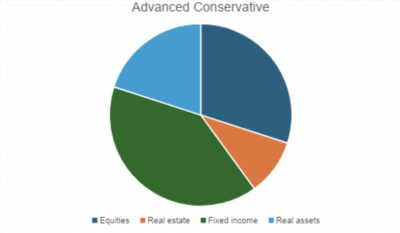 “Advanced couch potato” anything might sound like an oxymoron, but hear us out. First, couch-potato investing is not just for people who hate investing. Lots of smart investors have recognized that they can get competitive returns at very low cost using index funds and a passive methodology. They might combine it with individual stock holdings, GICs, and bonds.
They recognize, too, that there are more fish in the sea than the stock and bond indices represented in core portfolios. They may seek to spice up returns or further diversify with, say, a high-yield bond or crypto fund. There’s no limit to the add-ons you can apply to a couch portfolio.
Second, there are those who get the hang of managing a core portfolio, like the results, and, upon gaining investment knowledge and experience, feel comfortable raising the complexity of their holdings. Couch potato investing offers a good entry level to more sophisticated investing, by which time your nest egg will likely have grown and gained a momentum all its own…
How to build a core couch potato portfolio
– moneysense.ca
 You can build a couch-potato portfolio in three simple ways—using index mutual funds, index ETFs, or asset-allocation ETFs.
But before we dive into these further, an important note. The following options are meant to illustrate sample portfolios and do not constitute financial advice. If you haven’t already done so, review the principles behind how to build a couch-potato portfolio and our overview of couch potato investing before committing your hard-earned money to any of the investments indicated.
Option 1: Build a mutual fund portfolio
Most Canadian banks offer a selection of relatively low-cost index mutual funds with which you can build your own balanced portfolio. Depending on your relationship with the institution, they may throw in advice for free.
Your mutual fund options
TD is the best-known provider in this space with its e-Series funds, but Scotiabank, RBC, and CIBC, among others, have similar products.
The pie chart below illustrates how a typical mid-career investor with a moderate risk tolerance might construct a portfolio using e-Series funds…
Where to find a home under $1 million in Canada
– moneysense.ca
As of July, the Canadian Real Estate Association’s National Composite MLS Home Price Index was down 3.4% year-over-year. The non-seasonally adjusted national average home price stood at $672,784.
Indeed, if you peruse our Where to Buy Real Estate in Canada guide for 2025, tabulated by our research partner Zoocasa, all but four markets—Bancroft, Quinte district, and Northumberland Hills in Ontario, and the Fraser Valley in B.C.—had average home prices under $1 million as of year-end 2024.
The benchmark prices used here represent all kinds of units: single-family houses, ground-level townhouses, and condominiums…

