
There are plenty of retirement plan options in Canada! Stay on top of the best plans right here.
Latest News



How helping the kids with a down payment affects you + MORE May 27th
OTTAWA – Helping your children with a down payment on their first home may be tempting, but financial advisers say to be sure to fully grasp how it will affect your own retirement planning before cutting a cheque.
Kristine Skinner, financial adviser with BlueShore Financial in West Vancouver, B.C..... More »
How to plan for retirement for Canadians: A review of Four Steps to a Worry-Free Retirement course + MORE Oct 26th
With November incoming and being Financial Literacy Month in Canada, it seems appropriate to devote this edition of the Retired Money column to a new Canadian DIY retirement course created by MoneySense’s “Making sense of the markets” columnist Kyle Prevost.
Entitled 4 Steps to a .... More »
Working to live better, longer + MORE Mar 19th
(Corbis)
Whenever I suggest in a blog that investors might want to rethink early retirement, I usually hear from a few readers who insist that after 30 or 40 or more years in the workforce, they have a “right” to spend their last decade or so in the pursuit of leisure.
Readers are of course perf.... More »
WTFinance is an RRSP? + MORE Sep 9th
The post WTFinance is an RRSP? appeared first on MoneySense..... More »
Is the Longevity Pension Fund a cure for retirement income worries? Jun 15th
Many retirees and near-retirees are enthused about the June 1 release of Purpose Investments Inc.’s Longevity Pension Fund. (For the sake of space, we’ll refer to it as LPF henceforth.)
Taking on the challenge of providing retirement income for the vast army of people who don’t have classica.... More »
Remarrying in retirement can be financially complicated
– thestar.com
 If divorced seniors remarry in retirement there can be complications with ex-spouses, step children and retirement savings.
One late mega-retirement or multiple mini-retirements?
– moneysense.ca
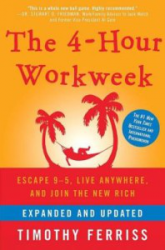 Here’s a new concept I’d not considered until I started reading the book pictured to your left. Last time, we talked about semi-retirement and sabbaticcals but you might want to add the term “mini-retirement” to all these concepts that (in my view) touch on financial independence.
In his book, The 4-hour Workweek, Timothy Ferriss floats the idea of periodic mini-retirements spread over a lifetime. So instead of the traditional route so many of us take—which he dubs “slave/save/retire”—Ferriss likes to work in two-month stints, then “retire” for blocks of a month or so (sometimes longer).
Death of vacations?
Now you might argue that the traditional two-week annual vacation squeezed between 48 to 50 weeks of working is a mini-retirement, or more accurately, a “micro-retirement.” But of course the very fact of you having a return ticket means a micro retirement is no retirement at all.
Even as he declares the birth of mini-metirements, Ferriss announces the “death of vacations…
It’s all in the timing
– moneysense.ca
 (Illustration by Paul Garland)
When you were younger, you may have focused on beating the market. But when you reach retirement, you need to ensure the market doesn’t beat you.
Retirement fundamentally changes the way you should approach your finances. When you’re young and adding money to your portfolio every year, you should welcome market downturns, because they offer an opportunity to buy more stocks at low prices. But if you encounter a severe bear market immediately after retirement, you may be forced to sell beaten-down stocks to provide the means to live on. While those stocks should bounce back eventually, by then your portfolio may be too depleted to fully recover.
“If you’re taking money out it means you can’t endure those downturns as well as someone who is still putting money in. People have to get their heads around that,” says Malcolm Hamilton, fellow with the C.D. Howe Institute and a retired actuary.
Luck of the draw (down)
Consider the example of a retiree with $500,000 who needs to withdraw $22,500 a year…

