
There are plenty of retirement plan options in Canada! Stay on top of the best plans right here.
Latest News



Reduce tax brackets by organizing where you hold investments + MORE Jun 11th
(Getty Images / Peter Dazeley)
Nobody likes to pay taxes.
But while they are inevitable, you can minimize the amount you pay.
Brent Vandermeer, a portfolio manager with HollisWealth, says to build a tax efficient portfolio you need to pay attention to what you hold and where it’s held.
“A lot of.... More »
Withdrawing money from a spousal RRSP + MORE Jan 14th
Q: If I have two spousal RRSPs, can I stop contributing to RRSP No. 1 for three years and then begin to withdraw from it without being subject to attribution rules, even if during that time I contribute to RRSP No. 2?
—Murray Hooper, Cambridge, Ont.
A: “All for one. And one for all,” goes.... More »
How to keep your holiday spending in check Dec 2nd
According to Equifax Canada data, there was a 1.9% rise in total debt per consumer at the end of the second quarter in 2019. Unsurprisingly, a recent survey commissioned by Equifax also found that 55% of Canadians say they’ll be spending less on holiday gifts this year. Hmm, I wonder why that.... More »
How banning bottled water can backfire + MORE Apr 1st
Markus Mainka/iStock
Having announced Montreal will ban single-use plastic shopping bags as of Jan. 1, 2018, the city’s mayor, Denis Coderre, recently set his sights on his next target—erasing plastic water bottles from the city.
While the move drew hackles from beverage companies, it was cheere.... More »
What’s my RRSP contribution limit? Nov 15th
Find out your current registered retirement savings plan (RRSP) contribution limit by using this calculator.
RRSP contribution rules highlights
Your RRSP contribution limit is based on the maximum annual RRSP contribution room set by the Canadian government, the earned income you had d.... More »
Remarrying in retirement can be financially complicated
– thestar.com
 If divorced seniors remarry in retirement there can be complications with ex-spouses, step children and retirement savings.
One late mega-retirement or multiple mini-retirements?
– moneysense.ca
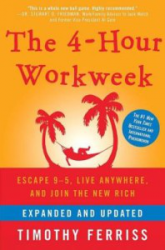 Here’s a new concept I’d not considered until I started reading the book pictured to your left. Last time, we talked about semi-retirement and sabbaticcals but you might want to add the term “mini-retirement” to all these concepts that (in my view) touch on financial independence.
In his book, The 4-hour Workweek, Timothy Ferriss floats the idea of periodic mini-retirements spread over a lifetime. So instead of the traditional route so many of us take—which he dubs “slave/save/retire”—Ferriss likes to work in two-month stints, then “retire” for blocks of a month or so (sometimes longer).
Death of vacations?
Now you might argue that the traditional two-week annual vacation squeezed between 48 to 50 weeks of working is a mini-retirement, or more accurately, a “micro-retirement.” But of course the very fact of you having a return ticket means a micro retirement is no retirement at all.
Even as he declares the birth of mini-metirements, Ferriss announces the “death of vacations…
It’s all in the timing
– moneysense.ca
 (Illustration by Paul Garland)
When you were younger, you may have focused on beating the market. But when you reach retirement, you need to ensure the market doesn’t beat you.
Retirement fundamentally changes the way you should approach your finances. When you’re young and adding money to your portfolio every year, you should welcome market downturns, because they offer an opportunity to buy more stocks at low prices. But if you encounter a severe bear market immediately after retirement, you may be forced to sell beaten-down stocks to provide the means to live on. While those stocks should bounce back eventually, by then your portfolio may be too depleted to fully recover.
“If you’re taking money out it means you can’t endure those downturns as well as someone who is still putting money in. People have to get their heads around that,” says Malcolm Hamilton, fellow with the C.D. Howe Institute and a retired actuary.
Luck of the draw (down)
Consider the example of a retiree with $500,000 who needs to withdraw $22,500 a year…

