
The “Big Five” Canadian banks offer credit cards and include Royal Bank of Canada, Toronto Dominion Bank (TD Canada Trust), Bank of Nova Scotia, Bank of Montreal and Canadian Imperial Bank of Commerce (CIBC). Did you know that there are many other options?
Latest News
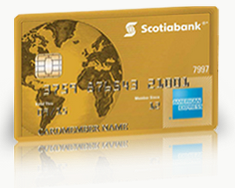


Scotiabank Gold American Express Card - First Year Free with a 20,000 points sign up bonus! + MORE Nov 1st
The card with some very strong category earning (Gas, Grocery, Dining & Entertainment) has had the 20,000 point sign up bonus since July 1 however it had the annual fee attached. However now we see the return of the FYF with the 20,000 points if you spend $500 in the first three months! The of.... More »
A lost-at-sea story deserves all our awe + MORE Jan 2nd
438 Days by Jonathan Franklin. No credit
Everyone presumed José Salvador Alvarenga to be dead. Cast adrift at sea by a storm, he scraped together food and fresh water. Near the end of his purgatory, it was all he could do to cling to his mind’s redoubts, fighting his descent into insanity. This w.... More »
Q&A: What to do if merchant details on card statement are unfamiliar Oct 8th
Finding charges inaccurately reported on credit card statements can be annoying, but disputing them can be cumbersome. Keeping receipts and tracking expenses can help you figure out legitimate expenses without having to initiate a chargeback..... More »
After one spouse dies, card debt likely impacts the other May 9th
If one spouse dies owing substantial credit card debt, the living spouse can feel the effect, even if it was a solo account not in a community property state.... More »
Podcast Episode 62 - Holiday Edition & Year End Wrap Up Episode Dec 17th
In this the last episode for 2019 Jeff and Patrick discuss the year in loyalty, with a loyalty wish list, which programs may have been a Grinch and more. We also talk about last minute shopping tips to make the most of your loyalty programs and touch upon our latest ultimate credit card portfolio.... More »
Taking care of business
– macleans.ca
 (The Windsor Star)
The economy has changed dramatically in the 30 years since Doug Bergeron first entered the work force and, of course, Bergeron, 53, has changed with it. Best known for leading the group that purchased the credit- and debit-card terminal maker VeriFone from Hewlett-Packard for $50 million in 2001, as CEO, he transformed it into a multinational, multi-billion-dollar company. But Bergeron, an entrepreneur and a philanthropist, started out with an arts degree with special honours in computer science from York University.
“It used to be that you got a fundamental engineering or computer science education, and you graduated and you got a job with a big company; you’d sit in a cubicle and work on some narrow part of a project and, if you did a good job [and] put your hand up, maybe you get promoted some day,” said Bergeron from his office in Palo Alto, Calif.
That world no longer exists, especially in Canada: Nortel, where Bergeron began his career, went bankrupt, and RIM (now BlackBerry) is a shadow of its former self; companies are being forced to become smaller and nimbler, meaning their employees have to be more agile in their skill sets; and venture capital is harder and harder to come by, making the competition all the more intense to turn good ideas into a reality…
Taking care of business
– macleans.ca
 (The Windsor Star)
The economy has changed dramatically in the 30 years since Doug Bergeron first entered the work force and, of course, Bergeron, 53, has changed with it. Best known for leading the group that purchased the credit- and debit-card terminal maker VeriFone from Hewlett-Packard for $50 million in 2001, as CEO, he transformed it into a multinational, multi-billion-dollar company. But Bergeron, an entrepreneur and a philanthropist, started out with an arts degree with special honours in computer science from York University.
“It used to be that you got a fundamental engineering or computer science education, and you graduated and you got a job with a big company; you’d sit in a cubicle and work on some narrow part of a project and, if you did a good job [and] put your hand up, maybe you get promoted some day,” said Bergeron from his office in Palo Alto, Calif.
That world no longer exists, especially in Canada: Nortel, where Bergeron began his career, went bankrupt, and RIM (now BlackBerry) is a shadow of its former self; companies are being forced to become smaller and nimbler, meaning their employees have to be more agile in their skill sets; and venture capital is harder and harder to come by, making the competition all the more intense to turn good ideas into a reality…

