
Retirement planning getting you down? There are always smart ways to plan the financial aspects of your retirement.
Latest News


“Where do we pay income tax if we retire abroad?” Apr 27th
Q. We’re thinking about moving to Mexico full-time when we retire. Where would we pay income tax on our monthly Canadian pensions?
–Marianna
A. Many Canadians dream of a retirement that includes travel abroad. Some even move abroad part of the year, most of the year, or give up their Canadian r.... More »
Making sense of the markets this week: December 24, 2023 Dec 28th
Kyle Prevost, creator of 4 Steps to a Worry-Free Retirement, Canada’s DIY retirement planning course, shares financial headlines and offers context for Canadian investors.
It’s a tough job, but…
It’s really hard to predict what the investment world will do. It’s even harder to predic.... More »
Market plunge scary, but more so for those near retirement + MORE Jan 29th
Worldwide market turmoil a painful lesson for those close to retirement about importance of balancing risk in portfolios.... More »
Sears looking to close all stores, 12,000 to lose jobs + MORE Oct 14th
TORONTO — Sears Canada Inc. is seeking court approval to liquidate its roughly 130 remaining stores, leaving approximately 12,000 employees without a job.
The embattled retailer, which has been operating under the Companies’ Creditors Arrangement Act since June, said Tuesday that it had fail.... More »
What happens at the end of a reverse mortgage? Mar 9th
When you get a reverse mortgage, you tap the equity in your home without having to sell it. There are several advantages to having a reverse mortgage, for those who qualify: For one, you gain access to part of the cash value of your home, increasing your liquidity. Setup and legal fees are rolled in.... More »
Despite pledge not to, Cianci has taken campaign cash from dozens of Providence city employees
– canadianbusiness.com
PROVIDENCE, R.I. – Ex-Mayor Buddy Cianci accepted campaign contributions from dozens of city employees in his comeback bid for City Hall despite saying he hadn’t and pledging he wouldn’t, according to campaign finance reports.
At a Sept. 17 mayoral forum, the 73-year-old independent addressed criticism about corruption and pay-to-play practices during his previous administrations.
“I haven’t taken a dime from any city worker, nor do I intend to,” Cianci said during the forum at the Laurelmead retirement community.
But campaign finance records filed Tuesday show that among those contributors who named their employers, more than five dozen city employees donated a total of about $18,000 to Cianci’s campaign. The reports cover the period from June 25, when Cianci announced his mayoral bid, through Oct. 6.
Some of the employees contributed several times, while others contributed once. Their donations ranged from $50 to $1,000, the maximum amount. Dozens of donations were made before Cianci made the comment Sept…
At a Sept. 17 mayoral forum, the 73-year-old independent addressed criticism about corruption and pay-to-play practices during his previous administrations.
“I haven’t taken a dime from any city worker, nor do I intend to,” Cianci said during the forum at the Laurelmead retirement community.
But campaign finance records filed Tuesday show that among those contributors who named their employers, more than five dozen city employees donated a total of about $18,000 to Cianci’s campaign. The reports cover the period from June 25, when Cianci announced his mayoral bid, through Oct. 6.
Some of the employees contributed several times, while others contributed once. Their donations ranged from $50 to $1,000, the maximum amount. Dozens of donations were made before Cianci made the comment Sept…
You Can Retire on Less Money (and Make it Work for You)
– rhondasherwood.com
Saving for financial goals, including retirement, is a challenge for most people these days. Retirement is often left on the back burner until later in life when it may be too late to save the full amount you think you need. Rather than putting off your retirement or continuing to work, consider downsizing your lifestyle and overall expenses so that you can retire on less money.
Figure Out How to Downsize your Life
While you may love your house, do you need to continue living in a large home? Once your children are gone and you and possibly your spouse are left, it probably doesn’t make sense to maintain a big house. It could be less expensive to move into a smaller home where you will be paying less for utilities, property taxes and insurance. If you are in strata you also won’t have to worry about gardening or lawn maintenance, leaving you with fewer headaches to deal with. Downsizing may also leave you with more money from the sale/repurchase of your home to fund your retirement needs…
Investing outside RRSPs and TFSAs
– moneysense.ca
 Getty Images
Q: After I max out my RRSP and TFSA contributions, what can I invest in?—Dale
A: Congratulations on maxing out your RRSP and TFSA, Dale. Statistics show that there’s a lot of unused RRSP and TFSA room in Canada, so maxing yours out is no small feat.
Depending on your situation, there are a few other options you should consider for your savings.
Are you debt-free? If not, I’d consider paying down your remaining debt (including the mortgage) before investing. Debt repayment is an investment with a guaranteed return and that return will rise as interest rates increase. Plus your non-registered investment income is taxable, meaning you keep less of your returns compared to those in your RRSP and TFSA.
Do you have kids? Consider maxing out their RESPs to help save for their post-secondary education costs. Depending on your financial situation, if they’re over the age of 18, you might even consider making contributions to their TFSA accounts. Just remember, that money becomes their money…
Lower long-term interest rates and updated actuarial tables that project longer life spans for Canadian retirees, are expected to put a squeeze on Canadian pension plans
5 rules to pay less tax
– moneysense.ca
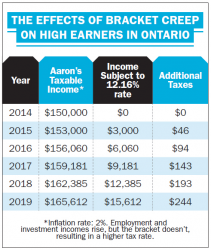 Do you plan to be wealthy? Then it’s time to go to tax school. As your kids head back to the classroom to learn to read and write, you can learn basic taxation principles that will help you build wealth faster.
There’s a reason why those who have more, care more about taxes. They know that what’s truly important is your “real net worth”—the net value of assets after taxes, inflation and accumulation costs such as interest on debt and professional fees. It’s all about what you keep and what it’s worth when you need it. Learn these five important tax principles, and you’ll have a more enlightened view of what wealth is, and how to build it faster.
1. Understand what income is. Make it your business to understand tax jargon. Start by learning the definitions of income: total income, net income, taxable income, earned income for RRSP purposes—they all have different meanings. The most important of these is “net income,” because that’s the figure used in many federal and provincial tax credit calculations…

