
The “Big Five” Canadian banks offer investment funds and include Royal Bank of Canada, Toronto Dominion Bank (TD Canada Trust), Bank of Nova Scotia, Bank of Montreal and Canadian Imperial Bank of Commerce (CIBC). Let’s explore the best place for you to invest.
Latest News

I make little to no income. Do I still need to file a tax return? Mar 20th
Experts say it’s always best to file a tax return to build up RRSP contribution room and set up eligibility for certain credits and benefits..... More »
40 days - 2.75% + MORE Dec 17th
This GIC rate is offered by DUCA Financial Services and was updated on 0000-00-00. Click on the link above to get more details or apply online..... More »
Bombardier and Trudeau say they're close to hammering out a funding deal + MORE Dec 16th
Bombardier says it's close to hammering out a financing deal with the federal government even as the transportation giant forecasts strong earnings growth in next year and enough cash to achieve to its turnaround plan..... More »
Disney closes $71B US deal for Fox entertainment assets Mar 20th
Disney has closed its $71 billion acquisition of Fox's entertainment business, putting Cinderella, The Simpsons, Star Wars and Dr. Strange under one corporate roof..... More »
Should you buy back pension service from your employer? Jun 19th
While defined benefit (DB) pensions are the Cadillac of retirement plans, they also entail a unique set of decisions. Buybacks are one of them.
There are a few ways to build up the value of your DB pension: by working to accumulate years of “pensionable service,” of course; by transferring servi.... More »

Top of the Morning
The Globe and Mail’s Tim Kiladze writes that push by the Office of the Superintendent of Financial Institutions (OSFI) to have banks adhere to certain “broadly stated principles” might leave financial institutions yearning for strict, but specific, rules:
I can imagine that this gave the directors of financial institutions hives: here are some big ideas and suggestive words, and we will fine you if your interpretation of these words differs from ours. As a director charged with increasing responsibility in supervising financial institutions, freedom and control are good things, but clear rules are nice as well…
Principles tend to be flexible and consistent with policy purposes, while formal compliance with a set of rules doesn’t necessarily mean that you’re not going to engage in the harm that the rule was intended to prevent – take Enron and its rule-compliant “special purposes entities” that nonetheless obscured the true financial condition of the company…
Income in retirement: How much will you make?
– moneysense.ca

How we came up with the grades
Canada's 100 best dividend stocks
Retirement 100 all-stars
How much will you make in retirement?
This year we decided to look at how our retirement income expectations change as we age. As you can see below, the 2014 BlackRock Investor Pulse study found that Canadians in their 20s and early 30s feel confident and in control, expecting a plush retirement income of almost $95,000 a year. But as we enter our late 30s and early 40s, reality hits and our confidence plummets—as does our expected income. Luckily, in our 50s and 60s some of that confidence returns, even though our income will be much less than we thought.
Source: BlackRock Investor Pulse study 2014, September 2014
The post Income in retirement: How much will you make? appeared first on MoneySense.
5.5 year – 2.60%
– ratesupermarket.ca
This GIC rate is offered by DUCA Financial Services and was updated on 2014-07-12. Click on the link above to get more details or apply online.
For investors seeking dividends, it’s finally safe to return to the U.S. financial sector
– canadianbusiness.com
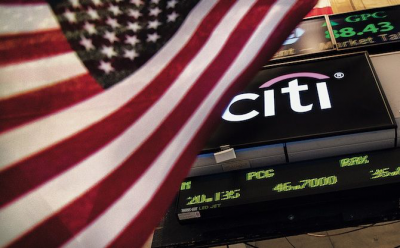 Tired of relying on Canadian REITs and utilities for income? Try U.S. banks. (Brendan McDermid/Reuters)
The financial sector is a natural place to look for yield in the Canadian equity market. Not so south of the border. It has to do with recent history: Between Sept. 15, 2008, the day investment bank Lehman Bros. filed for Chapter 11, and March 6, 2009, when the market bottomed out, the S&P 500 financial sub-index fell by a stunning 68%. Shareholders didn’t just rack up the capital losses, though. Over the same period, the average U.S. bank dividend was slashed by 72%.
The sector has since recovered—stock prices are up 283% from that 2009 nadir—yet dividends remain depressed. Between 2004 and 2007, U.S. financials accounted for about 30% of all the dividends paid on the S&P 500. That fell to 9% in 2009 and has climbed back to nearly 15% today. While some banks, such as Wells Fargo, are paying more per share than they were before the recession, others, like Citigroup, haven’t increased dividends at all…
Jim Can, a Canadian businessman wanted as part of a major U.S. investigation involving stock fraud and money laundering in Belize, has a controversial past in Canada, including an admission he was present during a violent kidnapping of a Calgary businessman.

