
Banking in Canada can be a murky subject – one that we hope to shed some light on with a series of highly informational articles.
Latest News



Is Online Credit Card Use Still Safe? + MORE Jan 14th
What would 2015 be without a little dash of data stealing?
Just in time for post-Christmas shopping woes, hackers claimed they leaked credit card info from 13,000 dating site users and Walmart/Amazon shoppers on December 28. A few days later it was American fast food chain Chick-Fil-A admitting tho.... More »
The 10 best no-fee credit cards in Canada for August 2023 Aug 23rd
Spend
The 10 best no-fee credit cards in Canada for August 2023
Searching for the perfect credit card? In under 60 seconds, CardFinder narrows down your top matches without impacting your credit score, no SIN required.
Find my perfect card*
.... More »
Wise Review (formerly TransferWise): A Better Way to Conduct Foreign Exchange? May 14th
The high fees and bloated exchange rates incurred when sending and receiving foreign currency can be a bitter pill to swallow. This is especially true for anyone who has to send international money transfers regularly.
Much of the problem lies in the exchange rates offered by banks, which are priced.... More »
Rocky year ahead for Canadian economy + MORE Jan 6th
TORONTO – The chief economists of some of Canada’s biggest banks say the country is headed for a rocky year as low oil prices continue to drag on economic performance.
Bank of Montreal chief economist Douglas Porter told a morning gathering of leading economists today that it’s going to be a â.... More »
The best GIC rates in Canada for 2024 + MORE Oct 8th
GIC comparison tool
Find the best and most up-to-date GIC rates in Canada using the comparison tool below. Plus, use the filters to assess your estimated rate of return based on the size of your balance.
Why trust us
MoneySense is an award-winning magazine, helping Canadians navigat.... More »
 (Getty Images/Arda Guldogan)
If you’re interested in making money off of other people’s debt you may have an increased opportunity, at least if the Bank of Canada gets its way.
A recent article, written by Bank of Canada deputy governor Lawrence Schembri, pressed for risk exposure changes in Canada’s mortgage market. In particular, Schembri suggested that the creation of a private-label mortgage securitization market in Canada.
Private-label mortgage securities includes any mortgage product that does not conform to criteria set by A-list banks and the CMHC. As a result, these private-label mortgages carry a significantly greater risk. Examples of these mortgages include: low-doc (aka: Liar loans), 40-year mortgages, large loans (over $415,000 in the US, over $1-million in Canada), B-lender loans. Of course, these types of loans may already seem familiar given that they, along with other private-label mortgage securities, played an integral role in the 2009 credit crisis…
Credit Card Interchange Fees Changes Announced
– ratesupermarket.ca
UPDATE: Visa and MasterCard have announced their proposals to reduce merchant interchange fees to an average of 1.5 per cent. Together, the two proposals will equal a 10 per cent reduction in processing fees for merchants. Canadian Minister of Finance, Joe Oliver, stated he was pleased with the actions taken, saying, “As a result of the voluntary proposals, there is no need for the Government to regulate the interchange rates set by the credit card networks.”
The proposals from Visa and MasterCard will:
Voluntarily reduce their respective credit card fees for consumer cards to an average effective rate of 1.50% for a period of five years.
Ensure that all merchants receive a reduction in credit card fees.
Provide a greater reduction for small and medium sized enterprises and charities, which have the least amount of bargaining power.
Require annual verification by an independent third party to ensure compliance.
The new fee structure will be implemented by April 2015. Currently, American Express is not participating in the voluntary reduction, though Oliver stated he was “pleased to see that American Express has committed to maintaining its current business model…
OTTAWA – Canadian food banks are wading into the hot political debate over how best the federal government can help families with kids: give them tax breaks, as the Conservatives are doing, or invest in regulated child care, as the NDP proposes.
In its annual HungerCount report, Food Banks Canada comes down squarely on the side of the NDP.
It says the use of food banks remains 25 per cent higher than it was before the devastating global recession in 2008 and that 37 per cent of those helped are children.
According to the report, almost half of the households helped are families with kids and nearly half of those are two-parent families.
Among other recommendations, the report says the federal government should replace “the current alphabet soup” of child tax benefits with a new child well-being benefit that targets the most vulnerable families.
And it calls on federal and provincial governments to invest in predictable, stable funding for affordable, regulated child care, enabling parents to enter or remain in the workforce…
In its annual HungerCount report, Food Banks Canada comes down squarely on the side of the NDP.
It says the use of food banks remains 25 per cent higher than it was before the devastating global recession in 2008 and that 37 per cent of those helped are children.
According to the report, almost half of the households helped are families with kids and nearly half of those are two-parent families.
Among other recommendations, the report says the federal government should replace “the current alphabet soup” of child tax benefits with a new child well-being benefit that targets the most vulnerable families.
And it calls on federal and provincial governments to invest in predictable, stable funding for affordable, regulated child care, enabling parents to enter or remain in the workforce…
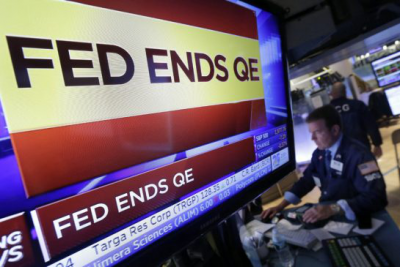 Central banks have been printing money by the truckload to prop up their economies. How long can inflation remain at bay?
The Roots of Government Meddling in Mortgages
– online.wsj.com
 Federal Land Banks created in 1916 were the Fannie Mae model. They too went belly up.
