
Banking in Canada can be a murky subject – one that we hope to shed some light on with a series of highly informational articles.
Latest News


What is a Secured Credit Card and How Does It Work? Jun 28th
A good credit history is important for everyone. It’s a gateway to more borrowing options and the basis of a positive financial future. But what if you have no credit, or some unfortunate marks on your record make it hard to get a new card?
That’s where a secured credit card may come in.... More »
Canadian Customers Will Soon Have to Pay More to Use Certain Premium Credit Cards Jun 20th
Canadian customers will soon be subject to additional fees when paying for purchases with certain premium credit cards, now that Visa and MasterCard have entered into a settlement agreement stemming from a class action lawsuit that will see both companies make changes to their “No Surcharge Ruleâ.... More »
The close: TSX ends lower as banks, Home Capital drag May 13th
Wall Street finishes week down as data, retailers weigh
.... More »
Applying for a credit card? Here’s what you should know before getting one Jul 7th
The convenience of making purchases with your credit card comes with many advantages, like rewards, perks and a solid credit history. However, if used irresponsibly, this financial tool can lead to unmanageable debt and a low credit score. So, how can you be a responsible credit card owner? I will e.... More »
3 Tips: Avoid Back to School Overspending Aug 12th
It’s that “wonderful” time of year again. Students are gearing up for a new school semester, gathering the supplies they’ll need for their courses and ensuring they’re well prepared for their first days back in class. Retailers – ever so helpful – make it a.... More »
Greece pitches surprise last-ditch financial rescue plan as deadline passes
– theglobeandmail.com
The surprise bid to keep Greece’s lifelines open from the European Union came as Greece’s banks remained closed for the second day, with ATM withdrawals limited to €60.
Canada’s Banks Go Big on PrePaid Credit Cards
– ratesupermarket.ca

What looks like a credit card, works like a credit card, but doesn’t charge interest or require monthly payments? Prepaid credit cards, which carry a pre-determined, reloadable balance, are one of the fastest growing product markets, and Canada’s big banks are keenly interested in getting them in your wallet. Here’s why, and some warnings for consumers who use them.
What’s The Difference?
As the name suggests, rather than getting a monthly statement balance owning, these are credit cards that you pay for in advance, with either a one-time (non-reloadable) balance deposit, or with a reloadable card – which the banks refer to as an“open loop prepaid card” – that you can continually top up the balance on. Other than the method of payment, you use them as you would a regular credit card at any of the same online or bricks-and-mortar retailers you normally shop at.
A Growing Market
A survey conducted for the newly formed industry association the Canadian Prepaid Providers Organization (CPPO), found that only 29 per cent of Canadians have used a prepaid card, compared to about 60 per cent of Americans…
Banks, insurers shy away from former grow ops
– moneysense.ca
 TORONTO – At first glance, the mid-century, three-level Winnipeg home was everything that Sarah Fehr and her fiancee had been looking for.
It was located in the right neighbourhood, had a double garage and the backyard was spacious enough for the couple’s two pugs to frolic in.
Perhaps most importantly, it was reasonably priced.
However, a quick Google search revealed the home’s shadowy past: it had been busted several years earlier for housing a marijuana grow operation.
While former grow ops may seem like a good deal to some buyers, experts caution that banks and insurers are increasingly shying away from these properties — even after all of the necessary remediation has been done.
“It’s always been strict, but it was a lot looser four or five years ago,” says Jeff Mark, co-founder of broker Spin Mortgage, adding that only credit unions and subprime lenders are willing to finance these homes, often at higher rates than those offered by the banks.
Running a grow-op in a residential home can cause extensive damage that may be pricey to remedy…
Canada’s Banks Go Big on PrePaid Credit Cards
– ratesupermarket.ca

What looks like a credit card, works like a credit card, but doesn’t charge interest or require monthly payments? Prepaid credit cards, which carry a pre-determined, reloadable balance, are one of the fastest growing product markets, and Canada’s big banks are keenly interested in getting them in your wallet. Here’s why, and some warnings for consumers who use them.
What’s The Difference?
As the name suggests, rather than getting a monthly statement balance owning, these are credit cards that you pay for in advance, with either a one-time (non-reloadable) balance deposit, or with a reloadable card – which the banks refer to as an“open loop prepaid card” – that you can continually top up the balance on. Other than the method of payment, you use them as you would a regular credit card at any of the same online or bricks-and-mortar retailers you normally shop at.
A Growing Market
A survey conducted for the newly formed industry association the Canadian Prepaid Providers Organization (CPPO), found that only 29 per cent of Canadians have used a prepaid card, compared to about 60 per cent of Americans…
Gimme shelter: The financial consumer code and you
– moneysense.ca
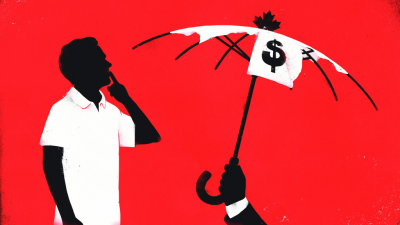 (Illustration by Sebastien Thibault)
The Conservatives are expected to table a new consumer protection code governing banks in the coming months, but don’t expect the campaign-friendly bill to improve your bottom line. While intended to empower banking customers navigating the financial services industry, pundits say the “Comprehensive Financial Consumer Code” falls flat because it does little to protect Canadians from being nickel-and-dimed at every turn.
“If people think this code will in any way limit what they pay to their banks, they’re dreaming,” says John Lawford, executive director and general counsel at the Public Interest Advocacy Centre.
Instead, the code will only feature standardized fee disclosure boxes on bank statements, loosened ID requirements on new accounts, mandatory cooling-off periods on a greater range of products, and a crackdown on misleading advertising.
As is now the case with Canada’s telecom providers, Lawford would have preferred to see the banks prevented from charging paper-bill fees—not to mention more egregious pay-to-pay tactics, such as charging customers $1 to $2 to make mortgage, loan and credit card payments…

