
How to go about securing the best savings strategy in Canada.
Latest News


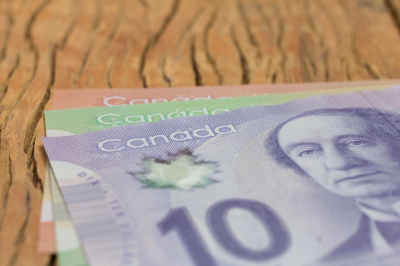
What does a weak Canadian dollar mean for your savings? Feb 25th
It’s the financial news story that everyone is talking about: The Canadian-to-U.S.-dollar exchange rate has been very unfavourable for the loonie lately.
How unfavourable? Since the beginning of the year, the Canadian dollar’s trading value has fluctuated between roughly USD$0.69 and $0.70—.... More »
Stock news: Cogeco, Roots, and BlackBerry deliver earnings gains but outlooks remain mixed + MORE Apr 15th
Here’s a round-up of news for Canadian investors this week.
Cogeco
Roots
BlackBerry
Featured RRSP Accounts
featured
EQ Bank
Build your retirement savings with 1.50% interest, t.... More »
This millennial has $100,000 in savings and wants to leave Toronto to buy a cheaper house. With help from parents, is it possible? + MORE Jun 12th
“After looking at all these properties, my boyfriend and I realize that we have to be realistic and find a place further out,” Vanessa said..... More »
The holidays on a budget: How to avoid credit card debt Nov 28th
For many Canadians, managing debt is a year-round challenge. Common tips tend to be simplistic or downright insulting (we’re looking at you, “skip your daily coffee”). Staying on top of your finances gets even more difficult during the holidays, when everywhere we look there are messages urgin.... More »
Retirement taxes explained: Withholding, clawbacks, and other surprises + MORE Sep 17th
Many working-age Canadians wonder what the impact of retirement will be on their tax situation. As you save and build wealth, it is important to plan for the eventual tax treatment of your retirement assets and income as you approach that transition.
Taxation in Canada
When you are.... More »
 Andrew Kravchenko/Pool/Reuters
CHELSEA, Que. – Canada has reached a trade agreement with Ukraine that will eventually see a near elimination of duties on goods coming into Canada from Ukraine.
Prime Minister Stephen Harper announced the free trade agreement as he met today with Ukraine’s prime minister, Arseniy Yatsenyuk.
The two met privately in a windowless room at a government-owned house overlooking picturesque Meech Lake in Quebec’s Gatineau Park, about a 20 minute drive from Parliament Hill.
Once in force, the agreement would eliminate 99.9 per cent of tariffs on current imports from Ukraine into Canada, and 86 per cent of Ukrainian tariffs on Canadian products including all tariffs on industrial goods, forestry and wood products, fish and seafood products.
Canada’s trade with Ukraine was worth $244 million last year, down from $322 million the previous year and less than the $400 million in low-interest loans Canada has provided to Ukraine since a political crisis erupted there in 2013…
Most Canadians can’t afford to save more for retirement
– moneysense.ca
As Canada’s premiers prepare to meet in St. John’s this Wednesday, new data shows that most Canadians can’t afford to save more for retirement, and wouldn’t put any extra money into the CPP or QPP if they could.
According to a new public opinion poll conducted by Ipsos-Reid for the Canadian Federation of Independent Business (CFIB), almost 60% of working Canadians report they can’t afford to save more than they already do. When asked how government could best help them save, only 18% point to mandatory increases in CPP/QPP. A similar 19% say they would voluntarily invest in the CPP/QPP.
“No matter how you ask the question, fewer than one in five Canadians supports putting more of their hard-earned money into the CPP or QPP,” says CFIB president Dan Kelly. “Premiers need to know that Canadians would choose to put any extra money for retirement savings in to TFSAs, RRSPs or private investments over any increase in CPP/QPP.”
Canadian employees identified reducing government spending and taxes (39%) and creating new incentives to save (37%) as the best ways for government to help…
According to a new public opinion poll conducted by Ipsos-Reid for the Canadian Federation of Independent Business (CFIB), almost 60% of working Canadians report they can’t afford to save more than they already do. When asked how government could best help them save, only 18% point to mandatory increases in CPP/QPP. A similar 19% say they would voluntarily invest in the CPP/QPP.
“No matter how you ask the question, fewer than one in five Canadians supports putting more of their hard-earned money into the CPP or QPP,” says CFIB president Dan Kelly. “Premiers need to know that Canadians would choose to put any extra money for retirement savings in to TFSAs, RRSPs or private investments over any increase in CPP/QPP.”
Canadian employees identified reducing government spending and taxes (39%) and creating new incentives to save (37%) as the best ways for government to help…

