
How to go about securing the best Retirement Plan in Canada.
Latest News


Ways to “unlock” retirement savings in a LIRA + MORE Dec 7th
Q. When I retired at age 63, the financial institution that managed my DPSP account paid the company-contributed portion (approximately $30,000) into a LIRA.
Given all the constraints related to drawing down a LIRA/LIF, I am now 65, living in BC, and have two questions:
Since I was already at re.... More »
7 simple differences between RRSPs and TFSAs + MORE Mar 18th
Registered Retirement Savings Plans (RRSPs) and Tax Free Savings Accounts (TFSAs) are the go-to products for Canadians who are serious about socking away some money for the future, whether it’s for retirement or for a big purchase, like a house. While the two products are similar in many ways,.... More »
40 and no pension: What do you do? + MORE Aug 23rd
Pension envy is real. That’s because, when it comes to retirement planning, a defined-benefit pension does the heavy lifting for you. Contributions come right off your paycheque and go into a pool of pension dollars that will fund your retirement, or most of it, anyway. It’s the ultimate “pay .... More »
What investments can I put in my TFSA? + MORE Sep 14th
The less tax you pay, the more money you keep for yourself. How can you apply this to investing? By using registered investment accounts like the tax-free savings account (TFSA) and the registered retirement savings plan (RRSP). The TFSA is often the first investment account a new or young investor .... More »
What retirees need to know about tax brackets for 2025 + MORE Dec 20th
In our working lives and in our post-work retirement or semi-retirement phases, taxes are one of if not the single biggest expense. This hits home with the annual tax-filing deadline in April, but the time to start thinking about the yearly ordeal is before year-end.
The complexity of this task i.... More »
Canada’s pension problem won’t be solved by the ORPP
– theglobeandmail.com
The Ontario Retirement Pension Plan has shortcomings, but its issues shouldn’t undermine the strong case for a fairer and focused solution
What you need to know about the ORPP
– moneysense.ca
TORONTO – Some key facts and figures about the Ontario Retirement Pension Plan, the details of which the province’s Liberal government announced Tuesday:
— It aims to replace 15 per cent of an employee’s earnings.
— A person making $45,000 a year would contribute $2.16 a day, as would the employer, which would leave the employee with $6,410 per year for life.
— The government has not yet established minimum pensionable earnings, but the maximum is $90,000. That’s compared to $3,500 minimum earnings and $53,600 maximum for the Canada Pension Plan.
— Employers and employees with a comparable plan won’t have to enrol in the ORPP.
— Employees between the ages of 18 and 70 qualify, but can only start collecting benefits at age 65.
— Defined benefit plans are considered comparable with a minimum benefit accrual rate of 0.5 per cent.
— Defined contribution plans are defined as comparable with a minimum annual contribution rate of eight per cent and employers must match at least 50 per cent…
— It aims to replace 15 per cent of an employee’s earnings.
— A person making $45,000 a year would contribute $2.16 a day, as would the employer, which would leave the employee with $6,410 per year for life.
— The government has not yet established minimum pensionable earnings, but the maximum is $90,000. That’s compared to $3,500 minimum earnings and $53,600 maximum for the Canada Pension Plan.
— Employers and employees with a comparable plan won’t have to enrol in the ORPP.
— Employees between the ages of 18 and 70 qualify, but can only start collecting benefits at age 65.
— Defined benefit plans are considered comparable with a minimum benefit accrual rate of 0.5 per cent.
— Defined contribution plans are defined as comparable with a minimum annual contribution rate of eight per cent and employers must match at least 50 per cent…
Harper pledges higher RRSP withdrawal limit for homebuyers
– moneysense.ca
The Conservatives would let first-time buyers take $35,000 from their RRSPs to pay for homes if they’re re-elected, said Stephen Harper during a campaign stop in Vancouver on Wednesday.
Under the Home Buyers’ Plan, new buyers can currently take $25,000 from their registered retirement plans, tax free, to purchase their starter homes. Owners must pay the money back within 15 years of the withdrawal.
The Conservatives say skyrocketing home prices in cities such as Toronto and Vancouver are making the increase necessary.
If re-elected, a Conservative government would also collect data on how foreign investors are impacting the Canadian housing market.
This article was originally published on Advisor.ca
Home Buyers’ Plan is tax-free money »
Under the Home Buyers’ Plan, new buyers can currently take $25,000 from their registered retirement plans, tax free, to purchase their starter homes. Owners must pay the money back within 15 years of the withdrawal.
The Conservatives say skyrocketing home prices in cities such as Toronto and Vancouver are making the increase necessary.
If re-elected, a Conservative government would also collect data on how foreign investors are impacting the Canadian housing market.
This article was originally published on Advisor.ca
Home Buyers’ Plan is tax-free money »
Using the Home Buyers’ Plan on a second home »
Paying back the RRSP Home Buyers’ Plan »
The post Harper pledges higher RRSP withdrawal limit for homebuyers appeared first on MoneySense.
Calpers vs. Voters
– online.wsj.com
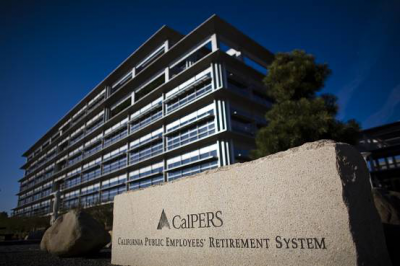 The union-run pension fund tries to stop a reform referendum.
