
How to go about securing the best Retirement Plan in Canada.
Latest News


“Get to know and minimize the investing fees you pay”: Michael McCullough, MoneySense contributing editor + MORE Nov 1st
Financial writer and editor Michael McCullough has made a career of helping Canadians understand a wide range of money topics, from real estate to alternative investments. In addition to being a MoneySense contributor and contributing editor, Michael writes for The Globe and Mail and BCBusiness, and.... More »
Affordability tips for first-time home buyers to securing a mortgage Nov 2nd
Q. My partner and I rent a two-bedroom apartment in Toronto in a great neighbourhood for $1,850 a month—so, a great deal. We have been living together for three years and would like to buy a house together next year, when we both turn 30.
Get the mortgage rate that works for you.Find the bes.... More »
An easy guide to income splitting for seniors Apr 14th
Q. My husband and I are both retired. He still has income from his business, and I have cashed in all of my RRSPs but one. My question is: Can Hubby cash one of his RRSPs (and pay taxes, of course), but then turn around and buy a spousal RRSP for me? Would that be worth doing? Then I could cash this.... More »
Best cash-alternative ETFs for Canadian investors 2026 + MORE May 2nd
If the only investment account you have is a registered retirement savings plan (RRSP), you probably don’t need to concern yourself with cash or cash-equivalent holdings. But let’s say you’re in the market for your first home and you’re saving up a down payment. You can’t afford to lose mo.... More »
How to stay the course with your retirement plan during market volatility + MORE Apr 11th
Three days of wild market volatility sparked by U.S. tariffs is enough to cause any investor stress, but for those in retirement, the plunge can be extra difficult.
Markets have taken a nosedive after U.S. President Donald Trump’s announcement of sweeping global tariffs last Wednesday (April .... More »
Canada’s pension problem won’t be solved by the ORPP
– theglobeandmail.com
The Ontario Retirement Pension Plan has shortcomings, but its issues shouldn’t undermine the strong case for a fairer and focused solution
What you need to know about the ORPP
– moneysense.ca
TORONTO – Some key facts and figures about the Ontario Retirement Pension Plan, the details of which the province’s Liberal government announced Tuesday:
— It aims to replace 15 per cent of an employee’s earnings.
— A person making $45,000 a year would contribute $2.16 a day, as would the employer, which would leave the employee with $6,410 per year for life.
— The government has not yet established minimum pensionable earnings, but the maximum is $90,000. That’s compared to $3,500 minimum earnings and $53,600 maximum for the Canada Pension Plan.
— Employers and employees with a comparable plan won’t have to enrol in the ORPP.
— Employees between the ages of 18 and 70 qualify, but can only start collecting benefits at age 65.
— Defined benefit plans are considered comparable with a minimum benefit accrual rate of 0.5 per cent.
— Defined contribution plans are defined as comparable with a minimum annual contribution rate of eight per cent and employers must match at least 50 per cent…
— It aims to replace 15 per cent of an employee’s earnings.
— A person making $45,000 a year would contribute $2.16 a day, as would the employer, which would leave the employee with $6,410 per year for life.
— The government has not yet established minimum pensionable earnings, but the maximum is $90,000. That’s compared to $3,500 minimum earnings and $53,600 maximum for the Canada Pension Plan.
— Employers and employees with a comparable plan won’t have to enrol in the ORPP.
— Employees between the ages of 18 and 70 qualify, but can only start collecting benefits at age 65.
— Defined benefit plans are considered comparable with a minimum benefit accrual rate of 0.5 per cent.
— Defined contribution plans are defined as comparable with a minimum annual contribution rate of eight per cent and employers must match at least 50 per cent…
Harper pledges higher RRSP withdrawal limit for homebuyers
– moneysense.ca
The Conservatives would let first-time buyers take $35,000 from their RRSPs to pay for homes if they’re re-elected, said Stephen Harper during a campaign stop in Vancouver on Wednesday.
Under the Home Buyers’ Plan, new buyers can currently take $25,000 from their registered retirement plans, tax free, to purchase their starter homes. Owners must pay the money back within 15 years of the withdrawal.
The Conservatives say skyrocketing home prices in cities such as Toronto and Vancouver are making the increase necessary.
If re-elected, a Conservative government would also collect data on how foreign investors are impacting the Canadian housing market.
This article was originally published on Advisor.ca
Home Buyers’ Plan is tax-free money »
Under the Home Buyers’ Plan, new buyers can currently take $25,000 from their registered retirement plans, tax free, to purchase their starter homes. Owners must pay the money back within 15 years of the withdrawal.
The Conservatives say skyrocketing home prices in cities such as Toronto and Vancouver are making the increase necessary.
If re-elected, a Conservative government would also collect data on how foreign investors are impacting the Canadian housing market.
This article was originally published on Advisor.ca
Home Buyers’ Plan is tax-free money »
Using the Home Buyers’ Plan on a second home »
Paying back the RRSP Home Buyers’ Plan »
The post Harper pledges higher RRSP withdrawal limit for homebuyers appeared first on MoneySense.
Calpers vs. Voters
– online.wsj.com
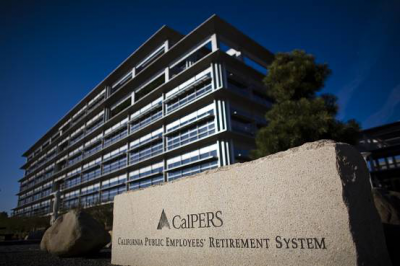 The union-run pension fund tries to stop a reform referendum.
