
The “Big Five” Canadian banks offer investment funds and include Royal Bank of Canada, Toronto Dominion Bank (TD Canada Trust), Bank of Nova Scotia, Bank of Montreal and Canadian Imperial Bank of Commerce (CIBC). Let’s explore the best place for you to invest.
Latest News


Three surprising things about the just-released MacKinnon report examining Alberta's financial mess - National Post Sep 3rd
Three surprising things about the just-released MacKinnon report examining Alberta's financial mess National PostMacKinnon panel's 26 recommendations include legislated salaries for public sector workers CBC.ca'Alberta faces a critical financial situation': Government panel rec.... More »
Scotiabank credit cards: A breakdown of the bank’s best cards + MORE Nov 25th
Scotiabank (originally called the Bank of Nova Scotia) is technically older than Canada itself. Founded in Halifax in 1832, the bank beat Confederation by 35 years. With that amount of history in the business, it’s no surprise the bank can offer and support a wide variety of products—including 1.... More »
Vancouver’s housing correction could be over + MORE Apr 18th
Vancouver, British Columbia (Dan Breckwoldt/Shutterstock)
TORONTO – Royal LePage says early evidence suggests that the recent correction in Vancouver’s housing market may be short-lived.
The realtor released a report Tuesday saying Canada’s two largest real estate markets continued the.... More »
The Gorpcore Fashion Trend Is Giving a Boost to the Outdoor-Apparel Market Nov 7th
The term “gorpcore” was coined in the mid-2010s to describe the type of utilitarian clothing worn by the “good old raisins and peanuts” (hence GORP) crowd—hikers, campers and the like. When celebrities like Hailey Bieber and Frank Ocean started wearing grip-sole shoes and multi-pocket pant.... More »
Hard choices ahead as Alberta teachers' strike bargaining resumes Tuesday - Edmonton Journal Oct 14th
Hard choices ahead as Alberta teachers' strike bargaining resumes Tuesday Edmonton JournalAlberta teachers, province set to meet for first time since strike began last week Global NewsTeachers’ Strike: Most Albertans side with teachers as they criticize UCP’s handling of ed.... More »
Do I still pay advisor fees in a self-directed account?
– moneysense.ca

Q: I recently moved my mutual funds from my advisor to a self-directed investment account. I’d like to know if the trailer fees on these mutual funds still go to my old advisor. If not, who gets them?
— Anne Doran, Toronto
A: A trailer fee, or trailing commission, is designed to pay advisors for the ongoing service they provide their clients. The commission is typically 0.5% to 1% annually, and it’s included in the management expense ratio of the fund. Not all mutual funds include trailer fees, but the ones sold through advisors and labelled series A, B, or C typically do.
.cbR{box-sizing:border-box;display:block;width:100%;margin:1em 0;border:1px solid #bbb;padding:.5em}@media (min-width:480px){.cbR{width:250px;margin:0 0 1em 1em;float:right}}Best mutual funds 2016 – MoneySense
If you purchase a mutual fund through an advisor and then transfer it to an online brokerage, the trailing commission will go to your new brokerage. This is a great deal for them, but not so much for you…
Former CP CEO teaming with investor to target CSX railroad
– canadianbusiness.com
OMAHA, Neb. _ The executive who orchestrated the financial turnaround of Canadian Pacific railroad over the past five years is teaming up with an activist investor to target CSX railroad.
Shares of CSX, based in Jacksonville, Florida, jumped 17 per cent in early trading Thursday.
Hunter Harrison announced his retirement from CP Wednesday, and then told the Wall Street Journal about his plans. Harrison is reportedly working with investor Paul Hilal, who left Pershing Square last year to start his own hedge fund, which the paper reported has raised more than $1 billion for a single investment.
Harrison, 72, came out of retirement in 2012 to lead Canadian Pacific after Pershing Square Capital took a large stake in the railroad and forced management changes.
A year ago, Harrison led a failed Canadian Pacific bid to acquire Norfolk Southern railroad. Canadian Pacific abandoned its roughly $30 billion bid for Norfolk Southern after encountering opposition from the railroad, politicians and some customers…
Parking just cash in a TFSA may hurt investors
– moneysense.ca
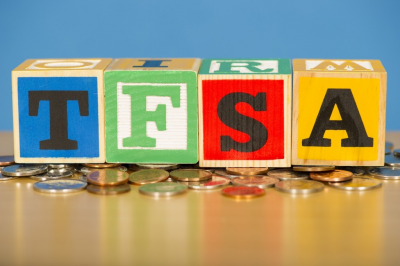 TORONTO — Financial planner Jason Heath’s mind boggles when he thinks about the high percentage of Canadians stockpiling what he calls “dead money” into tax-free savings accounts.
“There’s a lot of average Canadians out there that have been led to believe that parking a few thousand dollars in a TFSA in cash, or a near-cash equivalent investment paying one per cent, is somehow a good idea,” says Heath, managing director of Objective Financial Partners in Toronto.
“Arguably, money sitting in a TFSA at one per cent is a total waste of savings.”
Year after year, surveys performed by the Bank of Montreal show that a large number of Canadians are using TFSAs exclusively for cash reserves.
.cbR{box-sizing:border-box;display:block;width:100%;margin:1em 0;border:1px solid #bbb;padding:.5em}@media (min-width:480px){.cbR{width:250px;margin:0 0 1em 1em;float:right}}10 questions you probably have about TFSAs, answered
Their most recent report, published last year, showed Canadians using TFSAs held an average $17,133 in their accounts — with 65 per cent holding exclusively cash as opposed to any type of investment…
A surprising place to find free financial advice
– moneysense.ca

Looking for someone to help you learn to manage your money better? Then check out some of the local churches across Canada. Right now, Christians Against Poverty (CAP) Canada is offering three financial services: debt counselling, a free money course and a job counselling program for those interested in getting their debt under control and their life back on track.
Most visible has been the charity’s debt counselling service, which uses a combination of face-to-face home visits, budgeting advice, debt management tips, creditor negotiations and insolvency services to aid lower-income workers or those struggling with financial challenges such as job loss or divorce. The good news? It’s all free.
Recently, the charity has started offering a free, six-hour CAP Money Course in several locations in Ontario and Saskatchewan to anyone interested in learning to budget better tackle other financial problems. The course is taught by volunteers who use a structured course outline provided by CAP and more importantly, they do not sell financial products of any kind…
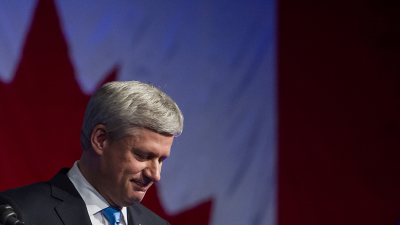 (Ben Nelms/Bloomerg/Getty Images)
OTTAWA – Former prime minister Stephen Harper says Donald Trump’s presidency is a major source of international uncertainty that will “reverse” seven decades of U.S. foreign policy.
Harper delivers that assessment today in a speech in New Delhi, the speaking notes for which were obtained by The Canadian Press.
He says Trump’s foreign policy will scale back U.S. involvement in global affairs and be guided by narrow economic interests, while coming to view China as a “geopolitical adversary.”
The speech comes on the eve of Trump’s inauguration, and represents Harper’s most sweeping foreign policy pronouncement since he lost power in October 2015.
The Liberal government says it is seeking common ground with the Trump administration on promoting middle-class growth, but Harper says friends and allies of the U.S. — he doesn’t mention Canada by name — will have to bring “real assets” to the table…

