

Should you take extra RRIF withdrawals to increase your estate? + MORE Nov 26th

What You Must Know Before Investing In Commercial Real Estate + MORE Apr 25th
The best Visa credit cards in Canada for August 2023 + MORE Aug 31st

Are women getting the right advice about RESPs? Apr 30th
Biggest marijuana ETF on TSX adds 9 new cannabis companies, including Tilray Sep 27th
Aurora acquires stake in medical pot company The Green Organic Dutchman Holdings
– canadianbusiness.com
Aurora (TSX:ACB) says it plans to acquire a 17.62 per cent stake in the privately held company for $55 million.
Aurora will also have the option to incrementally increase its ownership interest to 51 per cent once TGOD meets certain corporate, operational, construction and financial milestones.
TGOD is building a high-technology greenhouse in Valleyfield, Que., where it owns a 30-hectare property.
Under the proposed supply agreement, Aurora will have the right to purchase up to 20 per cent of TGOD’s annual production of cannabis from its Ancaster, Ont., and Valleyfield facilities.
The supply contract also gives Aurora the right to purchase up to 33 per cent of the production at the two facilities if it increases its ownership interest to 31 per cent.
The post Aurora acquires stake in medical pot company The Green Organic Dutchman Holdings appeared first on Canadian Business – Your Source For Business News.
Jeff Sessions's shift on marijuana enforcement roils US cannabis industry – The Globe and Mail
– news.google.ca
Why you should top up your TFSA
– moneysense.ca
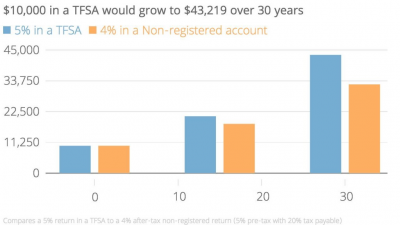 It’s not uncommon for people with unused space in their tax-free savings account or RRSP room to hold non-registered investments simultaneously. While you could make a case for not maxing out your RRSP, it’s tough to justify leaving room in your TFSA if you have the savings available. (One exception might be if you have non-registered investments with accrued capital gains that will trigger a large tax liability if you sell or transfer the investments.) Here’s what could happen if you move your non-registered savings into a TFSA and limit the amount of taxable income you’re earning.
This article was first published January 2016
Want even more tips to shape up your finances? Join the Money Fit Club to curb spending, boost your earnings, lower your taxes and more!
Learn to tone your money muscles all year long with our interactive calendar and sign up for our weekly newsletter for advice straight to your inbox.
The post Why you should top up your TFSA appeared first on MoneySense.
The max you can contribute to your TFSA for 2018
– macleans.ca
 (Shutterstock)
The TFSA limit determines how much you can deposit in your Tax-Free Savings Account each year.
The TFSA limit for 2018:
.tfsa-tbl {
width: 100%;
}
.tfsa-tbl td,
.tfsa-tbl th {
font-family: sans-serif;
}
.tfsa-tbl td {
text-align: left;
font-size: 1.4em;
}
.tfsa-tbl th {
font-weight: bold;
width: 33.33333%;
}
YearTFSA Annual LimitTFSA Cumulative Limit
2009$5,000$5,000
2010$5,000$10,000
2011$5,000$15,000
2012$5,000$20,000
2013$5,500$25,500
2014$5,500$31,000
2015$10,000$41,000
2016$5,500$46,500
2017$5,500$52,000
2018$5,500$57,500
More about the annual TFSA limit:
Tax-Free Savings Accounts (TFSAs) were first introduced in Canada in 2009. Most Canadian financial institutions now offer them. A TFSA allows any Canadian over the age of 18 to save or invest money in a tax-free account. “Tax free” means that you don’t pay taxes on the money you make inside your TFSA…
Essential reading for successful investing, fearless market forecasts, and a simple but solid ETF portfolio
– theglobeandmail.com

