

Making sense of the markets this week: December 21 + MORE Dec 18th
5 things to know before the stock market opens Thursday - CNBC Oct 19th
What’s behind the retreat in responsible investing? + MORE Oct 15th
Xiaomi's Redmi 5A, Redmi Note 5/Pro fastest selling smartphones: IDC Report - Livemint Feb 12th
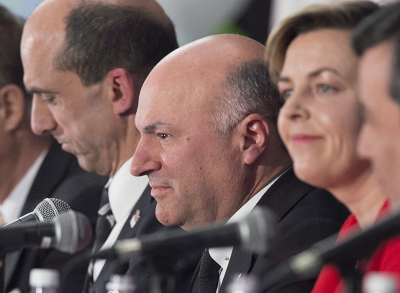
Inside Kevin O’Leary’s investing fund misadventure + MORE Apr 11th
A tantalizing fixed-income alternative
– moneysense.ca
 For 30 years, fixed income was the part of your portfolio that under-promised and over-delivered. Today bond holdings have become considerably less attractive, combining paltry yields with a high possibility of capital losses year to year as interest rates tick upward from historic lows. For older investors reliant on the income they provide, there are few options to boost yields (high-yield corporate bonds, dividend stocks) and they all involve greater risk.
One alternative worth considering right now is the preferred share ETF. Preferred shares occupy the middle ground between equities and fixed income. Generally issued by blue-chip companies, they are shares that act like bonds, promising a set payout over a set term and usually varying little in price. While preferred shares are difficult instruments to hold individually they are easily accessed through exchange-traded funds.
The appeal of preferred share ETFs
The appeal of preferred funds is they offer higher yields than bond ETFs, explains Alfred Lee, vice-president of BMO Global Asset Management and lead manager of the bank’s Laddered Preferred Share Index ETF (TSX: ZPR)…
Books you need to read before retirement
– moneysense.ca
 (Pexels.com)
In the last six months, at least three new Canadian books have been published that bear the word “Retirement” in their titles (counting the one I co-authored with Mike Drak.). I’ll leave it to others to review Victory Lap Retirement (indeed, it was excerpted in MoneySense last summer) but am happy to review the others, since they all provide valuable input to retirees and would-be retirees who read this column.
Let’s start with Create the Retirement You Really Want, by veteran financial advisor Clay Gillespie of Vancouver-based Rogers Group Financial. Over the years of covering the personal finance and retirement beat, Clay has always been a useful journalistic source. His new book takes the “Pseudo Novel” format that many others have adopted in the wake of David Chilton’s perennially best-selling The Wealthy Barber (including myself in Findependence Day).
Should I use my RRSP to pay down debt in retirement? »
Such books seldom read like Ludlum thrillers but if you ever wanted to be a fly on the wall for conversations between financial advisors and their clients concerned about retiring, Gillespie provides the next best thing…
TFSA math can be tricky
– moneysense.ca
 How do TFSAs work? It’s not as simple a question as it might seem.
 Let’s start with the simple part. We know the government has steadily increased the dollar contribution limit in the ensuing years since the TSFA was introduced in 2009. As of 2017 that figure stands at $52,000. It will go up another estimated $5,500 on January 1st, pushing the total limit to $57,500. That much is clear.
Ten TFSA questions answered »
Where it gets complicated is in figuring how much total room you have. So, if you were 18 or older in 2009, what is your contribution room? The answer: it depends. Some Canadians have contribution limits much higher than the dollar room granted. Confused? You’re not alone. This tripped us up, too when we built a tool to help readers do their own TSFA contribution limit calculation.
Here is how it works. Let’s say you turned 18 in 2009 and used up every cent of your contribution room. And, thanks to some fortuitous stock picking, you were able to grow your TFSA to $100,000…
Morneau calls for meeting with Tory, Sousa on overheating housing market – The Globe and Mail
– news.google.ca

