
The “Big Five” Canadian banks offer investment funds and include Royal Bank of Canada, Toronto Dominion Bank (TD Canada Trust), Bank of Nova Scotia, Bank of Montreal and Canadian Imperial Bank of Commerce (CIBC). Let’s explore the best place for you to invest.
Latest News
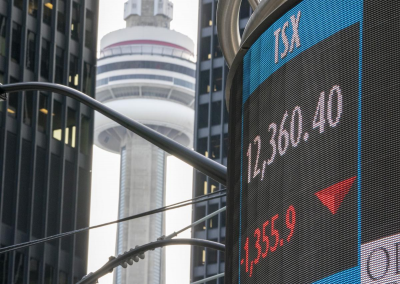

Did you manage to resist selling your stocks during the crash? Good. But now might be the time to do it Jun 23rd
The uncertainty over how the pandemic will play out and what the path to economic recovery will look like begs the question: What should you do with your investment portfolio now?.... More »
Canada, Ontario commit millions for Honda plant upgrades to manufacture hybrid cars - CBC.ca Mar 16th
Canada, Ontario commit millions for Honda plant upgrades to manufacture hybrid cars CBC.caHonda plans $1.38-billion plant upgrade in Ontario The Globe and MailHonda Canada to upgrade Ontario plant with help from Feds, province Yahoo Canada FinanceLILLEY: Honda's inve.... More »
A company I hold stock in was acquired or merged—do capital gains apply? + MORE Aug 8th
Ask MoneySense
A stock I used to own was recently sold to a private equity firm. Is there a strategy for avoiding a capital gain on a sale I did not authorize? I voted against the sale.—Mary
Tax implications of acquisitions, mergers and spinoffs
There are a few transactions that can have u.... More »
StatCan latest wealth survey shows stark disparity between homeowners, renters - CTV News Oct 29th
StatCan latest wealth survey shows stark disparity between homeowners, renters CTV NewsView Full Coverage on Google News.... More »
Where to find and apply for COVID-19 financial relief Aug 20th
The COVID-19 outbreak has dealt a shock to our economy, shuttering entire industries and leaving many more businesses in limbo, forcing layoffs and loss of income on many people. Fortunately, the Canadian government and several other institutions are offering financial relief for Canadians during th.... More »
How to calculate capital gains and losses on rental property
– moneysense.ca
Q. I am selling my rental property, which I lived in for six years before renting it out the last five years. I do not own another home and I am selling this one for less than market value because some horrible renters caused the property to become run down. My mortgage principal is $263,000 and I am selling privately (to avoid real estate commission costs) for $325,000. What do I need to know in regards to capital gains reporting and taxes?
– Chris
A. When you convert a home that is your principal residence into a rental property, this is considered a change in use. You are deemed to dispose of the property at the fair market value at that time, and immediately reacquire it. Future capital gains may then apply based upon subsequent growth in the property’s value.
Under subsection 45(2) of the Income Tax Act, it’s possible to continue treating a principal residence converted to a rental property as your principal residence for up to four years. There are, however, several conditions:
1) You must report the subsequent rental income;
2) You cannot claim depreciation (capital cost allowance) on the property as a tax deduction;
3) You cannot designate another property as your principal residence;
4) You must be a Canadian resident…
– Chris
A. When you convert a home that is your principal residence into a rental property, this is considered a change in use. You are deemed to dispose of the property at the fair market value at that time, and immediately reacquire it. Future capital gains may then apply based upon subsequent growth in the property’s value.
Under subsection 45(2) of the Income Tax Act, it’s possible to continue treating a principal residence converted to a rental property as your principal residence for up to four years. There are, however, several conditions:
1) You must report the subsequent rental income;
2) You cannot claim depreciation (capital cost allowance) on the property as a tax deduction;
3) You cannot designate another property as your principal residence;
4) You must be a Canadian resident…

