

Are we on track to retire at age 50? + MORE May 18th
10 simple ways to save money Aug 18th
How to stay invested in U.S. stocks without the tech overweight + MORE Feb 19th
The best high-interest savings accounts in Canada for 2025 + MORE Jun 16th

Canada’s best credit cards for grocery purchases 2023 + MORE Apr 24th
A TFSA strategy in need of diversification
– moneysense.ca
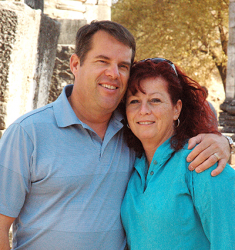
Marc & Kelly Charbonneau
AGE: 55 and 52
PLACE: Gatineau, Quebec
TFSA TOTAL: $82,000 each
STRATEGY: Two dividend-paying bank stocks
Me and my TFSA
Marc Charbonneau and his wife Kelly are looking forward to retiring in seven years. But without a company pension of any kind, Marc is relying on himself and his own investment know-how to pad retirement savings for the couple. He and Kelly have been investing in TFSAs since 2010. His aim? “I want to have $10,000 total in dividend income coming from our TFSAs when we retire in seven years,” says Marc, who does all the investing through an online account. “I’m very disciplined.”
Sign up for our Investing newsletter »
In fact, Marc is so disciplined that he has never waivered from his strategy, which focuses on buying just two dividend-paying bank stocks—TD Bank and Scotiabank. “I love TD because it has more bank branches in the U.S. than in Canada so that North American exposure is nice. And I like Scotiabank because of its international bank branch network so the businesses complement each other,” explains Marc…
How to invest a $50,000 inheritance
– moneysense.ca

Creative Commons/Quinn Dombrowski
Q: A friend of mine has inherited $50,000 and wants to invest it. This person will need $10,000 by next year, $20,000 in 5 years, but the remaining $20,000 has no near future need, so she plans to hold it for greater than 15 years. How would you invest this money? What kind of asset allocation would you use? Can you please together a simple and fundamental financial plan on how to allocate this $50,000?
—Bertram
A: At first glance, this looks like a simple question, but it’s actually quite complex. To start, the $10,000 that will be needed over the next year should go into an investment that’s very safe, such as a GIC or other deposit that has a certainty of maturity value.
The safe, unloved, amazing GIC »
But the answer to the two $20,000 amounts depends entirely on the tradeoff you are willing to make regarding risk and return. This information, in my experience, can only be gained through discussion in person with someone who can help you look at the entire picture as well as help you evaluate all your options…

