
When and how to transfer an RESP for grandchildren + MORE Jul 15th
WhatsApp rolls out contact cards sharing on Windows beta - Gulf News Nov 26th

Canada’s best credit cards for gas purchases for 2023 May 24th
Why it seems like you can never get ahead (Hint: It’s not your streaming subscription) Mar 25th
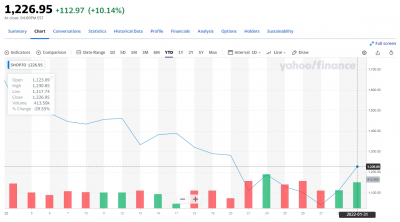
3 Canadian stock to own in Feb 2022 Feb 1st
What are the pros and cons of swap-based ETFs?
– moneysense.ca
 Q: I’m interested in replicating the Couch Potato portfolio with swap-based ETFs. What are the pros and cons of this strategy, and would I be taking on any extra risk?
— Laura G., Collingwood, Ont.
A: A “swap-based ETF” is a type of exchange-traded fund that does not hold any stocks or bonds directly. The fund instead uses a financial instrument called a “total-return swap” designed to deliver the same performance as a specific index, including any increase or decrease in price and any dividends or interest received.
Let’s use the Horizons S&P/TSX 60 Index ETF (HXT) as an example. This popular ETF tracks an index of the 60 largest public companies in Canada, but it doesn’t actually hold any stocks. When you buy units of HXT, your investment is held in cash. Meanwhile, the ETF’s “counterparty” (another financial institution) pledges to deliver to the ETF the same total return as the index. However, swap-based ETFs do not pay dividends or interest in cash. So if the stocks in the S&P/TSX 60 index increase by 5% and pay a 2% dividend, HXT will increase in price by 7% (minus a small fee)…
Relying on momentum to deliver long-term returns
– moneysense.ca

Martin Racicot
AGE: 41
PLACE: Montreal
TFSA TOTAL: $63,500
STRATEGY: Momentum investing
Me and my TFSA
Four years ago, when Martin Racicot, a real estate investor, found himself with a bit of extra money, he opened a TFSA. “It was a no-brainer,” remembers Racicot. Already holding conservative investments in his RRSP and other non-registered accounts, Racicot was willing to take on a good amount of risk in order to maximize returns in this new account.
So after spending some time reading up on different investment styles, Racicot decided to give momentum investing a try. He was inspired by Dual Momentum Investing by Gary Antonacci and is now a faithful follower of ITAwealth.com, a web site dedicated to momentum investing. “Dual momentum is an investment strategy that uses two forms of momentum to increase returns in bull markets, and just as important, to decrease losses in bear markets,” says Racicot. “It’s a system of buying stocks or other securities that have had high returns over the past three to twelve months, and selling those that have had poor returns over the same period…
Markets need active investors more than ever
– moneysense.ca

(Illustration by Sam Island)
I am a firm believer in stock picking. I think stock picking, with the right process and the right temperament, works. Stock pickers, at least the ones I track, in the long run tend to outperform. As a result, the growth in exchange-traded funds, which are investment funds that trade like common stocks and normally “passively” track an index, has been troublesome to me. The number of ETFs listed on the Toronto Stock Exchange has more than doubled since 2011. Pundits forecast these trends to continue, both in terms of asset growth and number of new players entering the marketplace. And the advent of robo-advisors will intensify the shift from active to passive management.
So, is active management doomed? I do not believe so. The more investors use ETFs and robo-advisers, the larger the mispricing of individual securities and the larger the opportunities for active managers—such as value investors—to outperform.
Markets need active investors
If ETFs and robo-advisor companies become popular enough to attract the majority of investable funds out there, they will distort financial markets…

