
The “Big Five” Canadian banks offer investment funds and include Royal Bank of Canada, Toronto Dominion Bank (TD Canada Trust), Bank of Nova Scotia, Bank of Montreal and Canadian Imperial Bank of Commerce (CIBC). Let’s explore the best place for you to invest.
Latest News


Your Next Home May Be in the Metaverse Jul 7th
Krista Kim’s dream home didn’t exist, so she built it herself—in the metaverse. In 2020, cooped up with her two kids in a Toronto condo during the Covid lockdown, the digital artist began designing her perfect escape, leaving no detail overlooked. She sketched out a glassed-walled bungalow vil.... More »
Podcast 25: Dr. Steve Wendel on Investor Success Jul 9th
The latest episode of the Canadian Couch Potato podcast features an interview with Dr. Stephen Wendel, Head of Behavioural Science at Morningstar. Wendel heads up a research initiative called the Investor Success Project, which focuses on the human factors that dominate personal finance. So much dis.... More »
Christy Clark backs campaign to ban requiring women to wear high heels Mar 14th
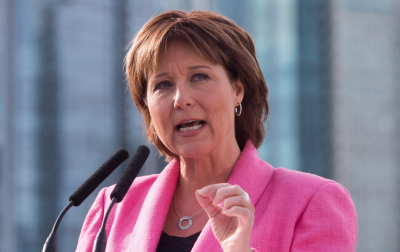
British Columbia Premier Christy Clark speaks about shadow flipping in the real estate industry, in Vancouver, B.C., on Friday March 18, 2016. THE CANADIAN PRESS/Darryl Dyck
VANCOUVER – A campaign to ban employers from requiring female workers to wear high heels on the job has gained the backi.... More »
Indonesia, Malaysia form OPEC-like council for palm oil producers to ensure price stability Nov 21st
KUALA LUMPUR, Malaysia – Indonesia and Malaysia, the world’s top two palm oil producers, signed an agreement Saturday to set up a council for palm oil producing countries in a bid to ensure price stability by managing production and stock in the global market.
Officials said the Jakarta-.... More »
At the open: TSX slides as riskier assets shunned + MORE Aug 18th
Wall Street starts flat
.... More »
Money saving tips for summer fun
– moneysense.ca
 (David Franklin/Getty Images)
Summer is here and that means Canadians will be going out and spending time with friends and family—but, apparently, not saving money.
A new survey by Tangerine reveals that 52% of Canadians adopt a more relaxed attitude when it comes to spending during the warmer months, blowing their funds on entertainment and vacations. A whopping 83% said that this spike in spending would impact how much they could save.
On average, Canadians plan to spend about $5,605 in the summer time, according to a BMO Summer Spending Survey—with 61% relying on credit cards to pay for these splurges. The biggest single expense? Vacations and trips with an average spend of $2,038 .
All this spending leads to two, related problems: savings slowing to a trickle and Canadians acquiring even more debt. According to Dr. Moira Somers, a financial psychologist, this more carefree money mindset occurs because normal routines change in the summer, causing you to become less conscious of your spending…
Cybertheft and island-building stoke US-China tensions ahead of high-level talks in Washington
– canadianbusiness.com
WASHINGTON – Tensions between the U.S. and China are growing over its island-building in the South China Sea and over suspicions that Beijing was behind a massive hack into a federal government server that resulted in the theft of personnel and security clearance records of 14 million employees and contractors.
But both powers have incentives to calm the waters ahead of the Chinese leader’s visit to Washington in the fall.
The two countries’ top diplomats and finance officials meet here next week for the annual U.S.-China strategic and economic dialogue. The Obama administration says the two governments won’t be papering over their differences, but they are expected to accentuate the positive, stressing areas of co-operation, like climate change.
Civilian and military officials will meet Monday to discuss thorny security issues. Secretary of State John Kerry and Treasury Secretary Jacob Lew kick off two days of talks Tuesday with Vice Premier Wang Yang and State Councilor Yang Jiechi on a sprawling agenda, including plans for a bilateral investment treaty…
But both powers have incentives to calm the waters ahead of the Chinese leader’s visit to Washington in the fall.
The two countries’ top diplomats and finance officials meet here next week for the annual U.S.-China strategic and economic dialogue. The Obama administration says the two governments won’t be papering over their differences, but they are expected to accentuate the positive, stressing areas of co-operation, like climate change.
Civilian and military officials will meet Monday to discuss thorny security issues. Secretary of State John Kerry and Treasury Secretary Jacob Lew kick off two days of talks Tuesday with Vice Premier Wang Yang and State Councilor Yang Jiechi on a sprawling agenda, including plans for a bilateral investment treaty…
Low prices and rising global political will are shifting future of the oil sands
– theglobeandmail.com
Should oil sands investment continue to ignore carbon costs and discount political rhetoric, or should it expect a decarbonized future, where oil prices and carbon policy both drive investment returns?

