
TSX getting you down? There are always sound investment alternatives.
Latest News


New documents link Huawei to suspected front companies in Iran, Syria Jan 8th
The U.S. case against the chief financial officer of China’s Huawei Technologies, who was arrested in Canada last month, centres on the company’s suspected ties to two obscure companies. One is a telecom equipment seller that operated in Tehran; the other is that firm’s owner, .... More »
Investing with your gut + MORE Jul 20th
(Shutterstock)
Most Canadians are boring investors; they sock their money away in plain vanilla mutual funds or Exchange Traded Funds (ETFs) inside of Registered Retirement Savings Plans (RRSPs) or Tax Free Savings Accounts (TFSAs). And that’s exactly how it should be—saving for retirement isnâ€.... More »
Joe Rogan’s podcast headed to Spotify, exclusive deal reportedly worth $100 million - MMA Mania May 19th
Joe Rogan’s podcast headed to Spotify, exclusive deal reportedly worth $100 million MMA ManiaJoe Rogan Signs Exclusive Podcast Deal With Spotify Yahoo Canada FinanceThe Joe Rogan Experience podcast to become Spotify exclusive BJPENN.COMJoe Rogan Calls 6ix9ine the '.... More »
Why everyone feels like they’re in the middle class + MORE Jun 19th
Most Canadians think of themselves as middle class. In fact, the term is so elastic that politicians know they have just about everybody’s ear when they talk about “middle class” goals and aspirations. We think they are talking to us, whether it’s about wage increases, debt, taxes, or sav.... More »
How TD Put the “Managed” in ETF Portfolios + MORE Mar 23rd
What Canadian bank was first to launch a line of ETFs? You might think it was BMO, which is by far the biggest bank in the industry today, with more than 70 ETFs and some $37 billion in assets. But in fact it was TD, who were ahead of the curve when they created a small family of ETFs way back in 20.... More »
What happens to your debts after you die?
– canadianbusiness.com
When you die, you don’t just leave behind your family and your legacy. You also leave behind your debts.
But what happens to those debts once you’re gone? In general, your assets and debts become part of an estate. It’s the estate’s responsibility to pay them. If there’s any money left, it goes to your heirs. If there’s not enough money to cover all the debts, they may go unpaid.
It can get complicated though, so here are a few things you should know:
SETTLING THE ESTATE: A will typically names an executor, who is responsible for settling the financial affairs of the deceased. If there is no will, the state decides who should handle it. That person follows a pecking order of who gets paid first, said Greg McBride of Bankrate.com. Secured debts, like mortgage or auto loans, come first; unsecured debts, such as credit cards and medical bills, follow.
HOME: Banks expect to continue to be paid for a mortgage or they will take action. But some protections exist for family members or others living in the home, said Chas Rampenthal, general counsel at LegalZoom…
But what happens to those debts once you’re gone? In general, your assets and debts become part of an estate. It’s the estate’s responsibility to pay them. If there’s any money left, it goes to your heirs. If there’s not enough money to cover all the debts, they may go unpaid.
It can get complicated though, so here are a few things you should know:
SETTLING THE ESTATE: A will typically names an executor, who is responsible for settling the financial affairs of the deceased. If there is no will, the state decides who should handle it. That person follows a pecking order of who gets paid first, said Greg McBride of Bankrate.com. Secured debts, like mortgage or auto loans, come first; unsecured debts, such as credit cards and medical bills, follow.
HOME: Banks expect to continue to be paid for a mortgage or they will take action. But some protections exist for family members or others living in the home, said Chas Rampenthal, general counsel at LegalZoom…
For 56-year-old farmer Shannon Webb, waking up Friday to six inches of snow coating his grain fields near Wynyard, Sask., the frustration of an interrupted harvest wins out, for now, over worry about the ongoing oil-and-gas drilling downturn.
Stephen Poloz to corporate Canada: Cheer up
– macleans.ca
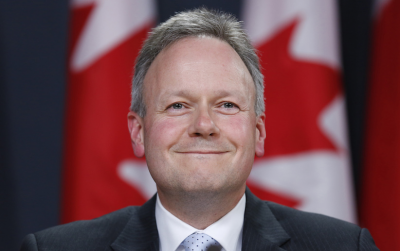 Bank of Canada Governor Stephen Poloz smiles during a news conference in Ottawa in 2013. REUTERS/Chris Wattie
Bank of Canada Governor Stephen Poloz is known for speaking in metaphors. He has used hockey cards to explain the wealth effects of spikes in energy prices, and simmering spaghetti sauce to describe the response of central banks to the financial crisis. His best one, he says, is an image he constructed recently to counter the notion that ultra-low interest rates are doing nothing for the economy. “The idea that policy has stopped working, I think, is a bit odd,” Poloz said over the weekend. “My metaphor of riding a bike up a hill is probably one of the best ones I have ever had. Everybody understands that if you are riding a bike up a hill and you stop pedaling, you are going to notice the outcome right there. You probably are just going to fall over.”
Unfortunately, the Canadian economy is a long way from being ready for the Tour de France. Poloz and the other members of the Bank of Canada’s Governing Council dropped the benchmark lending rate to 0…
Spielberg’s Amblin, China’s Alibaba announce partnership
– canadianbusiness.com
BEIJING, China – Steven Spielberg’s Amblin Partners and Chinese e-commerce giant Alibaba Group’s media arm announced a partnership Sunday to co-produce films for global audiences.
The deal adds to a multibillion-dollar string of Chinese ventures with Hollywood studios to capture more of the profits from China’s growing media market.
Alibaba Pictures will acquire a minority stake in Amblin Partners, the companies said. Amblin, co-owned by Spielberg, combines DreamWorks Studios, Participant Media, Reliance Entertainment and Entertainment One.
No financial details were announced.
Alibaba, led by founder Jack Ma, is China’s biggest online commerce company and has expanded into entertainment with its 2014 acquisition of a 60 per cent stake in a Hong Kong company that became Alibaba Pictures. Alibaba also owns the Youku Tudou online video service.
The partnership “marks an important milestone in our globalization strategy to reach Chinese and global audiences alike,” said Alibaba Pictures chairman Shao Xiaofeng in a statement…
The deal adds to a multibillion-dollar string of Chinese ventures with Hollywood studios to capture more of the profits from China’s growing media market.
Alibaba Pictures will acquire a minority stake in Amblin Partners, the companies said. Amblin, co-owned by Spielberg, combines DreamWorks Studios, Participant Media, Reliance Entertainment and Entertainment One.
No financial details were announced.
Alibaba, led by founder Jack Ma, is China’s biggest online commerce company and has expanded into entertainment with its 2014 acquisition of a 60 per cent stake in a Hong Kong company that became Alibaba Pictures. Alibaba also owns the Youku Tudou online video service.
The partnership “marks an important milestone in our globalization strategy to reach Chinese and global audiences alike,” said Alibaba Pictures chairman Shao Xiaofeng in a statement…
Prairie farmers take financial hit as oil and gas slowdown stalls drilling rigs
– canadianbusiness.com
CALGARY – For 56-year-old farmer Shannon Webb, waking up Friday to six inches of snow coating his grain fields near Wynyard, Sask., the frustration of an interrupted harvest wins out, for now, over worry about the ongoing oil-and-gas drilling downturn.
Like many Prairie farmers, Webb has used a steady paycheque from working on drilling rigs in winter and summer for decades to pay down his land and equipment debt and stabilize his farm income. He’s been able to leave the rig to tend his farm in spring and fall and go back to the oilpatch when dry weather or frozen ground allows drilling to ramp up again.
“I was supposed to go back (to the oilpatch) by Nov. 1 but I don’t think I’m going to get much more than about two weeks out of that job, anyway,” he said in disgust.
“I don’t think I’ll be done combining … I’m going to have to get this done.”
Webb has been working on rigs since 1978, about 38 years. He says the current downturn, marked by two years of depressed oil prices, is the worst he’s seen since the big oil price crash of the 1980s…
Like many Prairie farmers, Webb has used a steady paycheque from working on drilling rigs in winter and summer for decades to pay down his land and equipment debt and stabilize his farm income. He’s been able to leave the rig to tend his farm in spring and fall and go back to the oilpatch when dry weather or frozen ground allows drilling to ramp up again.
“I was supposed to go back (to the oilpatch) by Nov. 1 but I don’t think I’m going to get much more than about two weeks out of that job, anyway,” he said in disgust.
“I don’t think I’ll be done combining … I’m going to have to get this done.”
Webb has been working on rigs since 1978, about 38 years. He says the current downturn, marked by two years of depressed oil prices, is the worst he’s seen since the big oil price crash of the 1980s…

