
The “Big Five” Canadian banks offer investment funds and include Royal Bank of Canada, Toronto Dominion Bank (TD Canada Trust), Bank of Nova Scotia, Bank of Montreal and Canadian Imperial Bank of Commerce (CIBC). Let’s explore the best place for you to invest.
Latest News



So you fell short of your financial goals in 2025—here’s how to do better Dec 26th
Did you fall behind on your financial goals for 2025? If so, you’re not alone. According to a survey by online estate planning platform Willful, 58% of Canadians reported postponing financial tasks they’d earmarked for the year, such as paying down debt, contributing to registered savings and in.... More »
What is a non-registered account and how does it work? + MORE Mar 4th
You could consider opening a non-registered account if you’ve reached the contribution limits of your registered accounts, like your registered retirement savings plan (RRSP) and tax-free savings account (TFSA). Unlike a registered account, a non-registered account doesn’t offer tax benefits, bu.... More »
Where are Nvidia’s chips made? Apr 15th
Nvidia announced Monday that it will produce its artificial intelligence (AI) super computers in the United States for the first time.
AP Photo
The tech giant said it has commissioned more than one million square feet of manufacturing space to build and test its specialized Blackwell chips in .... More »
Making sense of the markets this week: November 24, 2024 Nov 22nd
Kyle Prevost, creator of 4 Steps to a Worry-Free Retirement, Canada’s DIY retirement planning course, shares financial headlines and offers context for Canadian investors.
Can’t stop the Nvidia train
Nvidia is now the world’s largest company. You know it’s growing quickly when there ar.... More »
The best cash back credit cards in Canada for 2024 + MORE Sep 27th
Cash back credit cards are an extremely popular type of rewards card in Canada. Each cash back credit card has its own features and benefits, so you’ll want to compare the annual fee, earn rate and any additional benefits before you apply.
Credit card comparison tool
Compare your options wit.... More »
The State of Commercial Real Estate in Canada
– canadianbusiness.com
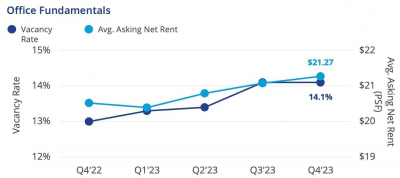 From a transactional standpoint, particularly for investments, it was one of the slowest years we’ve had in a long time. Inflation and subsequent interest rate increases prompted a sense of uncertainty across global real estate markets. Canadians spent most of the year asking whether interest rates would keep rising, and wondering what the effects of these elevated rates would be.
The past 18 months have witnessed the impact of these rises, sending ripples through the commercial real estate (CRE) cap rate landscape—intricately influencing property valuation processes, dampening transactional activities, and curbing landowners’ enthusiasm for acquiring new properties or initiating fresh developments. As real estate inherently operates in cycles, we find ourselves navigating a transitional period, adapting to the enduring presence of elevated interest rates as we turn the page to 2024.
A recession’s impact on the national market
Statistics Canada reported that the national economy shrank in the third quarter by 0…

