
Mortgages in Canada can be a murky subject – one that we hope to shed some light on with a series of highly informational articles.
Latest News




Six Months was What it Took to Absorb Latest Mortgage Changes! Aug 19th
Ever since the US 2008 sub-prime mortgage crisis, we’ve seen a never-ending string of change. Mortgage lending rules have become tougher and tighter. Underwriting is stricter and more thorough. (As usual, the government has not missed an opportunity to stick their nose into your business by m.... More »
Pace of construction in Ottawa still too high, according to CMHC + MORE Jan 31st
Home builders need to further scale back construction to cool overheated markets in Ottawa and other centres, says Canada Mortgage and Housing Corp. A quarterly market assessment released by the federal government’s housing watchdog Wednesday said rising vacancy rates and high inventories of n.... More »
How to prepare for a 2023 recession + MORE Nov 19th
The Great Recession scarred me. I was just about to graduate from university in 2008 when it hit: The fallout from the subprime mortgage crisis created a deluge of fear, anxiety and pure panic from all corners. The S&P 500 plunged by 57%, U.S. gross domestic product (GDP) declined by 3.8% and em.... More »
Why January is peak season for second mortgages in Canada Dec 18th
For many mortgage brokers, January is the busiest month of the year..... More »
Toronto's MaRS Building To Receive $86-Million Loan From Province + MORE Dec 11th
TORONTO - Ontario's Liberal government announced Wednesday that it would provide an $86-million line of credit to the MaRS office project in downtown Toronto to help attract tenants and protect the province's original investment.The government was already on the hook for a $225 million loan to MaRS .... More »
 They are arriving with big down payments, and reducing their risk with five-year mortgages.
Forecasts are right: Rates will rise
– moneysense.ca
 (Getty Images/Juan Monino)
Quick Chicken Little, the sky is falling!
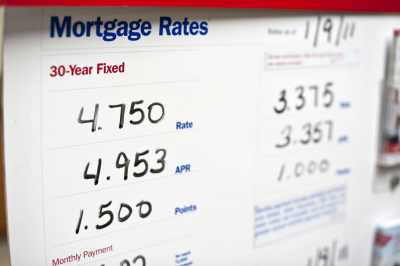
That’s my synopsis of the latest Organization for Economic Co-Operation and Development forecast regarding when mortgage rates will begin to climb in Canada.
Much like the fable, the OECD keeps pointing to signs of how Canada’s housing market is in for steep correction, or even a collapse. Much like the fable, the OECD is beginning to sound like an anxious chicken whipping up fears to cause mass hysteria.
I don’t think there’s an economist out there that wouldn’t agree with the assertion that mortgage rates are going to rise next year in Canada. Economists I’ve spoken to (including David Madani at Capital Economics and Robert Hogue of RBC Bank) predict a small increase by mid-year with an overall increase of just over 1% by year-end (2015).
Now, I may be naïve, but I don’t really think there will be much difference in the market if residential mortgage rates rise in May versus June. It’s certainly not a “sky is falling!” situation…
Family help for down payment barely increases
– moneysense.ca
 (Getty Images/Image Source)
Over the last few years critics have complained that fewer and fewer Canadians rely on personal savings for their down payment, preferring to get help from friends and other sources. But a new survey shows that this just isn’t the case.
Released in mid-November by the Canadian Association of Accredited Mortgage Professionals, the annual survey shows that the average down payment made by first-time homebuyers hasn’t changed much in the last three decades—bouncing between 20% and 22% since 1980. However, the source of that down payment has shifted over the years.
Before 1980, first-time homebuyers relied primarily on:
personal savings for the bulk of their down payment (54%)
gifts from family members (5%)
family loans (9%)
loans from financial institutions (26%)
loans from employers (1%)
other sources (4%)
withdrawals from an RRSP (2%)
Between 2010 and 2014, the source of down payment shifted:
personal savings for the bulk of their down payment (40%)
gifts from family members (11%)
family loans (6%)
loans from financial institutions (27%)
loans from employers (1%)
other sources (2%)
withdrawals from an RRSP (12%)
However, if you were to include withdrawals from RRSPs as part of savings, then there’s only been a 2% drop in the amount of personal savings used by first-time homebuyers to make a down payment—from 54% in pre-1980, to 52% in the 2010 to 2014 period…
Canadian housing markets overvalued: CMHC
– moneysense.ca
 (Getty Images)
OTTAWA – The Canada Mortgage and Housing Corp. says there is a modest amount of overvaluation in the country’s housing markets, however other risk factors such was overheating, price acceleration, and overbuilding are not present.
In its house price analysis and assessment, CMHC says, overall, housing markets in Canada are broadly consistent with underlying demographic and economic factors such as employment and interest rates.
CMHC chief economist Bob Dugan says the risk of overvaluation is most evident in Montreal and Quebec, but added that the trend is improving.
He said a modest risk of overvaluation is also present in Toronto, Calgary and Halifax.
However, CMHC did not point to Vancouver, one of the country’s hottest real estate markets as being at a risk of overvaluation.
CMHC says home prices in Vancouver are supported by local growth in personal disposable income and long-term population growth.
The post Canadian housing markets overvalued: CMHC appeared first on MoneySense.
The Buzz From the Expo
– canadianmortgagetrends.com
A perennial highlight of CAAMP’s Mortgage Forum is the EXPO. It’s where brokers network with lenders and mortgage industry suppliers, and where the latter show off their wares. It’s become our tradition to roam the show floor every year, gathering tidbits about each exhibitor’s recent developments and new products. Here’s some of what we dug […]

