
Learn more about Canadian mortgage rates, rules and the latest news – read on!
Latest News


Department of Finance Announces New Qualifying Rate for Insured Stress Test Feb 19th
The federal government announced on Tuesday it will be changing the benchmark qualifying rate used for Canada’s insured mortgage stress test. The change, which will take effect April 6, 2020, means borrowers with insured mortgages (typically those with less than 20% equity) will need to prove they.... More »
Should you hold your mortgage inside your RRSP? + MORE Oct 2nd
Q. I currently own a house in Edmonton that is mortgaged, and looking to purchase a property in Vernon, BC, that I will eventually retire to. Until then, I am liking the idea of renting out that property to help support the additional mortgage.
I am wondering if it’s possible to transfer my exis.... More »
Scotiabank to buy small Dallas bank in mortgage-finance play + MORE May 30th
Scotiabank agreed to acquire Maple Financial Holdings Inc., which owns a small U.S. commercial bank, as the Canadian firm looks to expand its structured-finance business in the American mortgage industry. .... More »
Mortgage debt rising fastest among Canadians nearing retirement, data show Apr 27th
Older homeowners are increasingly leveraging equity to help younger buyers, raising long-term financial risks as retirement approaches.... More »
Thinking of a private mortgage? Here’s what lenders want to see + MORE May 9th
Private mortgages continue to play an important role in today’s Canadian housing market, especially as traditional lending guidelines tighten. Yet many borrowers are surprised to learn that private lenders don’t simply look at one or two factors — they assess a wide range of details that can m.... More »
Home ownership rate in Canada on the decline: census
– moneysense.ca
OTTAWA — Not everyone wants to own a home these days, Evan Siddall concedes — not even his own millennial-age son. For the head of the Canada Mortgage and Housing Corp., that’s really saying something.
But Siddall’s experience is far from uncommon, the latest census figures show: 30-year-old Canadians are less likely to own a home today than their baby boomer parents did at the same age, mirroring a modest but unmistakable decline in the national home ownership rate.
READ: The dream hasn’t changed, we have
At age 30, 50.2 per cent of millennials owned their homes, compared to 55 per cent of baby boomers at the same age. Young adults today are more likely to live in apartments than their 1981 counterparts, are less likely to live in single-detached homes, and — as Statistics Canada revealed over the summer — more likely than ever before to still be living at home.
The figures should change the way Canada thinks about its real estate sector, said Graham Haines, research and policy manager at the Ryerson City Building Institute in Toronto…
BoC Rate Hold Good News for Variable Rate Mortgage Holders
– canadianmortgagetrends.com
Although Wednesday’s Bank of Canada rate hold was largely expected, variable rate mortgage holders are likely still breathing a sigh of relief. After raising interest rates at each of its previous two meetings, the Bank of Canada on Wednesday took a pause and left its overnight rate at 1.00%, citing concerns about NAFTA renegotiations and […]
Has ‘fixing’ Canada’s mortgage market made it riskier?
– macleans.ca
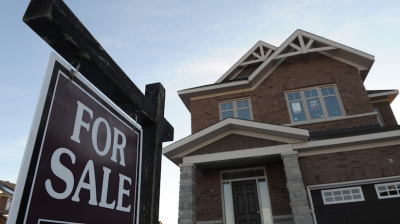 THE CANADIAN PRESS IMAGES/Sean Kilpatrick
Adam Farber has a practical, if slightly gory, view of his place in Canada’s mortgage market. “You come to me with an open wound,” he says. “You’ve been beaten up. I’m your last option.” Farber, the vice-president of Corwin Mortgage Capital in Toronto, is a private mortgage lender. Borrowers who can’t get a loan elsewhere will sometimes seek private funds that bear higher interest rates. It’s a business that’s mostly unregulated—and set to grow. Ironically, one of the unintended—and potentially dangerous—consequences of regulators’ recent attempts to stabilize the mortgage market may be to push people toward riskier products. “My business is going to explode at this point,” Farber predicts. “With me, people are going to qualify because there’s no stress-test.”
Earlier this month, the Office of the Superintendent of Financial Institutions, the country’s banking regulator, introduced a new stress-test for banks to apply to borrowers…
Will gifting a home avoid U.S. capital gains tax?
– moneysense.ca
 (Getty Images / Peter Dazeley)
Q: I am a U.S. citizen, my wife is not. We jointly own our home in Toronto where we have lived for 20+ years. Can I gift my half of the home to her before we sell to avoid U.S. capital gains tax?
—Robert
A: Robert, you may not have to gift your half of the house to avoid U.S. tax on the gain. You are allowed under U.S. tax law to exempt up to $250,000 U.S. of gain from the sale of a personal residence (the one you have lived in and owned for at least two of the previous five years as your primary residence). If your gain is greater than that, you may want to look at some gifting options. If you gift something with a value of greater than US$148,000 to a non-resident alien spouse, you will be required to file a gift tax return.
You also need to be mindful of foreign mortgage gain if you are paying off a mortgage. The difference between the U.S. dollar value of your mortgage when you took it out and the U.S. dollar value when you paid it off can be included in your income in the year of sale if there is a positive currency gain…

