
There are plenty of retirement plan options in Canada! Stay on top of the best plans right here.
Latest News




Should I draw down my RRIF to avoid estate taxes? + MORE Apr 25th
Ask MoneySense
Is it a good idea to withdraw more money monthly than one needs from one’s RRIF? What about beginning a regularly automated transfer of this extra money to one’s non-registered investments so that there is less money in the RRIF account upon death? As a result, the estate will be .... More »
Canada’s income tax brackets for 2023, plus the maximum tax you’ll pay based on income + MORE Dec 7th
Taxes are an inescapable fact of life in Canada. Despite this, many of us don’t think too hard about the specific federal and provincial tax brackets that govern our taxable income. Nonetheless, understanding what bracket we fall into is key to accurately estimating the amount of tax we owe on our.... More »
A low-fee portfolio for DIY investors + MORE Jul 15th
(Photo by Micah Bond)
The portfolio problem
Gino Marcone, 49, is a regional sales manager who has spent the last three years working with an advisor at his local Guelph, Ont. bank to build his retirement nest egg. He recently learned he’s paying 2% annually in management expense ratios (MER.... More »
MoneySense magazine: February/March 2015 + MORE Jan 29th
February/March 2015
Volume 16, Number 9
Download the MoneySense app to read this issue on your tablet or smartphone now.
The RRSP advantage
Canada’s best mutual funds
The Best ETFs to buy right now!
Editor’s Letter
By: Duncan Hood
Intelligence
Ask MoneySense
By: Bruce Sellery
Am I On .... More »
A guide to spousal RRSPs for married and common-law partners + MORE Jun 22nd
Couples can open and contribute to a personal Registered Retirement Savings Plan (RRSP) or a spousal RRSP—or both. A spousal RRSP generally makes the most financial sense for couples whose incomes are quite different. If one partner earns little or no income, so that contributing to their own RRSP.... More »
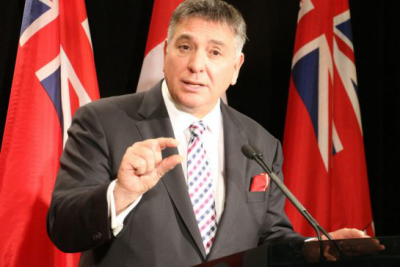 Plan will aim to replace up to 15 per cent of income, with workers and employers each contributing 1.9% of annual earnings up to $90,000.
Bond ETFs in taxable accounts
– moneysense.ca
 (Peter Dazeley/Getty Images)
Q: Can you share your thoughts about the BMO Discount Bond (ZDB) and the Horizons Canadian Select Universe Bond (HBB) as long-term holdings in a taxable account? –D. F.
A: Earlier this year BMO and Horizons both launched bond ETFs specifically designed for taxable accounts. These two funds have very different structures, and each has its strengths and weaknesses. So let’s dig more deeply into each fund to help you decide which might be right for your portfolio.
Before we discuss these specific funds, let’s review the problem with holding traditional bond ETFs in non-registered accounts. Most bonds these days trade at a premium (higher than their par value), because they were issued when interest rates were higher. Premium bonds are perfectly fine in your RRSP or TFSA, but they are notoriously tax-inefficient and should not be held in non-registered accounts.
Do you want a discount or a swap?
The BMO Discount Bond (ZDB), launched in February, is similar to traditional broad-market bond ETFs, such as the iShares Canadian Universe Bond (XBB), the Vanguard Canadian Aggregate Bond (VAB) and the BMO Aggregate Bond (ZAG)…
Delaying OAS Payments: Good Idea for your Retirement?
– rhondasherwood.com

Many people have questions and concerns about how delaying OAS payments will affect their retirement income. Not only will Canadians have to wait longer to receive Old Age Security (OAS) payments, but another change to the rules means that people who opt to start receiving payments later will receive a higher amount each month. Does it make sense for you to decide to delay OAS payments to get more money later on? Let’s look at your options carefully to help you determine which choice is best for you.
The Old Age Security Pension
As a Canadian you are entitled to receive certain government pension benefits such as Old Age Security (OAS) and Canadian Pension Plan (CPP), which are two very separate retirement programs. CPP eligibility is based on contributions that you have made during your working life, while OAS is based on residency.
OAS is available to all Canadian residents who have lived in the country for a minimum of 10 years after the age of 18. You can even receive benefits if you are living outside of the country when you apply for them if you have lived in Canada for at least 20 years or more after you turned 18…

