
Retirement planning getting you down? There are always smart ways to plan the financial aspects of your retirement.
Latest News


Using RRSP money for a renovation + MORE Aug 19th
Q: My daughter and my husband bought a $400,000 property three years ago near Midland, Ont. My husband earns $59,000 annually and my daughter $16,000 (self-employed). They want to renovate the kitchen and eventually sell the home to make a profit on it. The mortgage is $319,000. My daughter wants .... More »
Why contributing to a TFSA is a good resolution Dec 28th
If nothing else, tax-free savings accounts (TFSAs) have been a boon to Canadian financial writers and bloggers. Two noteworthy examples: A blog on Boomer & Echo by CFP Robb Engen (also a MoneySense ETF expert panelist for the annual Best ETFs in Canada feature) comparing TFSAs to registered reti.... More »
How annuities work in Canada + MORE Apr 18th
Annuities are life insurance products that pay a regular income to a purchaser. When you buy an annuity, it’s like buying a pension plan with a lump sum premium paid from your savings. The payments you receive include a return of your original capital and interest income on that capital. It ma.... More »
Divorce over 50: managing your finances if you find yourself single in the run-up to retirement Aug 3rd
Divorce is certainly not new—but what’s emerging as a trend is the choice to split later in life. Dubbed grey divorce, these marital splits, happening close to or in retirement, are reportedly on the rise, and they can have a significant financial impact.
Married couples are generally subject .... More »
2022 Income Tax: New tax credits for Canadians Nov 30th
It’s that time again… to get all your paperwork ready for tax season. We all know about having our T4 and registered retirement savings plan (RRSP) contribution statements ready, but what about the new tax credits for the 2022 tax filing season? What are they and how do they work? Don’t wo.... More »
Should I buy life insurance for our child?
– moneysense.ca
Q: About a year ago our 18-month-old had a liver transplant. We worry he won’t be eligible for life insurance when he’s older and are considering a whole life policy for him while he’s young. Is this wise?
—Jenny Reid, Fredericton, NB
A: The first thing you need to do is ask your insurance provider about your son’s eligibility for life insurance when he is an adult. This may save you a lot of work and a lot of worry. Aline Baker of Rogers Insurance in Calgary says that “depending on the circumstances of the child’s medical history, he may very well be eligible for coverage.” If, however, you’re concerned that he won’t get coverage due to medical exclusions, you could opt for a whole life policy that allows you to increase the coverage without future medical evidence. Baker explains that “the child would have a small amount of whole life coverage now, but he will be able to access the cash value of these policies when he is older to offset things like education expenses, a down payment on a home or to provide retirement income…
—Jenny Reid, Fredericton, NB
A: The first thing you need to do is ask your insurance provider about your son’s eligibility for life insurance when he is an adult. This may save you a lot of work and a lot of worry. Aline Baker of Rogers Insurance in Calgary says that “depending on the circumstances of the child’s medical history, he may very well be eligible for coverage.” If, however, you’re concerned that he won’t get coverage due to medical exclusions, you could opt for a whole life policy that allows you to increase the coverage without future medical evidence. Baker explains that “the child would have a small amount of whole life coverage now, but he will be able to access the cash value of these policies when he is older to offset things like education expenses, a down payment on a home or to provide retirement income…
No need to boost private pension contributions: Report
– moneysense.ca
OTTAWA – A new study says automatically raising workplace pension contributions in tandem with the cost of living is unnecessary because Canadian retirees increasingly tighten their purse strings after they reach 70 years old.
The report by the C.D. Howe Institute think tank also argues that tying up the extra funds in pension contributions is an inefficient use of scarce financial resources for Canadians.
10 signs you’re ready to retire »
The research says lowering pension contributions for company plans — such as defined-benefit vehicles — would put more money in the pockets of families that are raising kids and paying down mortgages.
The study is released a few days before federal Finance Minister Bill Morneau is scheduled to meet his provincial and territorial counterparts to continue quickly evolving discussions on how to boost the Canada Pension Plan.
The federal Liberals have pledged to work with the provinces and territories to enhance CPP. They argue that expanding CPP across the country will ensure more Canadians have a secure retirement…
The report by the C.D. Howe Institute think tank also argues that tying up the extra funds in pension contributions is an inefficient use of scarce financial resources for Canadians.
10 signs you’re ready to retire »
The research says lowering pension contributions for company plans — such as defined-benefit vehicles — would put more money in the pockets of families that are raising kids and paying down mortgages.
The study is released a few days before federal Finance Minister Bill Morneau is scheduled to meet his provincial and territorial counterparts to continue quickly evolving discussions on how to boost the Canada Pension Plan.
The federal Liberals have pledged to work with the provinces and territories to enhance CPP. They argue that expanding CPP across the country will ensure more Canadians have a secure retirement…
One caveat of the 4% withdrawal rule
– moneysense.ca
Dieters experience a great deal of joy when they are able to tighten their belts an extra notch.
But financial belt tightening isn’t much fun. It’s something that came to mind when reading Andrew Hallam’s article called “Retirement Fortunes That You Can’t Control.”
He looked at the experience of two unfortunate retirees. One retired at the peak of the market in 2000 and the other at the peak in 2007. Both invested in a low-fee balanced index fund from Vanguard and withdrew 4% per year to live on.
Given their poor timing, the results weren’t entirely discouraging. While both investors suffered from an initial dip, they also enjoyed a subsequent recovery.
But—and it’s a pretty big ‘but’—the income produced by their portfolios fell when the market declined. For instance, 4% of a $1 million portfolio is $40,000. Should the portfolio fall to $500,000 then the 4% withdrawal only produces a payment of $20,000.
In addition, even after the portfolios recovered, the payments didn’t keep up with inflation…
But financial belt tightening isn’t much fun. It’s something that came to mind when reading Andrew Hallam’s article called “Retirement Fortunes That You Can’t Control.”
He looked at the experience of two unfortunate retirees. One retired at the peak of the market in 2000 and the other at the peak in 2007. Both invested in a low-fee balanced index fund from Vanguard and withdrew 4% per year to live on.
Given their poor timing, the results weren’t entirely discouraging. While both investors suffered from an initial dip, they also enjoyed a subsequent recovery.
But—and it’s a pretty big ‘but’—the income produced by their portfolios fell when the market declined. For instance, 4% of a $1 million portfolio is $40,000. Should the portfolio fall to $500,000 then the 4% withdrawal only produces a payment of $20,000.
In addition, even after the portfolios recovered, the payments didn’t keep up with inflation…
No need to expand the CPP: Report
– moneysense.ca
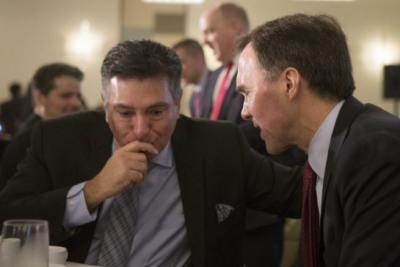
As Ontario Premier Kathleen Wynne clarifies and possibly softens her line on what her government is expecting around Canada Pension Plan reform, a new report from the Fraser Institute suggests expanding the program isn’t necessary.
“When you consider the facts, not the rhetoric, it becomes abundantly clear that expanding the CPP is a solution in search of a problem,” Charles Lammam, director of fiscal studies at the Fraser Institute and co-author of the study, said in a release.
First of all, the study argues, most Canadians are financially prepared for retirement. It points to the fact that in 2014, Canadians held $7.7 trillion in non-pension assets, such as stocks and real estate, compared to the $3.3 trillion held in pensions.
How do I know if I qualify for a pension income tax credit? »
The study comes as Wynne said yesterday the Ontario government could accept an enhanced CPP even if it doesn’t meet the same benefit levels as the Ontario Retirement Pension Plan. Finance ministers are meeting in Vancouver next week to see whether they can reach an agreement on enhancement of the CPP and the Quebec Pension Plan, something that would require the approval of seven provinces representing two-thirds of the population…
“When you consider the facts, not the rhetoric, it becomes abundantly clear that expanding the CPP is a solution in search of a problem,” Charles Lammam, director of fiscal studies at the Fraser Institute and co-author of the study, said in a release.
First of all, the study argues, most Canadians are financially prepared for retirement. It points to the fact that in 2014, Canadians held $7.7 trillion in non-pension assets, such as stocks and real estate, compared to the $3.3 trillion held in pensions.
How do I know if I qualify for a pension income tax credit? »
The study comes as Wynne said yesterday the Ontario government could accept an enhanced CPP even if it doesn’t meet the same benefit levels as the Ontario Retirement Pension Plan. Finance ministers are meeting in Vancouver next week to see whether they can reach an agreement on enhancement of the CPP and the Quebec Pension Plan, something that would require the approval of seven provinces representing two-thirds of the population…

