
Not sure how to make a savings plan? Read on…
Latest News
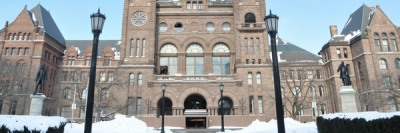



Ontario Fall Economic Update: Small Businesses Get Tax Cut; Minimum Wage Hike Moves Forward + MORE Nov 23rd
The Ontario government recently published its Fall Economic Statement which outlined some new tax breaks for small businesses and further acknowledged its plans to increase the minimum wage in the new year.
Good news for small businesses
For businesses that earn less than $500,000, the corporate in.... More »
The best high-interest savings accounts in Canada for 2025 + MORE Mar 18th
Savings comparison tool
Find the best and most up-to-date savings rates in Canada using the comparison tool below. Plus, use the filters to assess your estimated return based on the size of your balance.
Advertisement
Why trust us
MoneySense is an.... More »
Advice for cash-strapped renters and landlords during COVID-19 + MORE May 16th
When the COVID-19 pandemic swept across North America in early 2020, it created a wave of income loss that impacted people from all walks of life. While some individuals have been hit harder than others, it’s difficult to find a group or industry that hasn’t been affected. A small segment of the.... More »
What happens to your spouse’s TFSA if they die + MORE Jan 11th
Q: My brother recently died and my sister-in-law is his beneficiary. We are unclear what happens with his TFSA, i.e. how can it be turned over ‘in kind’ to her if her TFSA is already maximized?
Wouldn’t it have to be cashed out for her to invest as she wishes, she just wouldn’t have to cla.... More »
How life insurance can protect from debt risks + MORE Apr 5th
Q: Our 19-year-old son has been accepted into an aviation program. The cost of the program is $100,000. Government Student Loan funding is not enough to cover the program cost, therefore we looked into a student line of credit. Unfortunately, a pilot was not listed as a profession that would ge.... More »
Your Jet Set Savings Guide
– ratesupermarket.ca

March Break is nearly here, and for many winter-weary Canadians that means a welcome jaunt to a sunnier climate. However, travelling may be harder on the wallet this year due to weaker spending power. But not to fear, would-be vacationers – this week’s travel tips will have you enjoying life in the jet set in no time. Read on for the full story.
INFOGRAPHIC: How to Fly for Free
A weaker Canadian dollar may be clipping vacationers’ wings, but there’s no need to settle for a staycation! There are tons of travel rewards credit cards on the market that can help offset your travel costs – but finding the right one (and understanding how points work) can be confusing. Check out our infographic for insider tips on taking to the skies for less.
Read Penelope’s Blog | How to Fly for Free
Travel in Canada Grows Due to Weak Loonie
Did you know: a vacation in the U.S. could cost you 30% more this year? It’s no wonder canucks are choosing to stay north of the border this vacation season, according to a recent Expedia study…
Should you ever use an RRSP to pay tuition fees?
– moneysense.ca
 Q: I am a 55-year old with three kids who are in university. I have exhausted our RESP savings and am having a cash flow problem. My wife and I have about $250,000 in RRSPs and another $150,000 in LIRAs. We have had some money difficulties over the last couple of years and now have a $450,000 mortgage on a home that is worth around $650,000.
I am a good earner and make close to $200,000 before taxes. I am a psychologist in private practice. My wife works for me and we income-split to help reduce taxes.
The dilemma we are facing is whether or not we should sell our house and downsize into something a little cheaper in order to reduce our mortgage, or use some of the money that we have in RRSPs to pay down the mortgage and help with the kids’ education. Once they are done, we will have a lot more money to put against the mortgage, but what is killing us is the interest on the mortgage.
We are also thinking about building a house and have found a nice lot. We could probably do it for about $500,000…
China’s Li pledges more reform, says debt under control
– canadianbusiness.com
BEIJING, China – Chinese Premier Li Keqiang pledged Wednesday to press ahead with an overhaul of the state-dominated economy and financial markets despite slowing growth, saying the country’s rising debt levels are under control.
Li’s comments at a news conference were the latest installment in a high-level campaign to reassure jittery global markets about the health of the world’s second-largest economy following stock market and currency turmoil.
Li, the country’s top economic official, expressed confidence Beijing can carry out plans to shrink bloated steel and coal industries while still meeting its economic growth target of 6.5 to 7 per cent. He promised to make it easier to set up private businesses and said financial markets will be made more market-oriented to support growth.
“We will continue to pursue market-oriented reform,” said Li at the event held following the closing of the annual session of China’s ceremonial legislature.
The premier acknowledged concerns about rising debts and potential bad loans at banks but said debt levels and manageable due to large reserves at financial institutions and a high savings rate…
Li’s comments at a news conference were the latest installment in a high-level campaign to reassure jittery global markets about the health of the world’s second-largest economy following stock market and currency turmoil.
Li, the country’s top economic official, expressed confidence Beijing can carry out plans to shrink bloated steel and coal industries while still meeting its economic growth target of 6.5 to 7 per cent. He promised to make it easier to set up private businesses and said financial markets will be made more market-oriented to support growth.
“We will continue to pursue market-oriented reform,” said Li at the event held following the closing of the annual session of China’s ceremonial legislature.
The premier acknowledged concerns about rising debts and potential bad loans at banks but said debt levels and manageable due to large reserves at financial institutions and a high savings rate…
Household debt rises to another record
– thestar.com
Canadian household credit market debt, which includes consumer credit, mortgage and non-mortgage loans, increased to $1.9 trillion at the end of last year
The Canadian Debt-to-Income Ratio Hits 165%
– ratesupermarket.ca
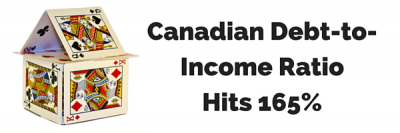
The latest household debt stats have been released by Statistics Canada – and they reveal a trend of persistent consumer and mortgage borrowing across the nation. The average debt-to-income ratio hit 165 per cent in the fourth quarter of 2015, up from 164 per cent in the previous quarter. That means the average Canadian now owes $1.65 for every dollar they earn after taxes.
Total debt, including consumer credit and non-mortgage and mortgage-based loans, grew 1.2 per cent to $1.923 trillion at the end of last year – but a whopping 1.262 trillion of that can be attributed to mortgages.
This follows a report from TransUnion that finds the average Canadian credit card balance has hit $3,610 – a three-year high.
Cheap Borrowing to Blame
It’s not surprising debt – and particularly mortgage borrowing – continues to grow in Canada; consumers have been spurred to borrow by the central bank for several years, as record low interest rates have been the norm. The Bank of Canada (BoC) cut the cost of borrowing to 0…

