
Not sure how to make a savings plan? Read on…
Latest News



Toyota Credit settles US discrimination allegations + MORE Feb 3rd
DETROIT – Toyota Motor Credit Corp. will pay $21.9 million to black and Asian borrowers as part of a settlement over alleged discriminatory lending.
The U.S. Department of Justice and the Consumer Financial Protection Bureau announced the settlement Tuesday.
A government investigation found th.... More »
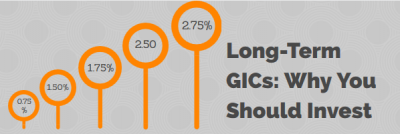
Long-Term GICs – A Good Addition to Your Portfolio Oct 21st
Have you checked the interest rates on GICs lately? Today’s low interest rate environment has made many investors hesitant to plunk their savings in GICs, especially with the paltry returns offered – but they remain a solid option for risk-adverse investors seeking a steady return, espe.... More »
Best FHSAs in Canada: Where to get the new first home savings account + MORE May 8th
First home savings account (FHSA) highlights
The FHSA is a type of registered account that allows you to contribute up to $8,000 annually, up to a lifetime limit of $40,000, to save for the purchase of your first home.FHSAs became available on April 1, 2023. However, availability is currently limite.... More »
Here’s what’s changed — and what hasn’t — in a pandemic RRSP season + MORE Jan 23rd
If you’ve been earning a good salary from a secure job, investing your savings in a tax-advantaged RRSP is a good idea. But if your income has suffered or your job security is uncertain, keeping what money you have saved in a TFSA is a better bet..... More »
10 ways to save more and pay down your debt + MORE Nov 30th
1. Set a goal
If you’re serious about saving you need to set a goal so you know what you’re saving for. Whether it’s a trip to Japan you hope to take in a few months or saving for retirement, having a very specific goal will help you stay motivated and on track.
2. Track your dollars.... More »
What Is A Money Market?
– ratesupermarket.ca

If you’re an investor you’ve probably come across the term “money market” many times. However, many don’t use this investing vehicle because they don’t understand how it works or assume it’s only used by big corporations and governments. With the emergence of money market funds, though, every investor can now participate in the money market. It can be a great place to invest your money for a short period of time before you make a long-term investment decision. The return is slightly better than your bank savings or chequing account and is also considered one of the safest most conservative places to park your cash.
What Is The Money Market?
A money market is a subsection of the financial markets, and a place for financial institutions to borrow or lend for a short period, generally less than one year. The money market consists of securities like government bonds, commercial paper, short-term mortgages and asset backed-securities. These are some of the safest places to invest money for the short-term, but they also have very low returns compared to stocks and bonds…
The dark side of the gift card boom: Olive
– thestar.com
 There is a real downside for consumers, who find themselves inadvertently making billions of dollars’ worth of interest-free loans to retailers, banks and even government agencies.
Don’t get caught retired and broke
– moneysense.ca
In my research I have found one age group that is at much greater financial risk than others. It’s the age 55 to 64 group—both male and female. The risks for this group are almost always health related. Most Canadians greatly underestimate health risks. Individuals in this age group who have had to stop working due to health issues are not eligible for many retirement benefits until they reach age 65. In this corridor leading to retirement there are increasing expenses such as prescription medications and health aids, but often there is little or no insurance available. Until the individual reaches age 65 they find it necessary to tap into their savings or take on more debt. Even upon reaching age 65, some continue with financial challenges.
Three key factors for financial security later in life:
Three key factors for financial security later in life:
Be financially literate. This does not mean becoming an expert in everything. Make it a personal policy to not sign anything if you do not understand the full implications of it. Keep asking questions and doing research until you are satisfied…
The dark side of the gift card boom: Olive
– thestar.com
 There is a real downside for consumers, who find themselves inadvertently making billions of dollars’ worth of interest-free loans to retailers, banks and even government agencies.
Do You Need To Appoint A Power Of Attorney?
– ratesupermarket.ca

There’s no shortage of horror stories associated with the “gap” years – the lingering time between healthy life expectancy and actual life expectancy.
You often hear of the fallout from poorly planned end-of-life financial decisions, ill-managed expectations of family members or the onset of dementia resulting in an inability to properly sort out financial affairs.
The issue is, while healthy life expectancy for men and women in Canada is 69 and 72 years, respectively, many are living nine to 11 years beyond the “healthy” time – and these extended final years are causing havoc with their finances and savings.
A Growing, Aging Demographic
In 2011, nearly 15 per cent of the population – about five million people – was 65 or older. It’s an issue RBC Wealth Management tackled in “Mind the Gap: What Canada’s Baby Boomers Need to Know to Protect Themselves.”
“These changing demographics present challenges that we haven’t seen before in Canada,” said Tony Maiorino, head of RBC Wealth Management Services, in a release with the report…

