
All about Canadian Savings. Learn the ins and outs and get the latest news.
Latest News



The best TFSAs in Canada for 2024 + MORE Jan 9th
Tax-free savings accounts (TFSAs) are more than a simple tax-sheltered savings account. TFSAs allow Canadians to hold cash, guaranteed investment certificates (GICs), stocks, bonds, exchange-traded funds (ETFs) or mutual funds within a structure backed by the government. Any interest made during you.... More »
How segregated funds can help protect your nest egg in a volatile market + MORE Sep 20th
For older Canadians afraid of having their savings wiped out in a market downturn, segregated funds could be an effective option, writes Gordon Pape..... More »
10 simple ways to save money Aug 21st
As the cost of living increases for Canadians, having a savings strategy has never been more important to ensure you can live comfortably in the future. But many are unsure where to start. Not having a thought-through plan or having one that is too rigid and demanding can easily push you off track. .... More »
Canada’s best credit cards 2020 Nov 28th
Finding the right credit card could save you hundreds, if not thousands, of dollars a year. Whether you’re looking for lower fees, more rewards or simply valuable perks like travel medical insurance or rental car savings, every dollar counts. If you use your credit card wisely, pay off your balanc.... More »
Reconsidering when to take CPP benefits amid COVID-19 risk + MORE Apr 18th
In an earlier column, we looked at how to optimize the timing for taking your Canada Pension Plan benefits—early or late. We also touched on the issue of “survivorship,” mentioning retired advisor Warren Baldwin, who decided to take his own CPP at age 66, in part because of limited options for.... More »
Liberals Pass the Middle-Class Tax Cut
– ratesupermarket.ca

The Liberal government is putting into motion some of the economic promises made to Canadians during their campaign. Helping the ailing middle class, which was a major theme in last week’s throne speech, is now official as the Liberals have passed the aptly-named middle-class tax cut.
But that’s not the only tax change in store for Canadians; the nation’s wealthiest can expect a 2016 tax increase along with a higher charitable donation tax credit for that income bracket.
Canada’s New Tax Changes
It’s time for the middle class to catch a (tax) break; the second income bracket for middle-class Canadians will drop from 22 per cent to 20.5 per cent starting next year for those with taxable income between $45,282 and $90,563. This adds up to savings of about $680.
To pay for the tax cut for the middle class, the so-called “one per cent” will have to cough up more; those with taxable income above $200,000 will see a new tax bracket of 33 per cent (the top tax bracket of 29 remains for those with taxable income between $140,388 and $200,000)…
 In a week where our central banker talked about negative interest rates, readers wonder about living longer than their savings..
When you’re late to the savings game
– moneysense.ca
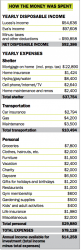 Up until two years ago, Lucas and Eva Simmons were an active, carefree couple who spent most of their spare time attending local hockey games, volunteering at their church and camping in some of Alberta’s most beautiful parks. Then, their daughter Madison was born and everything changed. “We’ve come late to the game of starting a family but we’re loving every minute of it,” says Eva, 38, an elementary school teacher in Slave Lake, Alta., 200 km northwest of Edmonton. “We’ve been good savers but now with Madison and another baby due to arrive this April, saving for the future is going to be difficult. Heck, we’ll be retiring at the same time our kids are still in high school or university. We need to juggle so many financial balls and we don’t know the best way to do that.”
The couple is contemplating big changes. Lucas, 38, works as a program co-ordinator at a local community centre, but is thinking about a career change. (We’ve changed names to protect privacy.) That means going back to school for up to four years…
 In a week where our central banker talked about negative interest rates, readers wonder about living longer than their savings..
What Happens To Debt When You Get Married?
– ratesupermarket.ca

Many couples are getting married with a significant amount of debt. One or both partners might have student loans, credit card debt, a line of credit, an auto loan, or a mortgage. In 2014, Harris/Decima conducted a poll that showed two in five Canadian newlyweds enter their marriages with debt and owe, on average, $21,500.
Also read: The Cost of Love in Canada: $50,339.21>
So, what happens to this debt when you tie the knot or become common law partners? And what happens to debt that you accumulate during your marriage?
This article explores how debt can affect the finances of married or common law couples.
Pre-Existing Debt
The good news is that you won’t be held liable for any pre-existing debt that your partner brings with them to the marriage or partnership. Unless you co-signed for the loan or credit card, pre-existing debt is seen as entirely your partner’s responsibility.
Student Loan Debt
Student loan debt remains the responsibility of the borrower even after you’re married, but marriage or common law status might affect the repayment of your student loans and your ability to take out new student loans…

